Nature, form, and the architecture that has stayed with me since high school
The first time I saw Gaudí’s work I was in high school, looking at a picture of Casa Batlló in an art history class. I loved art history, but I don’t think I fully understood then the depth of connection I would later feel with Gaudí’s work. Something about that image stayed with me. It looked more alive and organic than anything I had seen before in architecture.
That was the beginning of a fascination that has only grown since. Not everyone feels this way about architecture. For many people, buildings are simply part of the background of everyday life, functional, present, but not something that moves you. For me, Gaudí was the architect who changed that. He was the first architect I ever truly loved. And visiting Barcelona in June last year, standing in front of his buildings in person for the first time, only made that clearer.
Who is Gaudí?
Antoni Gaudí i Cornet was born on June 25, 1852, in Catalonia, Spain. He grew up with delicate health, which meant he spent long periods of rest at the family home in the countryside. Rather than seeing this as a limitation, Gaudí spent those hours observing the shapes of plants, the structure of rocks, the way light moved through trees, the pattern of a honeycomb, the curve of a snail’s shell, the skeleton of a dried snake. He considered nature his greatest teacher. As he said: “The big book, always open and we must strive to read, is that of nature.”
He also came from a family of coppersmiths, his father and grandfather both worked with metal, shaping and transforming materials by hand. From a young age, Gaudí developed an instinct for space, volume, and how materials behave. That early combination, hours spent observing nature, hands that understood material, shaped everything that followed. When he finished his studies at the Barcelona School of Architecture in 1878, his director handed him his degree with these words: “I don’t know if we’ve given this title to a madman or a genius. Time will tell.”
Gaudí and Nature
What made Gaudí so different from other architects of his time, and possibly of any time, was that he didn’t just look at nature for visual inspiration. He studied the forces behind it. The logic of it. How a tree distributes weight through its branches. How shells and bones achieve strength through curve rather than mass. He then applied all of this knowledge to his buildings.
This approach is now called biomimicry, architecture that draws not just from the appearance of nature but from its structural intelligence. Gaudí was doing this more than a century before the term existed. Unlike most architects, he rarely drew detailed plans on paper. Instead he worked with physical models, clay, rope or hanging chains. He worked with his hands, with gravity, with material, the same way nature works. He never considered himself a genius. He thought of himself as a vessel, someone through whom the wisdom of nature flowed. As he said: “Nothing is art if it does not come from nature.”
And his most famous line: “Originality consists in returning to the origin.”
For Gaudí, the origin was always nature. And nature, for a deeply Catholic man, was the supreme work of God.
A life’s work
In 1878, by chance, Gaudí met Eusebi Güell, a wealthy industrialist with a deep love of the arts. What began as a professional relationship became one of the most important friendships in the history of art and architecture. Güell gave Gaudí the freedom and resources to develop his ideas fully, commissioning some of his most significant works including the Palau Güell and Park Güell. During these years his masterpieces followed one after another, Casa Batlló, Casa Milà, Park Güell, and always, above everything else, the Sagrada Família.
In his later years, Gaudí withdrew almost entirely from social life. He had been, as a young man, social and well dressed, someone who enjoyed theater, concerts, and good food. Gradually he gave all of that up. He ate frugally, neglected his appearance, and dedicated himself entirely to the basilica. From 1915 until his death, he worked on nothing else. He died on June 10, 1926, struck by a tram while walking from the Sant Felip Neri church to the Sagrada Família, as he did every evening. He lost consciousness immediately. Nobody realized it was the most famous architect in Barcelona. He was taken to a public hospital, where he was later identified by a priest from the Sagrada Família. His funeral took place two days later at the basilica itself. The streets of Barcelona filled with people coming to say goodbye. At the time of his death, the Sagrada Família was still far from complete. Construction was interrupted by the Spanish Civil War, during which revolutionaries destroyed many of his original plans and models. Neverthless, construction was able to resume in the 1950s, aided eventually by computer technology. Since then, the building has been slowly moving toward completion.
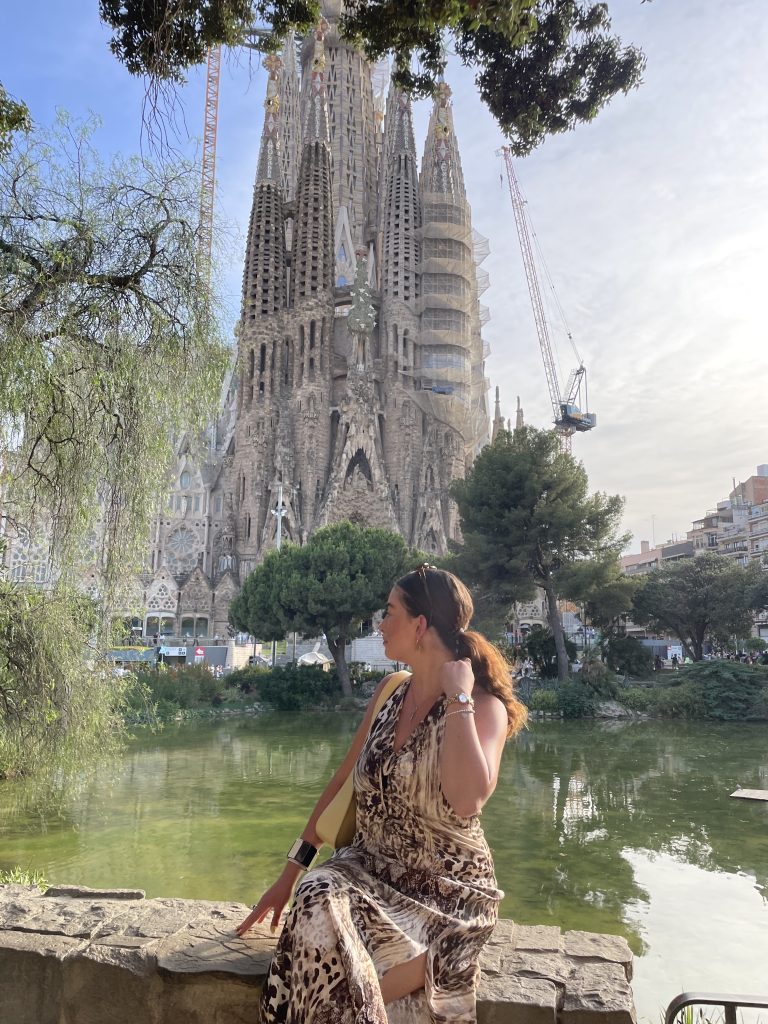
When I visited Barcelona in June last year, the Sagrada Família was approaching a historic moment, 2026 marks one hundred years since Gaudí’s death, and the year his basilica finally reached its full height. A building he never saw finished, completed a century after he was gone. Looking back, it adds something to the experience of being there. Seven of Gaudí’s works in and around Barcelona are recognized as UNESCO World Heritage Sites with The Sagrada Família as one of the most visited monument in all of Spain.
Barcelona; Four Places, One Vision
While in Barcelona, I visited Casa Batlló, Casa Milà, Sagrada Família, and Park Güell. Each one is completely different in character, but they all unmistakably come from the same mind with the same obsession with organic form, with curve over straight line, with the idea that a building should feel like it grew rather than was built.
Casa Batlló
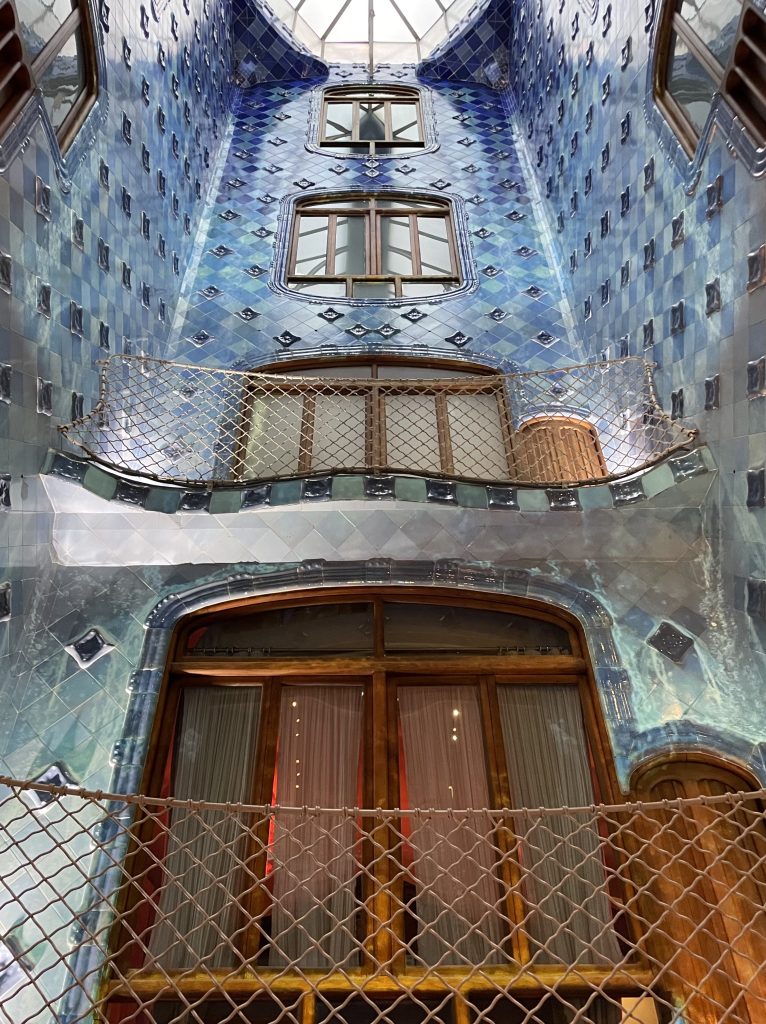
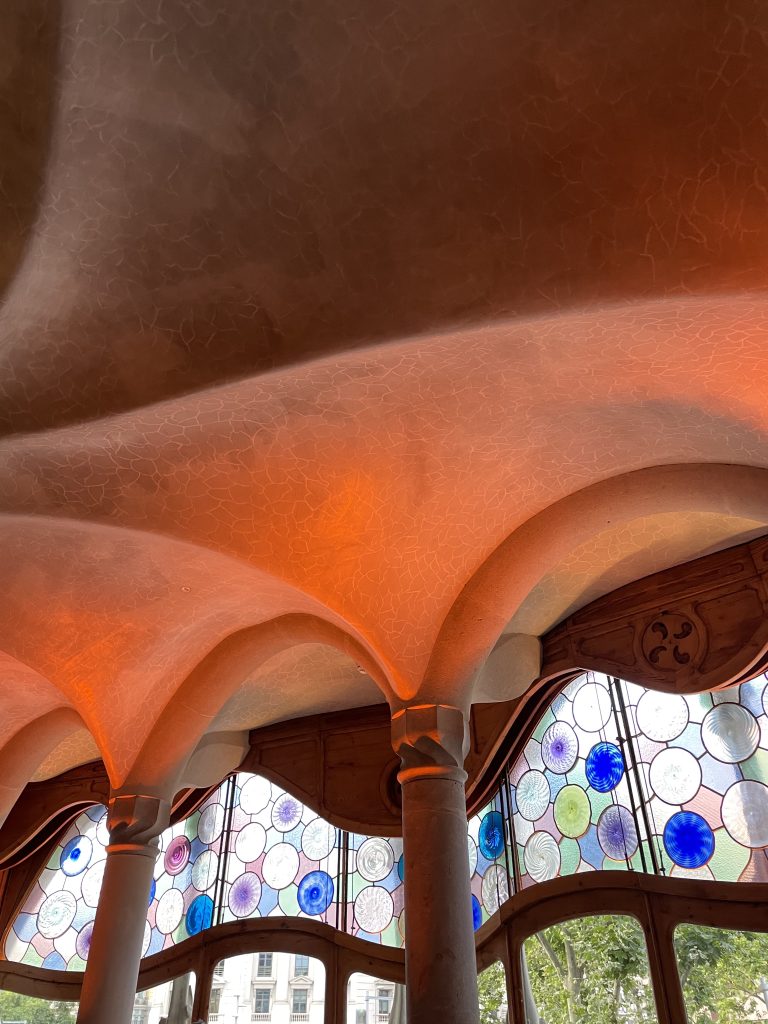
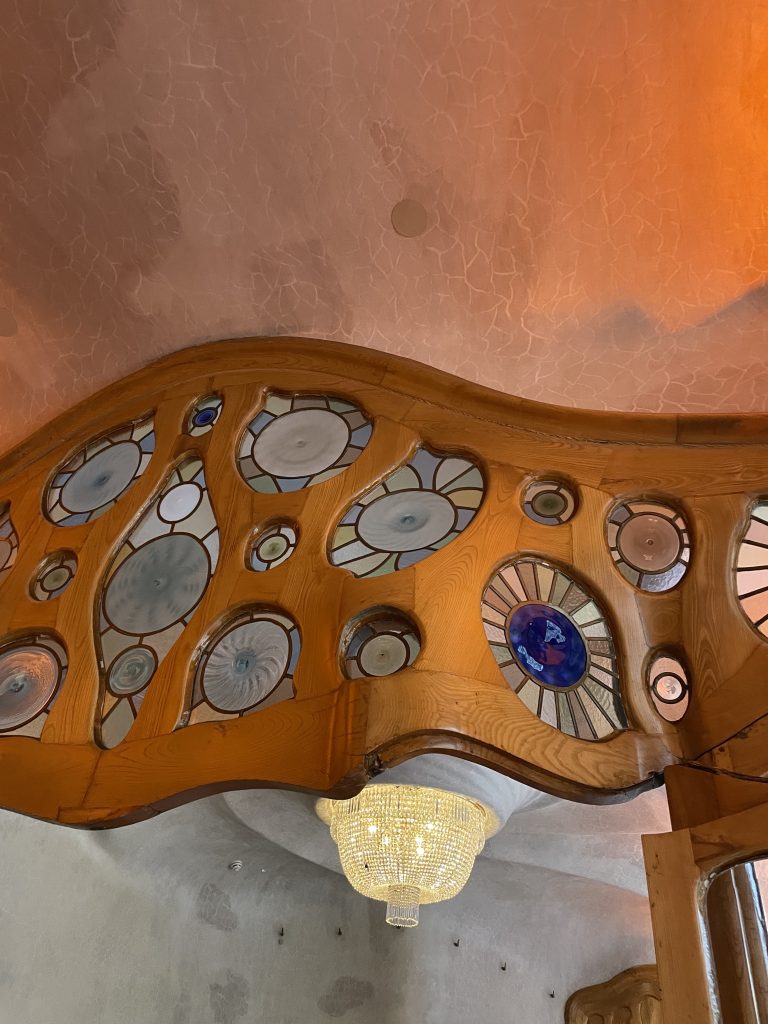
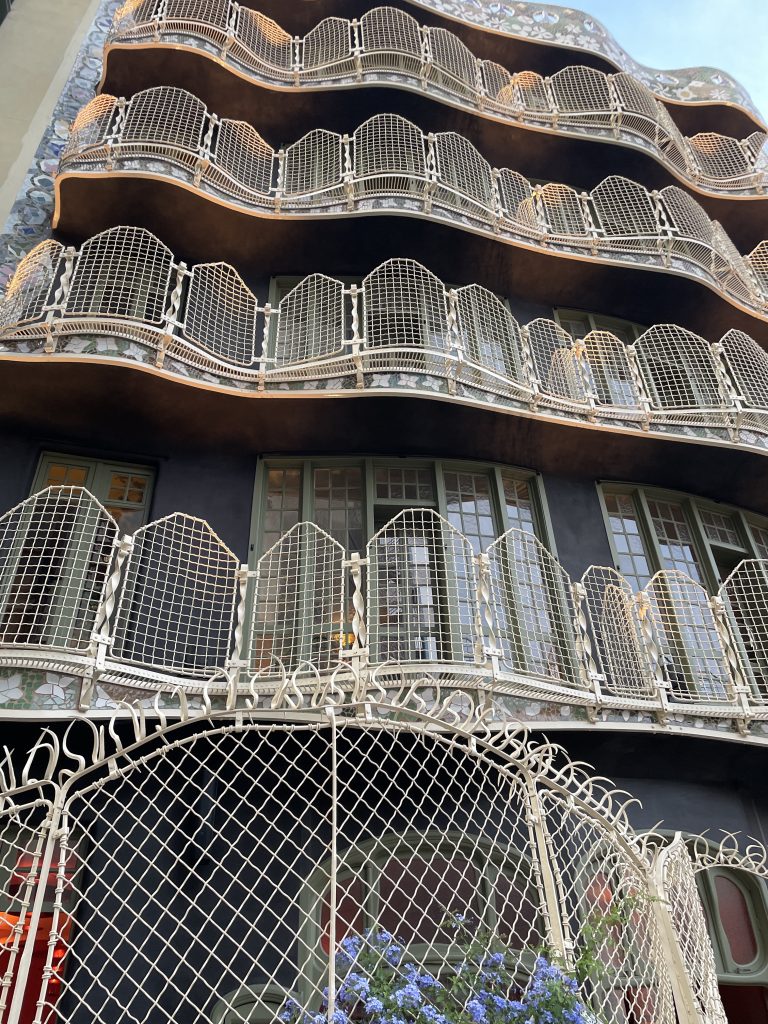
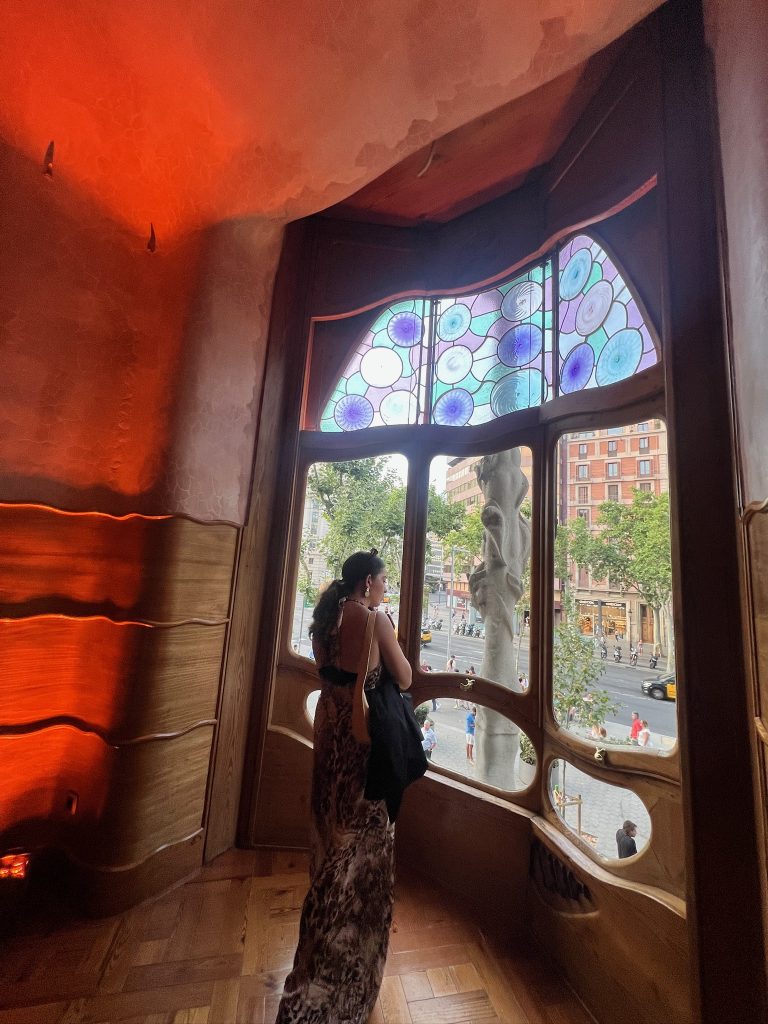
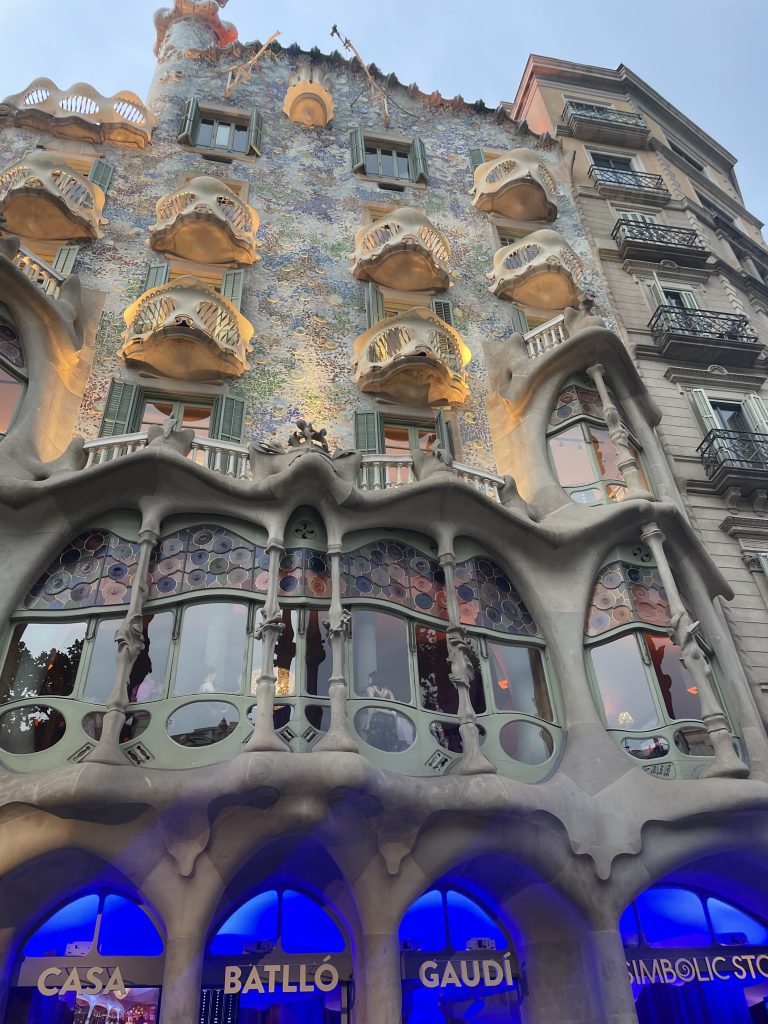
Casa Batlló was the first Gaudí building I ever studied in my art history classes, even if only in a photograph. Standing in front of it in person was so exciting; the facade catches the light, feeling almost like an underwater world, wavy and covered in ceramic tiles that shift color as the light changes. The balconies look like bones, the roof curves upward like the back of a dragon.
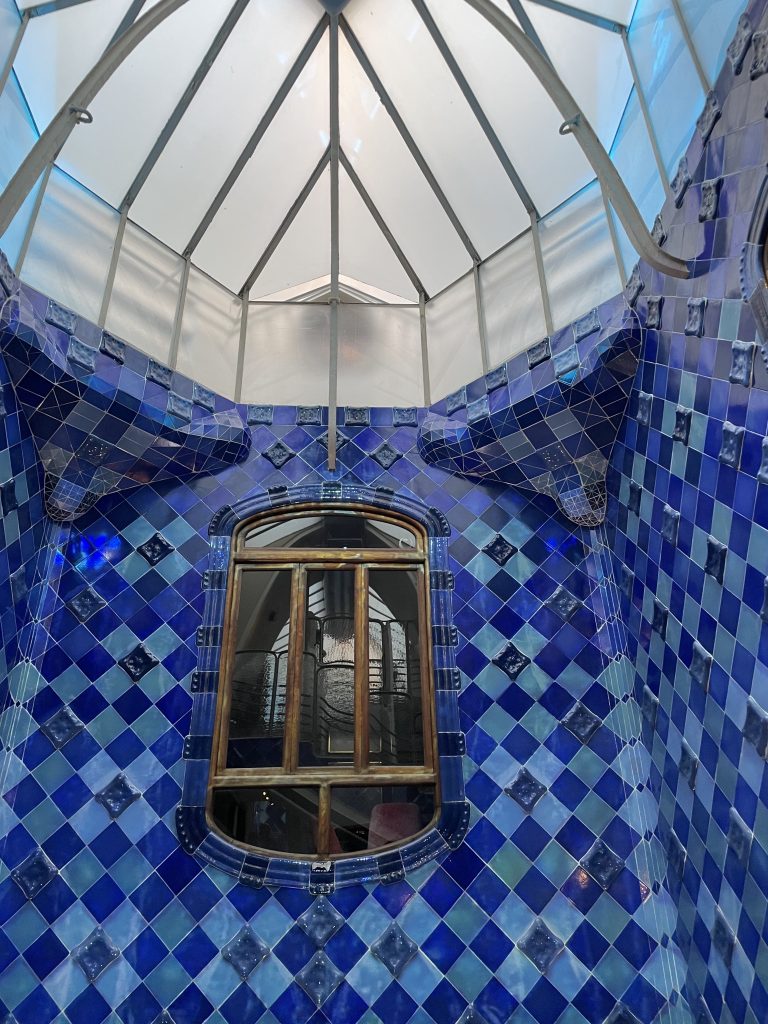
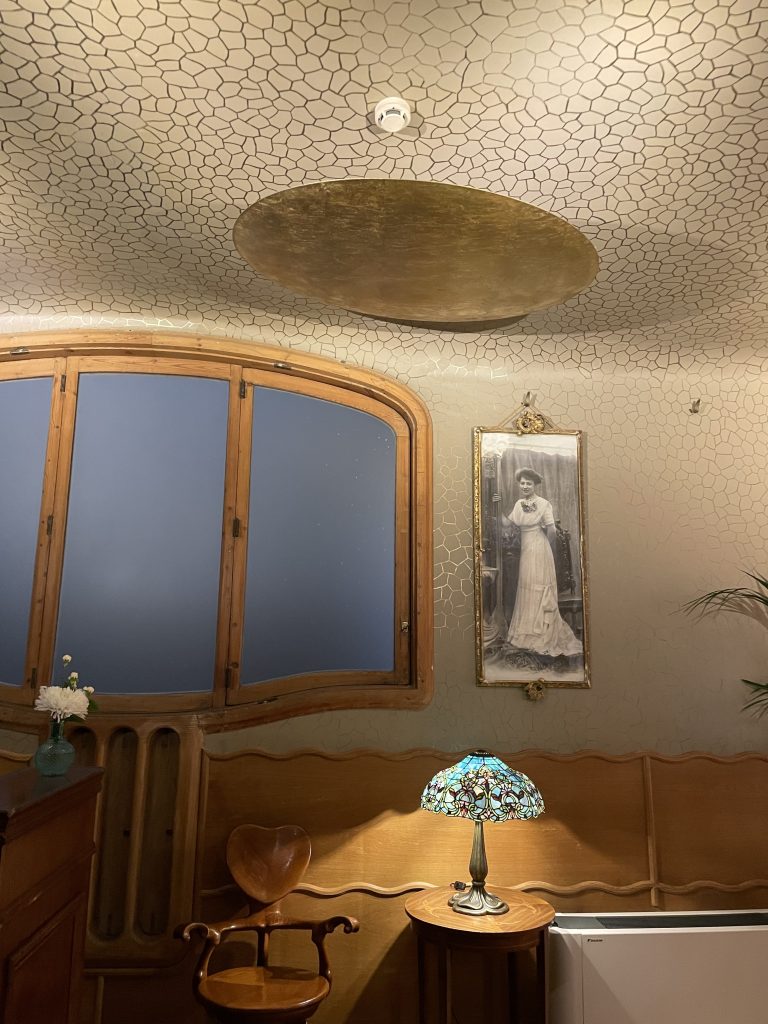
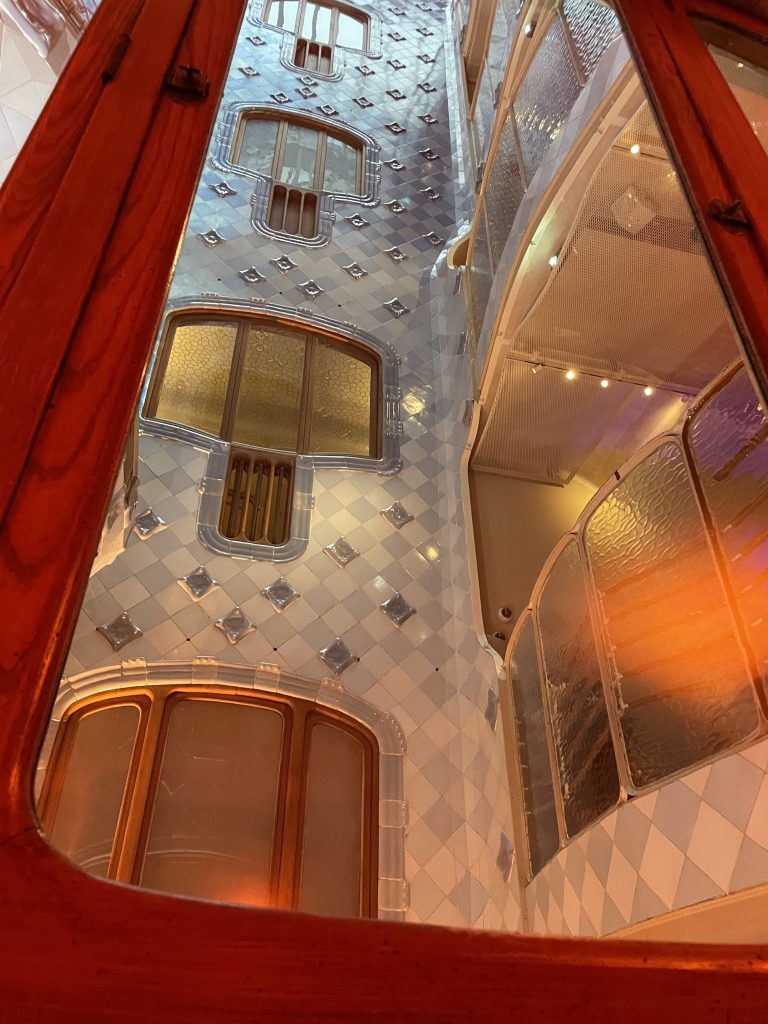
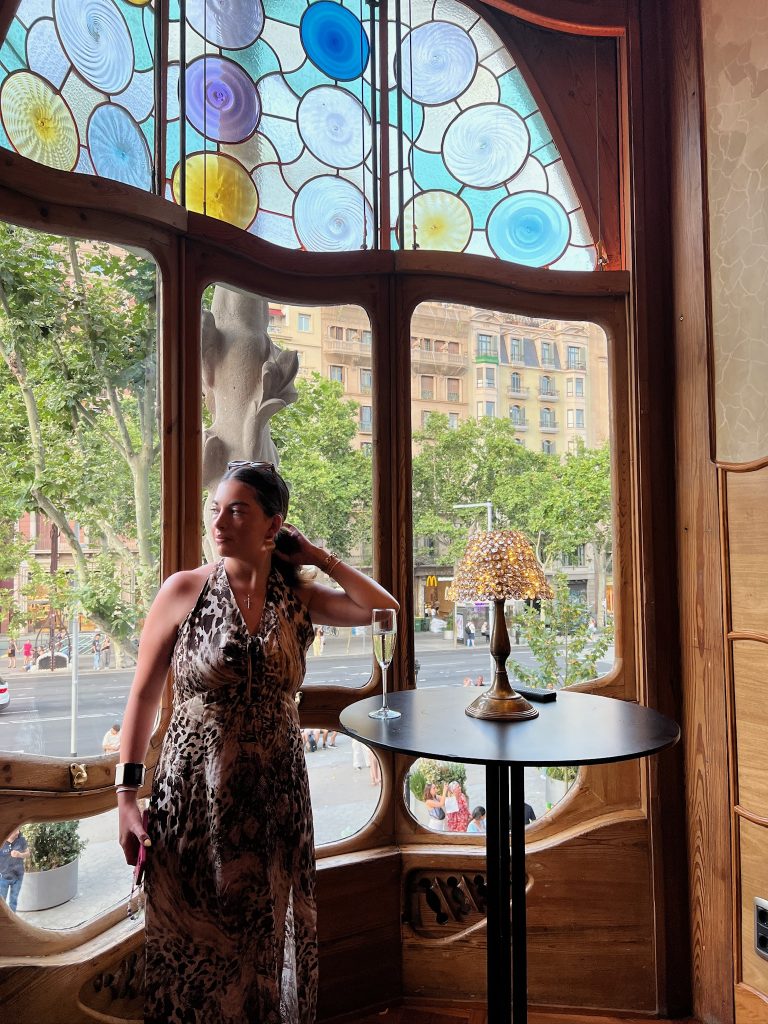
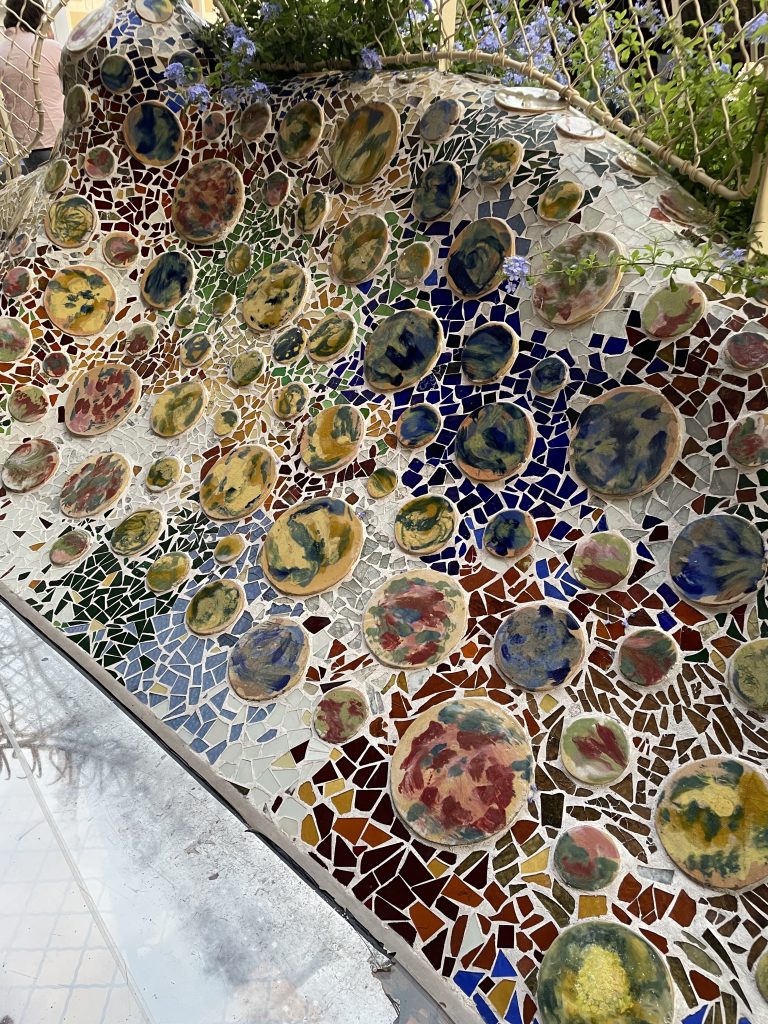
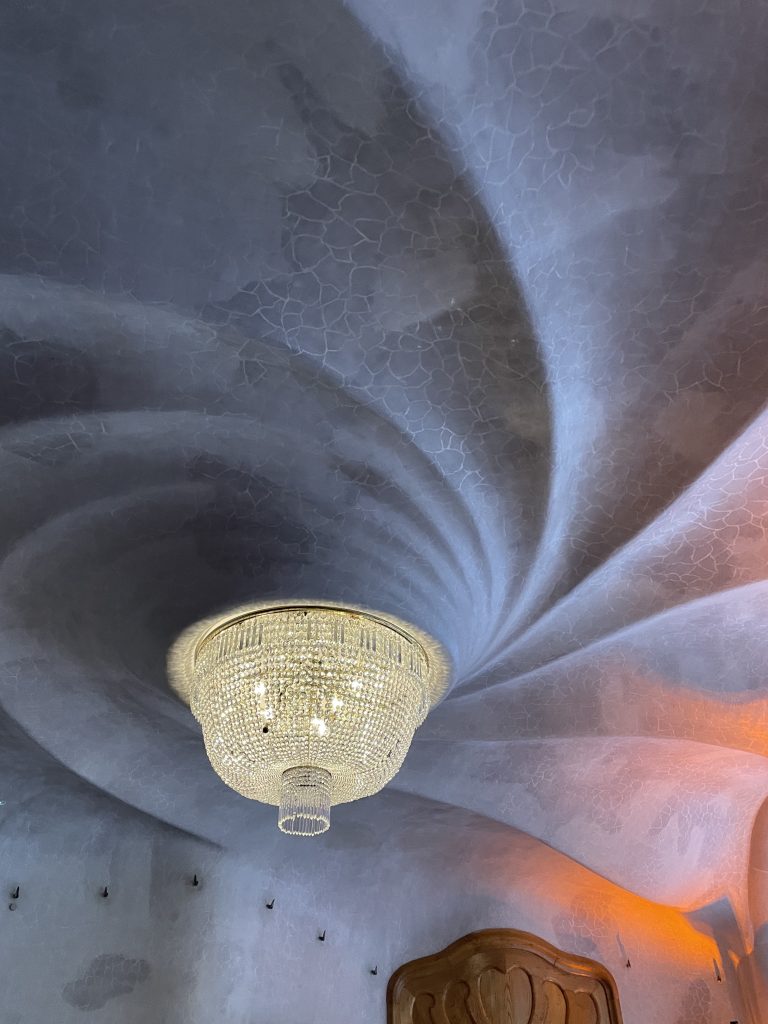
I visited at night, which I would highly recommend. Casa Batlló offers a night experience called Magical Nights, a tour of the Noble Floor, the loft, and the rooftop terrace, followed by a live concert on the roof with a welcome drink (One of the best thing I did in Barcelona!). I think it is a completely different experience from a daytime visit, fewer people, more intimate, and the special lighting brings out the marine details of the facade in a way that feels almost theatrical. The audiovisual tour inside is really worth it too, the special lighting highlights all the organic details Gaudí built into every corner, and you start noticing things you would have completely missed otherwise.
Casa Milà
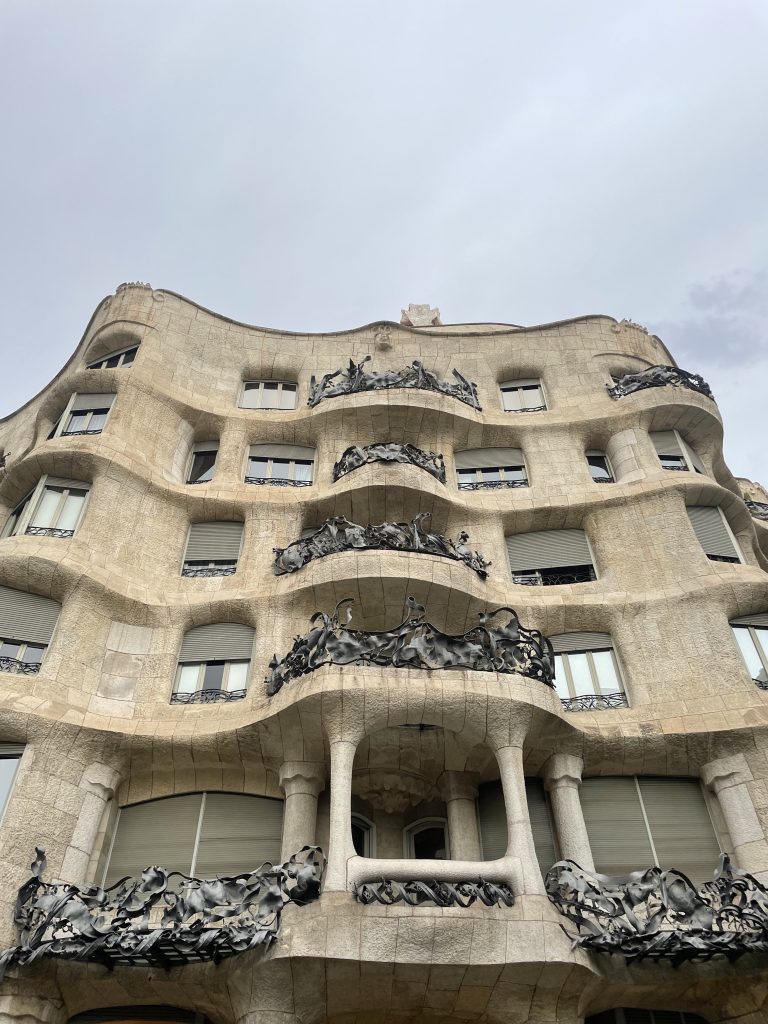
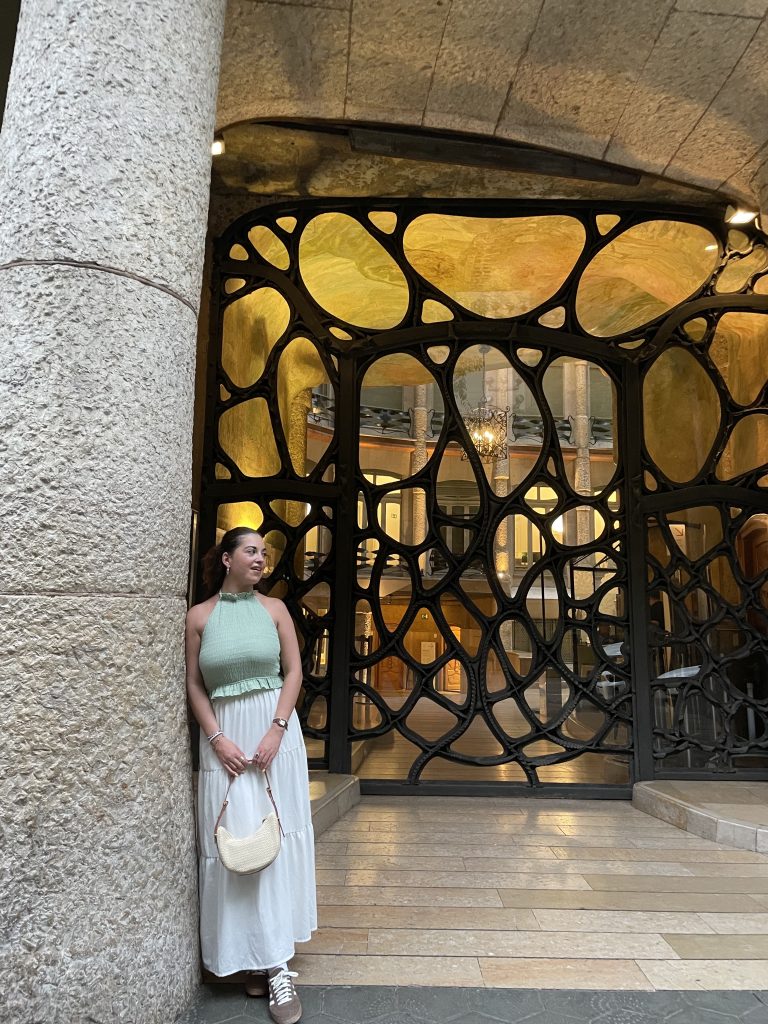
I only saw Casa Milà, known as La Pedrera, from the outside, as we had limited days and had to choose where to spend our time.
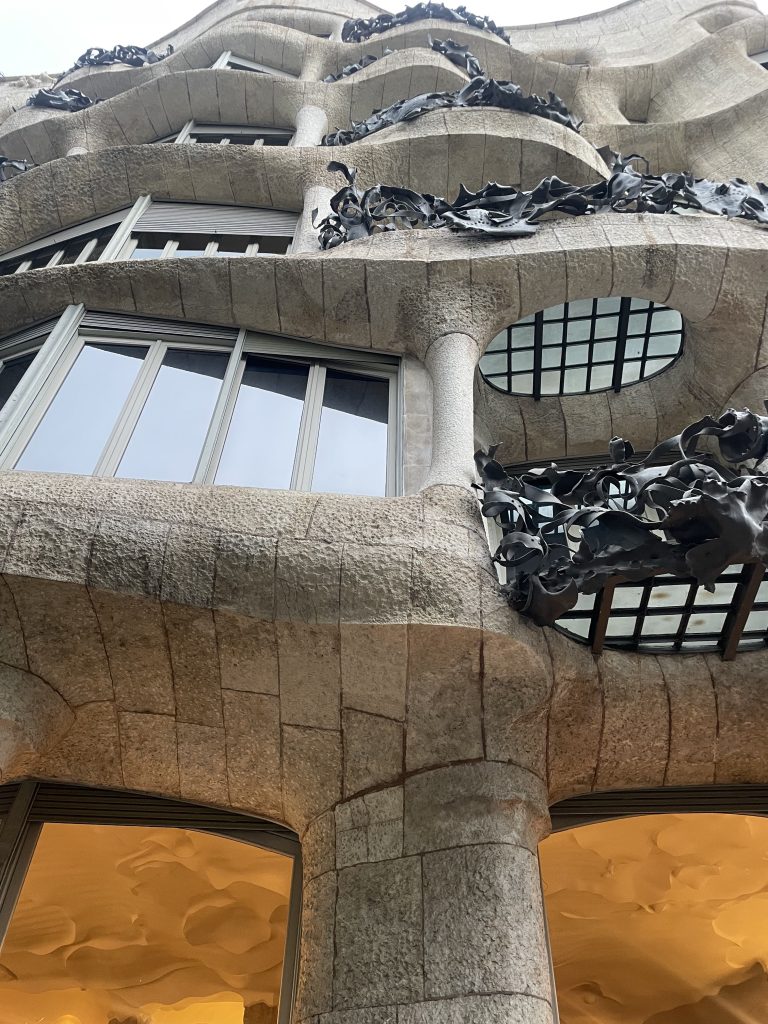
The facade is made of more than six thousand limestone blocks, undulating like a cliff face shaped by wind and water over centuries. It doesn’t look constructed, it looks eroded, like something the earth produced rather than something humans designed. The rooftop, visible from certain angles, is one of the most remarkable things Gaudí ever made with chimneys that look like sculptures or coral formations, ventilation towers that spiral like shells. Every practical element transformed into something that feels alive.
Park Güell
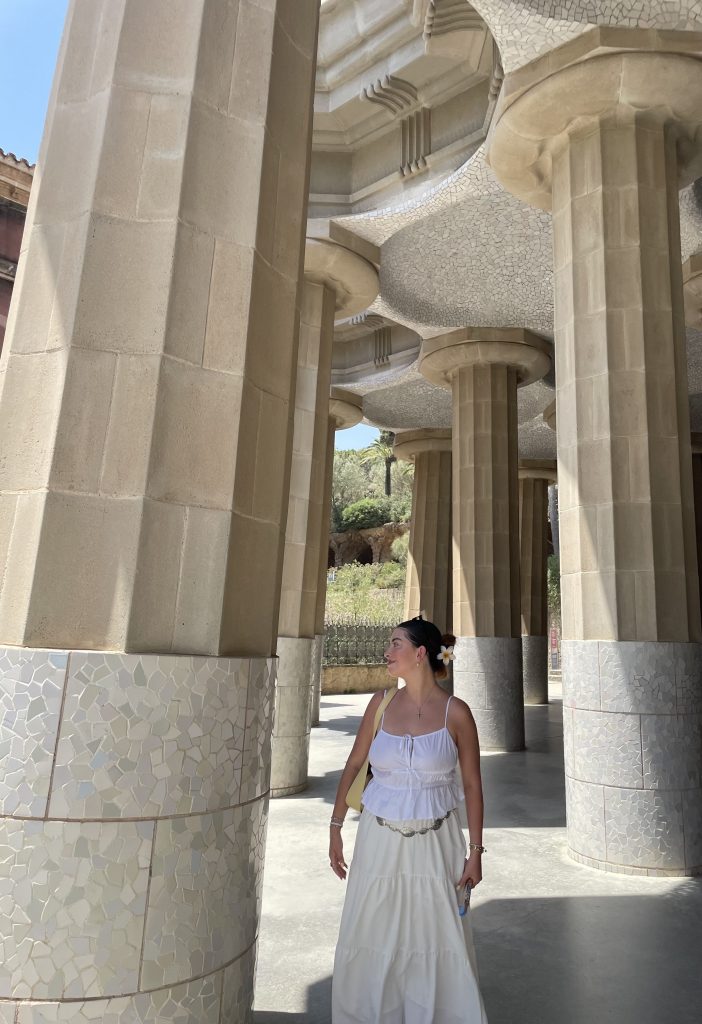
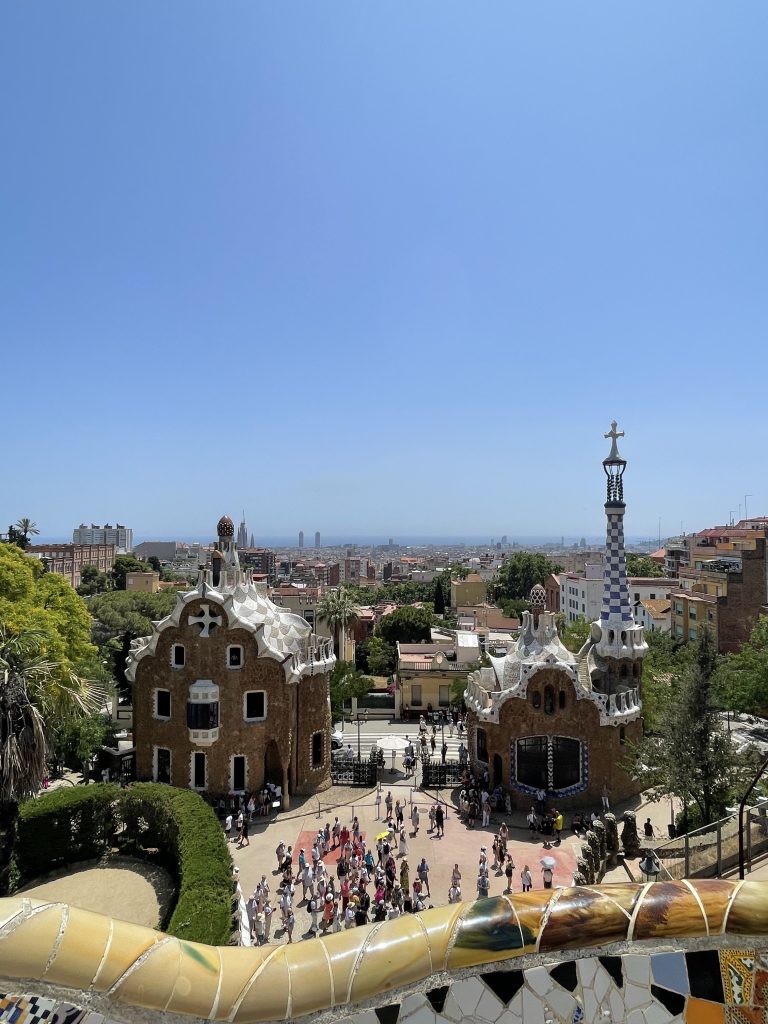
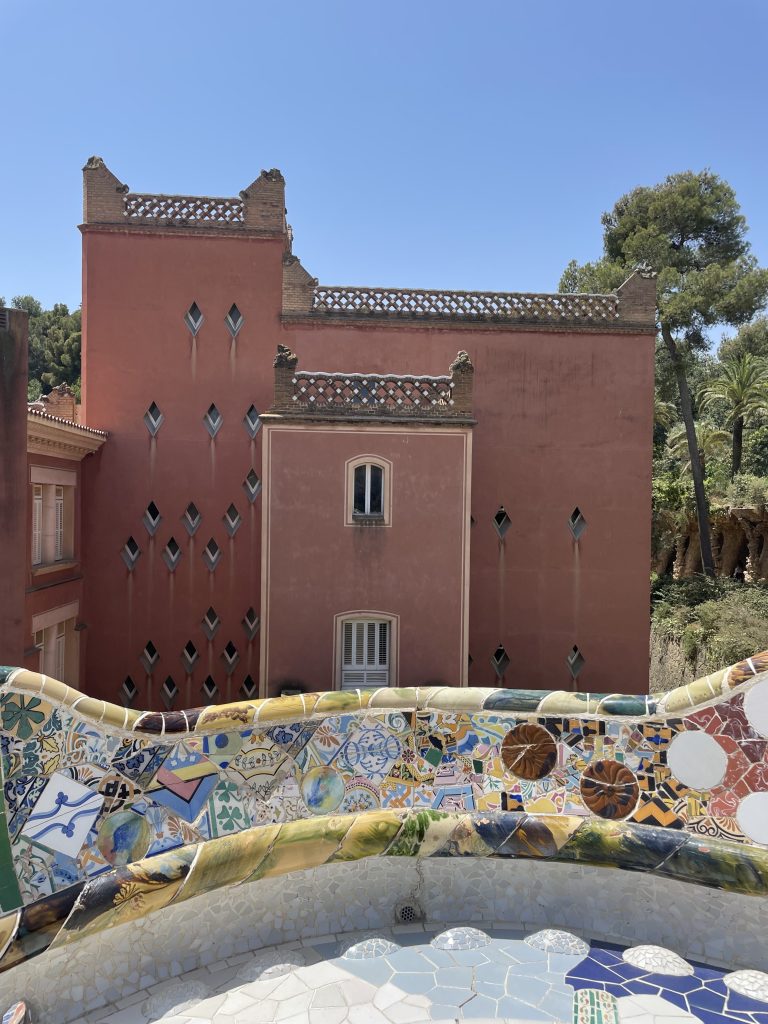
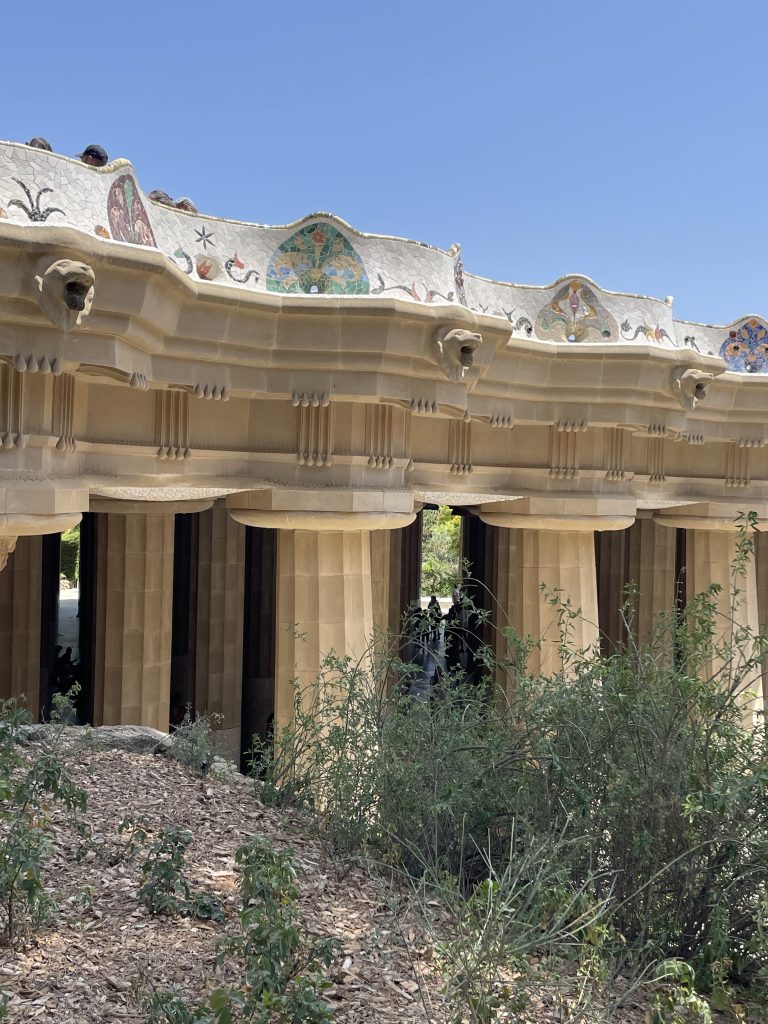
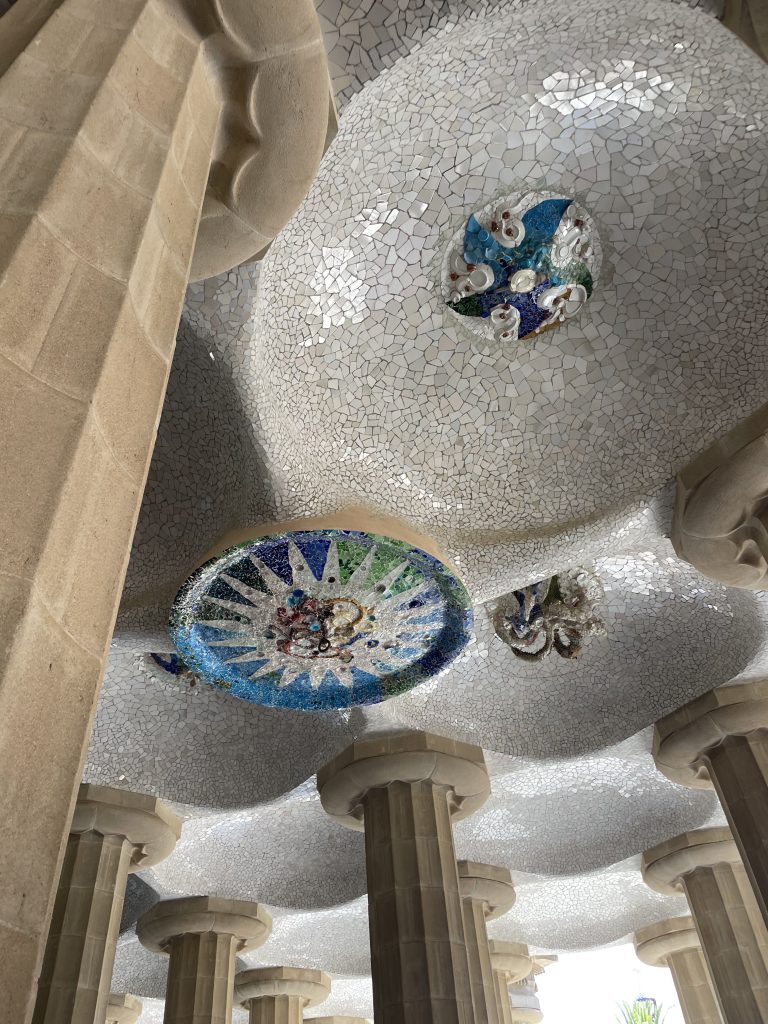
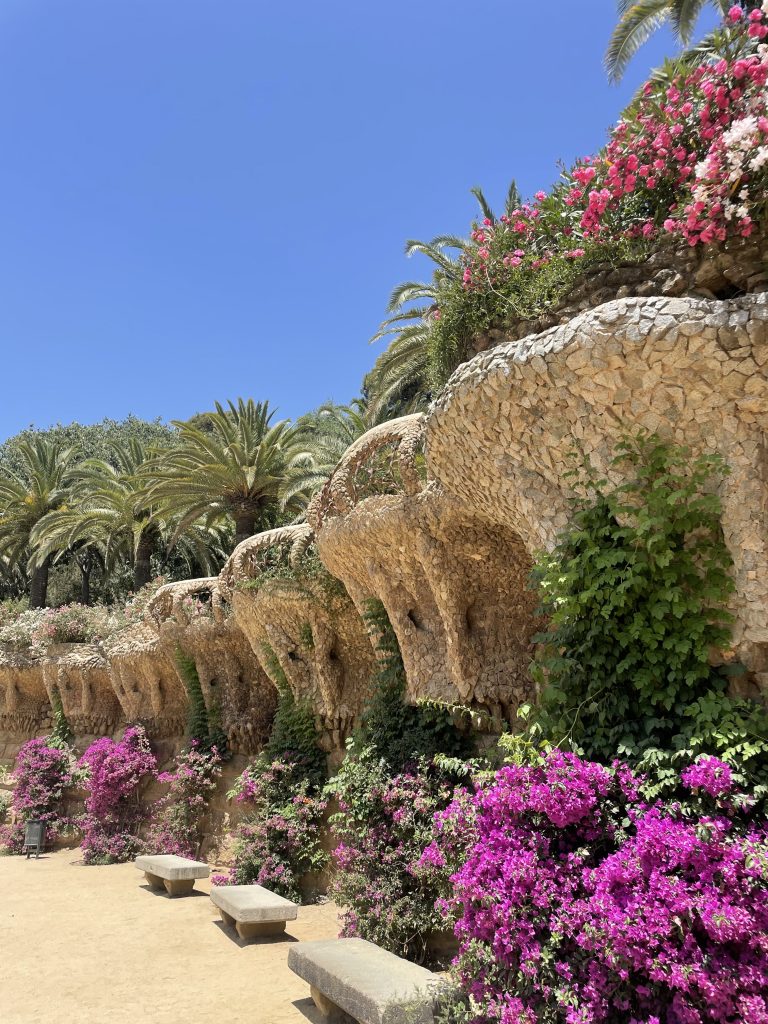
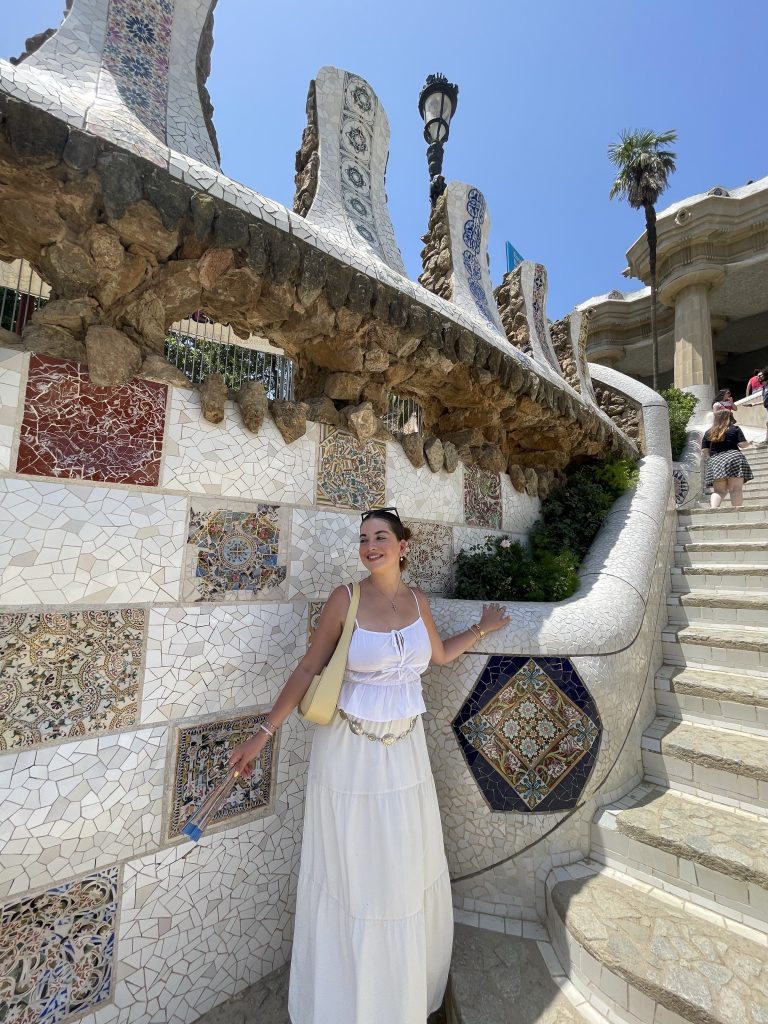
Park Güell is different again, more open, more playful, more color. The mosaic tiles pick up the colors of the surrounding landscape such as the warm earth tones, the greens, so the park feels like it belongs to the hillside rather than sitting on top of it. Park Güell feels so natural and organic that it doesn’t feel man-made. It feels like it was always part of the landscape around it.
One honest note: I would not recommend visiting in the middle of summer. We were under the sun for hours, desperately looking for shade, and it was very crowded. Go early in the morning or in the spring or autumn if you can. Despite that, it is still one of my favorite Gaudí works, there is a lightness and playfulness to it that feels different from everything else he made.
Sagrada Família
And then Sagrada Família.
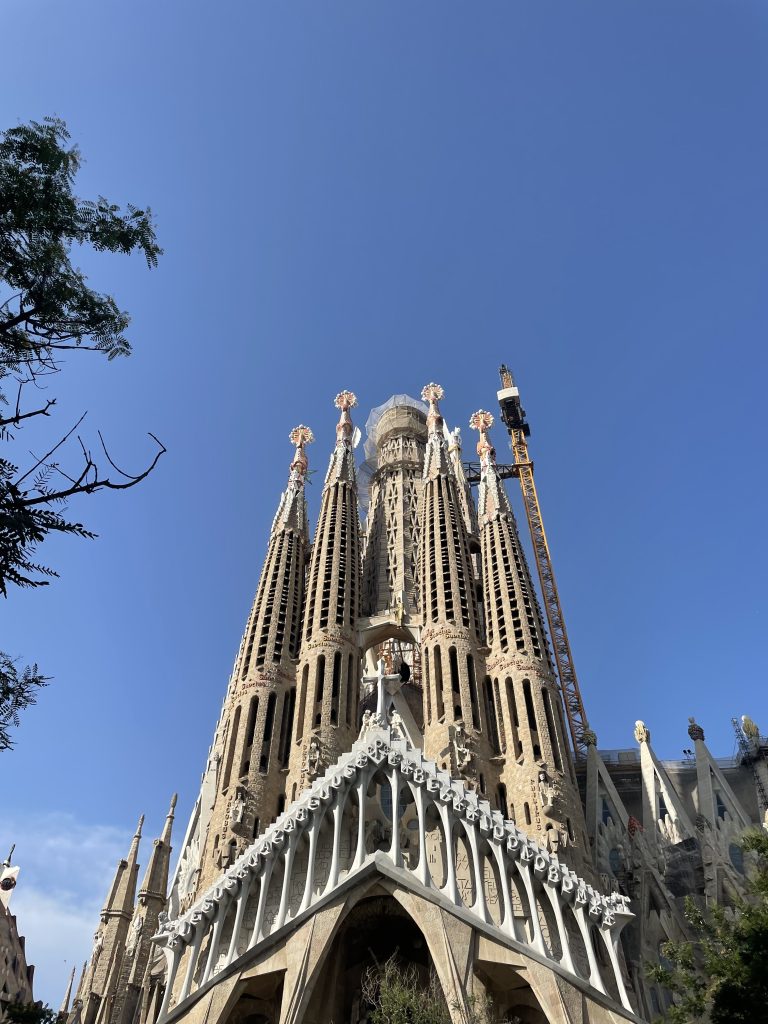
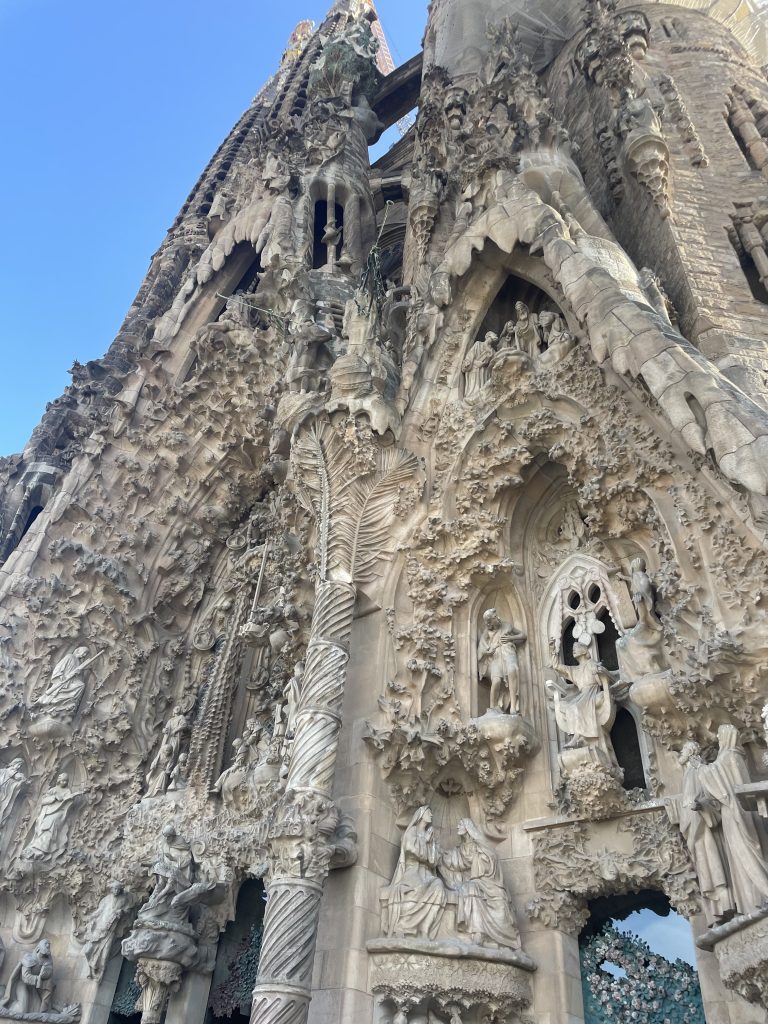
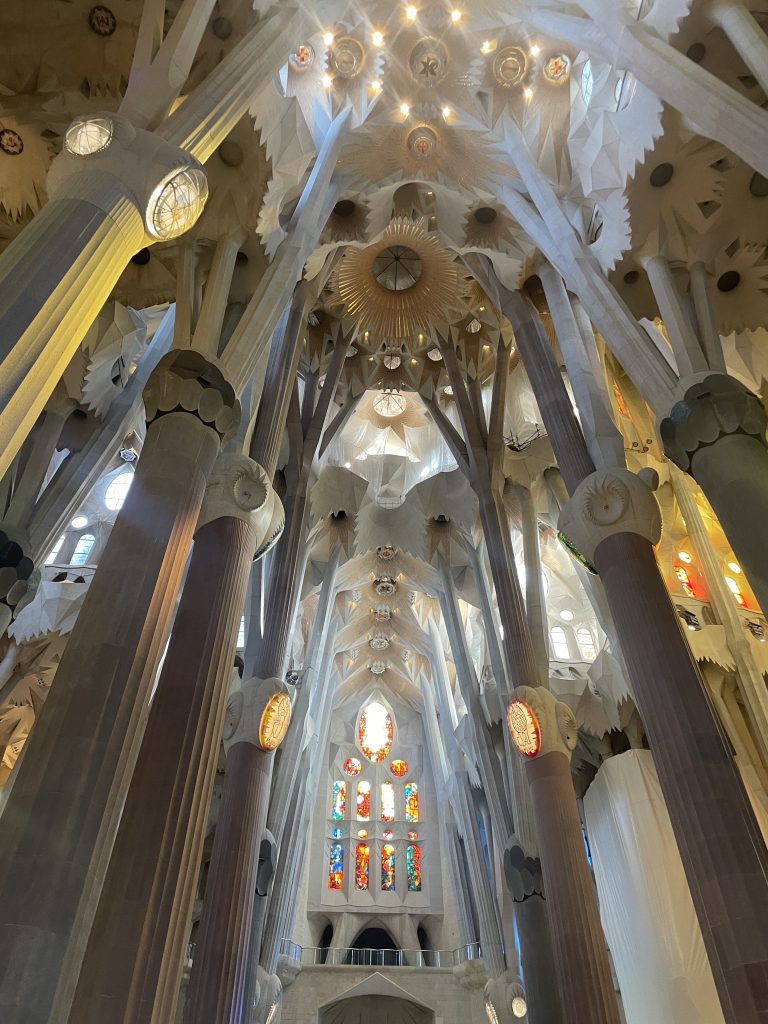
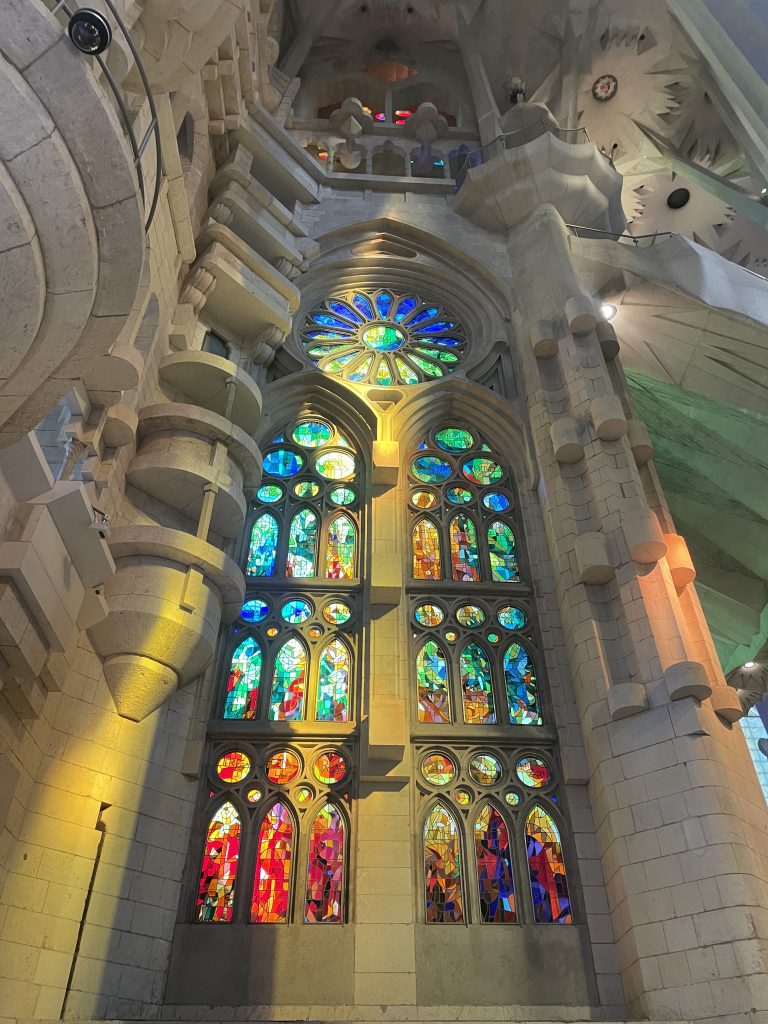
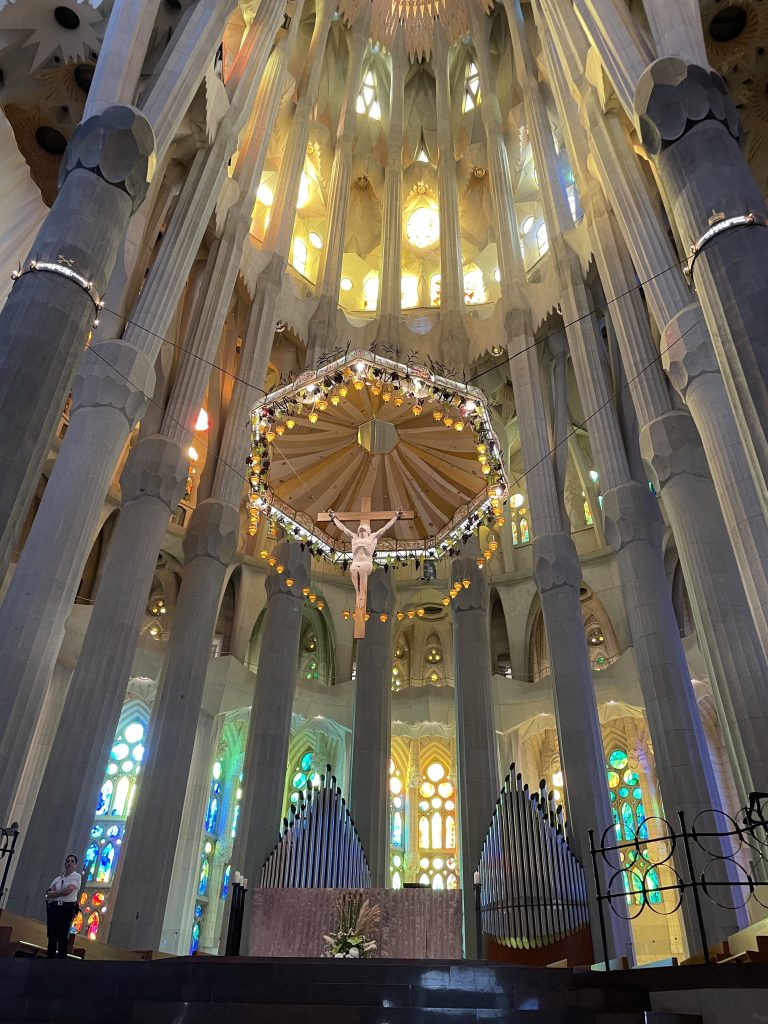
I don’t think there are many buildings in the world that feel the way Sagrada Família feels from the inside. The columns rise like trees, branching as they reach the ceiling, spreading the weight of the roof the way a forest canopy spreads light. The structure is built entirely from forms found in nature such as arches, curves, and vaults that follow the same logic as trees, bones, and shells. The result feels both incredibly precise and completely organic at the same time. Gaudí designed the windows so that light enters and moves through the space in a particular way. On one side of the nave the glass is deep blue and green, cool and quiet. On the other side it is amber, gold, and red, warm and full. As you move through the building the light changes around you. The whole interior feels like it is breathing.
The building has been under construction for over 140 years and is still not fully complete. That fact alone adds something to the experience of being there, standing inside a building that outlived its architect by a century and is still becoming what he imagined it to be. And walking through it, that incompleteness doesn’t feel like a flaw. It feels like part of what it is.
A Personal Connection
There is another layer to Sagrada Família that I feel personally, beyond architecture.
Gaudí was a deeply devout Catholic. For him, nature and God were inseparable, studying one was a form of worshipping the other. The Sagrada Família was not just a building project. It was an act of faith. Every form, every detail, every structural decision was in some way a reflection of his belief that the natural world was the supreme creation, and that architecture should honor it. As a Catholic myself, walking through that space felt different from visiting other landmarks. The scale, the light, the upward movement of everything, it all pointed somewhere beyond itself. Gaudí brought nature into a space of worship, the forest, the ocean, the coral, the bone, the shell, all of it present in the stone and light around you.
Why Gaudí Still Matters
Gaudí’s work makes you think about how deeply architecture can be shaped by nature, not just inspired by it. Most buildings reference nature visually at most. Gaudí went much further. He studied its logic, its mathematics, its structural intelligence, and built from all of it. His influence is still felt today. Many architects have drawn directly from his ideas. The digital tools that now allow architects to design fluid organic forms are doing computationally what Gaudí did by hand, with rope, clay, and hanging chains, more than a century ago.
He spent his life finding ways to bring nature into architecture, not just as decoration, but as the foundation of everything he built. That idea has stayed with me. It made me think about creativity more broadly, and how often the most interesting work comes from looking closely at the world around us rather than inventing something entirely new. For Gaudí the answer was always nature.