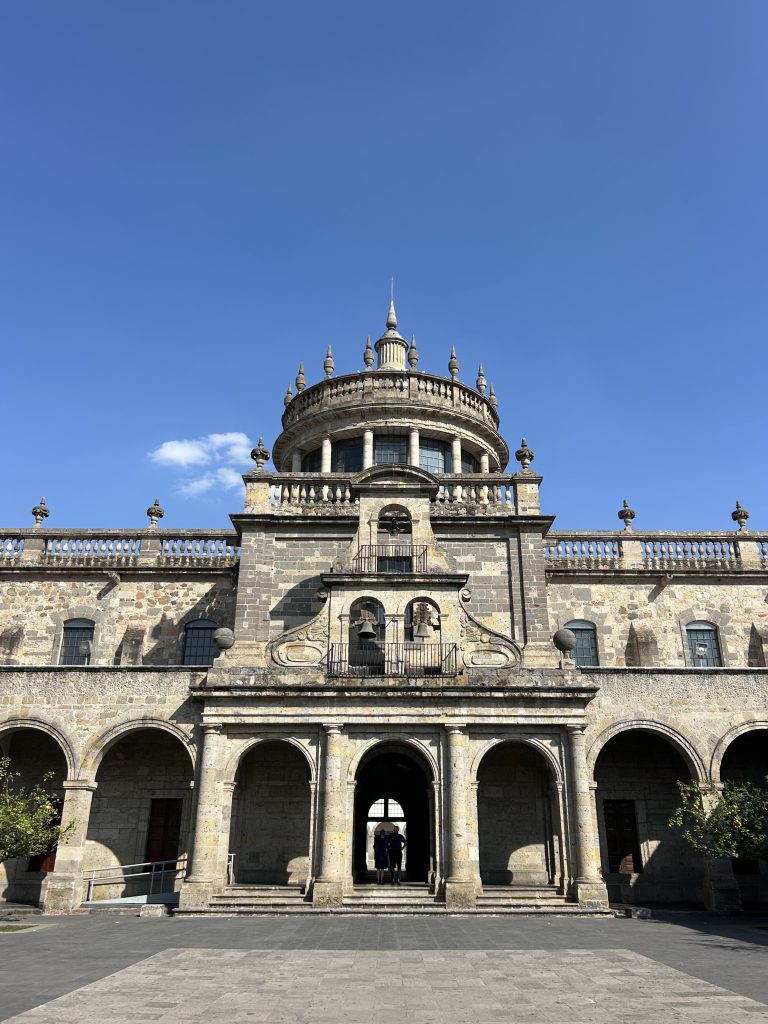
Located in the historic center of Guadalajara, Hospicio Cabañas, now known as Museo Cabañas, is one of the most important architectural landmarks in Mexico. Built between 1796 and 1810, the complex was originally designed as an orphanage and hospital. It was created under the direction of Bishop Juan Ruiz de Cabañas and designed by architect Manuel Tolsá, who was inspired by large European buildings such as Les Invalides in Paris and El Escorial in Spain.
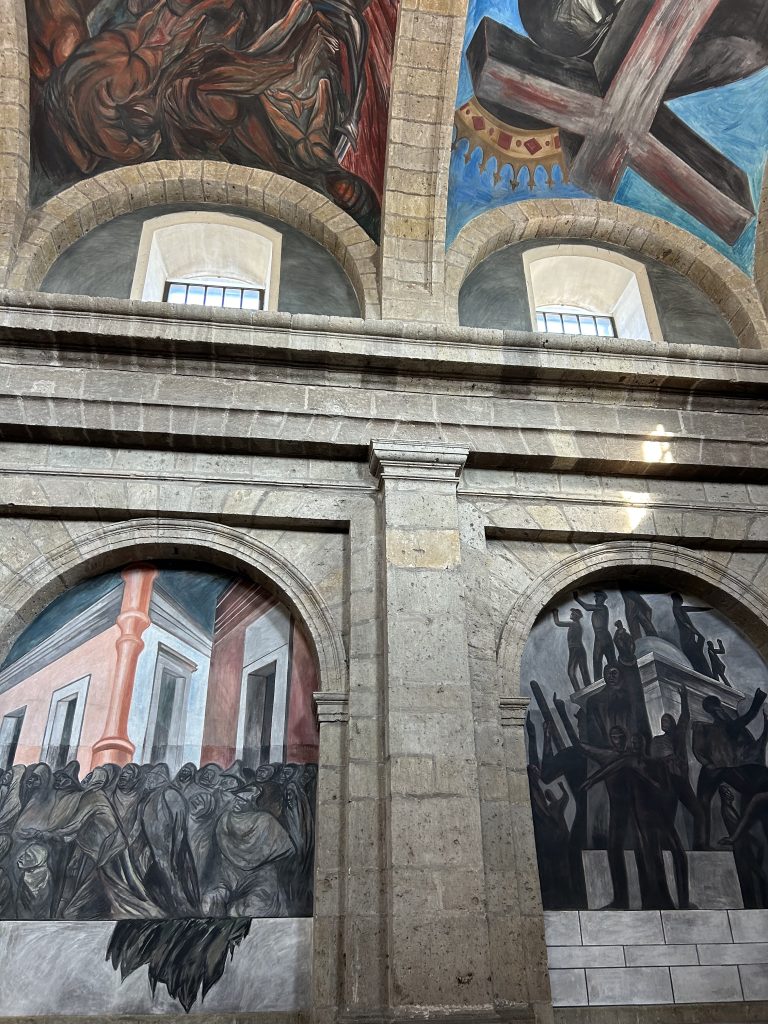
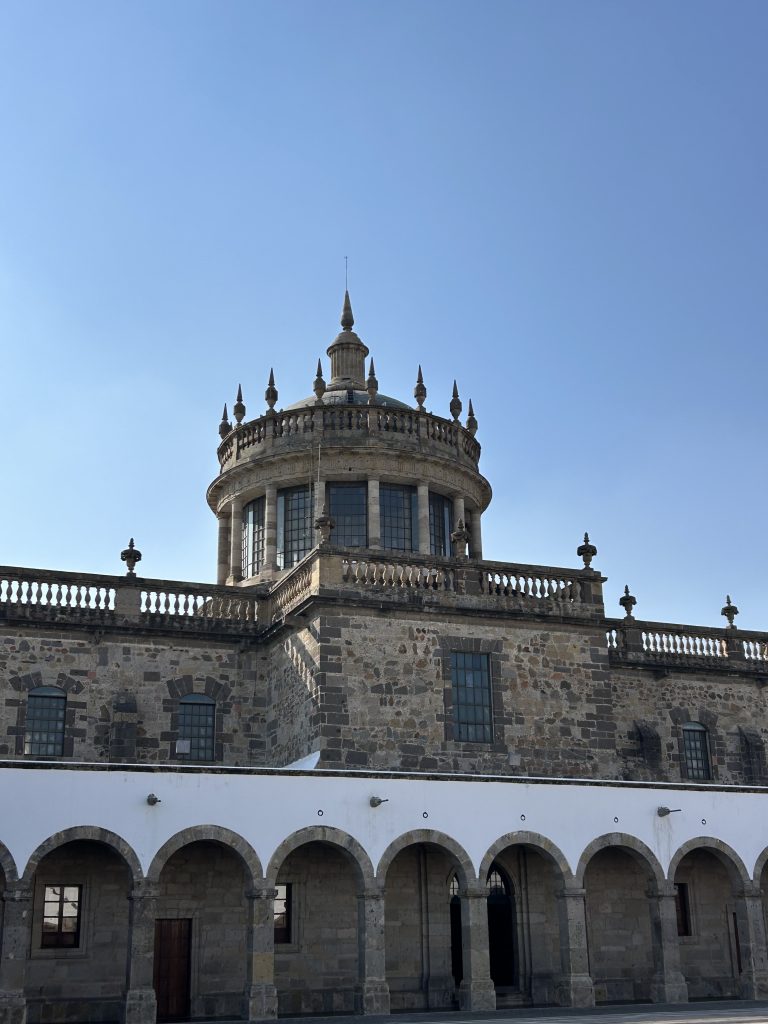
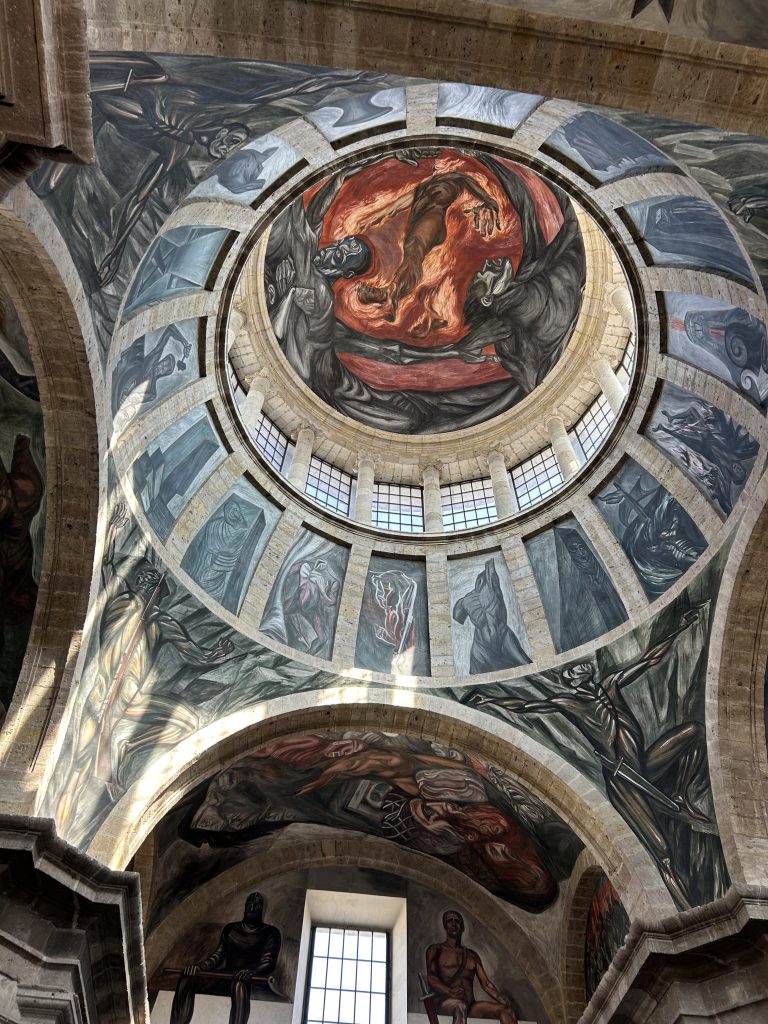
The structure is defined by long corridors, repeated arches, and open courtyards arranged in a large rectangular plan. The buildings are low and spread across one level, allowing light and air to move easily through the space. At the center stands the chapel, crowned by a dome that rises above the calm geometry of the complex. Inside, the museum houses the monumental frescoes of José Clemente Orozco. Painted in the 1930s, his murals, especially The Man of Fire beneath the dome, bring dramatic energy to the otherwise restrained architecture. The contrast between the quiet structure and the intensity of Orozco’s work creates a powerful experience.
In 1997, Hospicio Cabañas was named a UNESCO World Heritage Site. Today, it functions as a cultural center and museum, holding both historic murals and contemporary exhibitions.
Below are a few moments from the space.
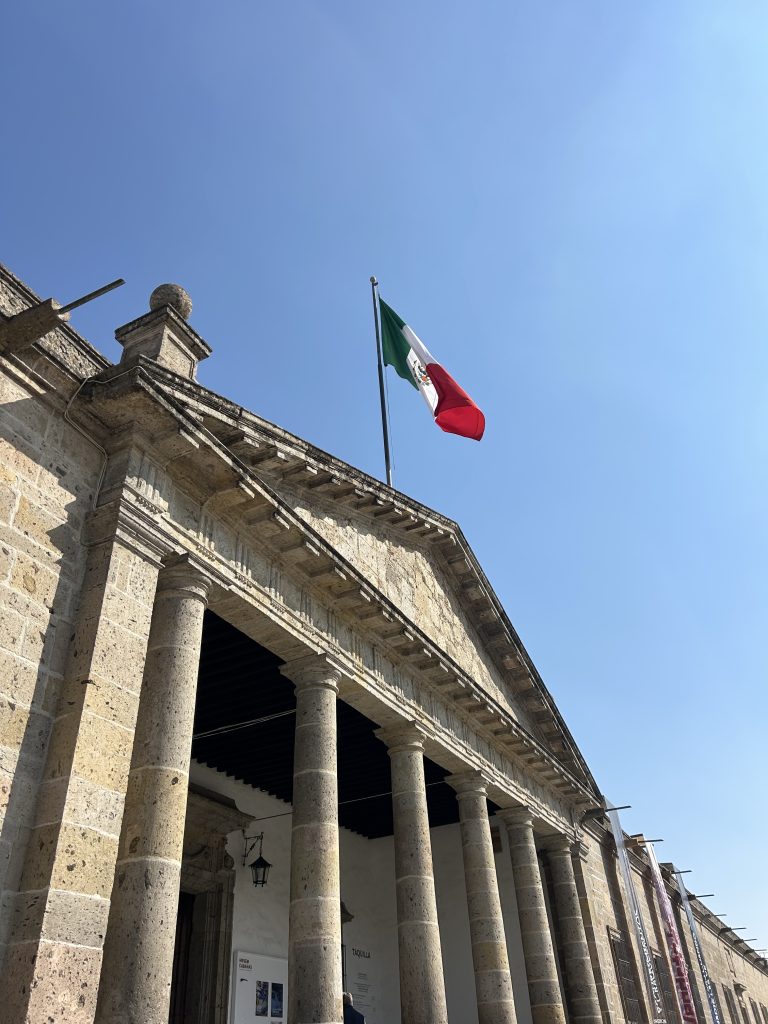
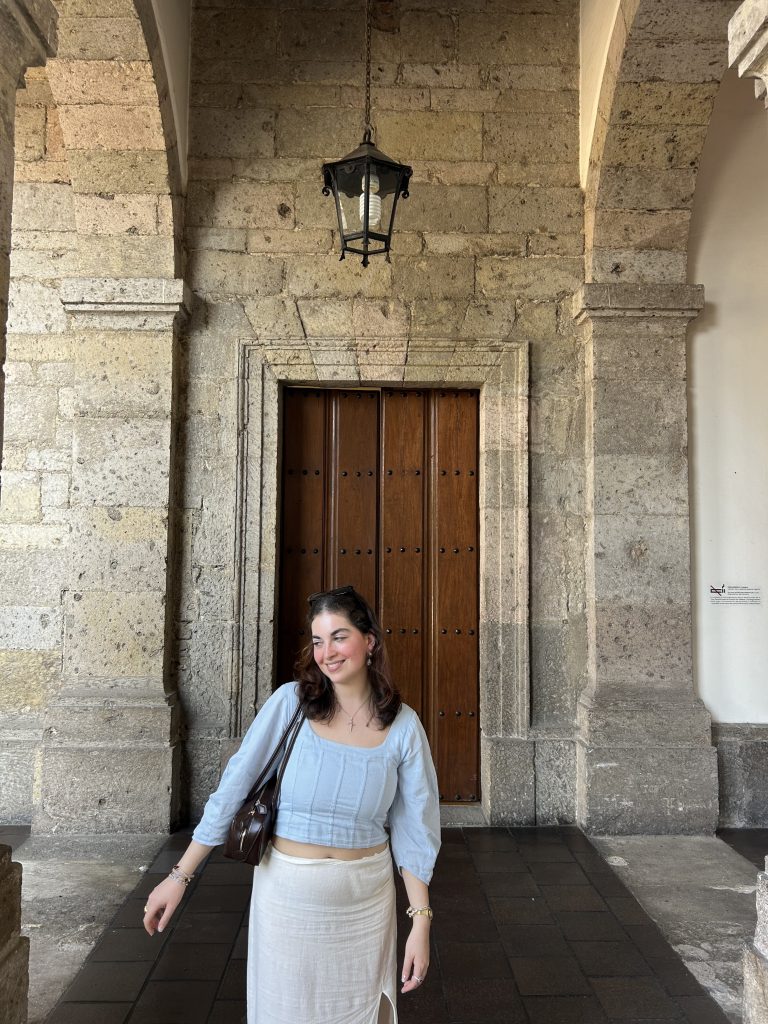
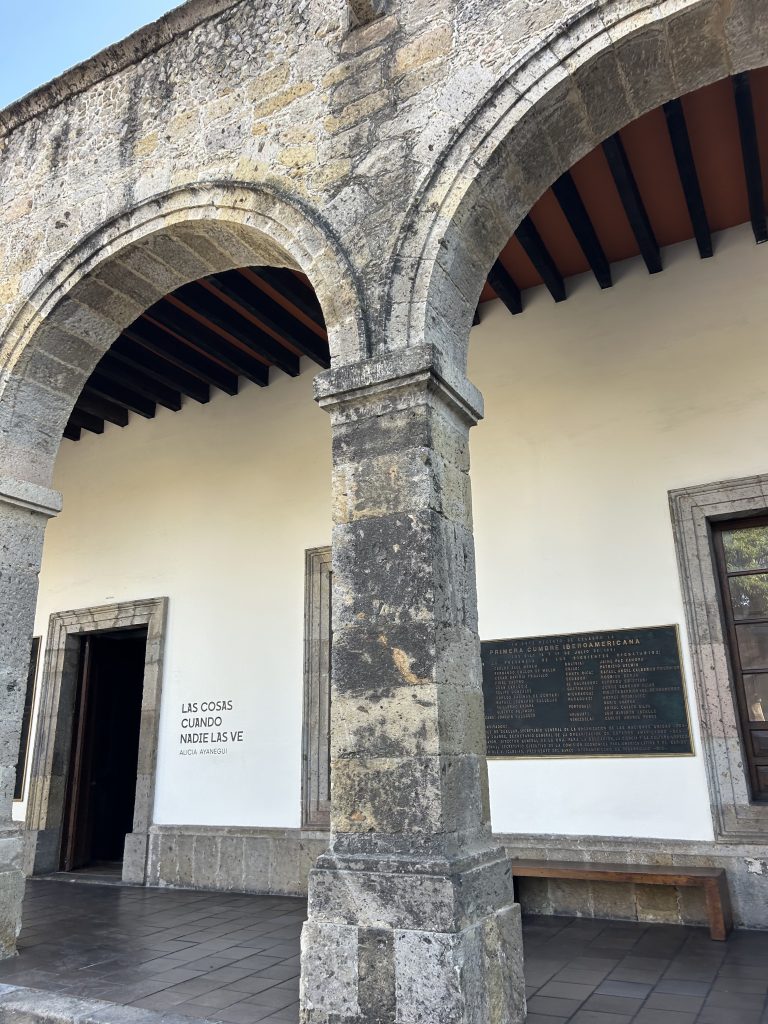
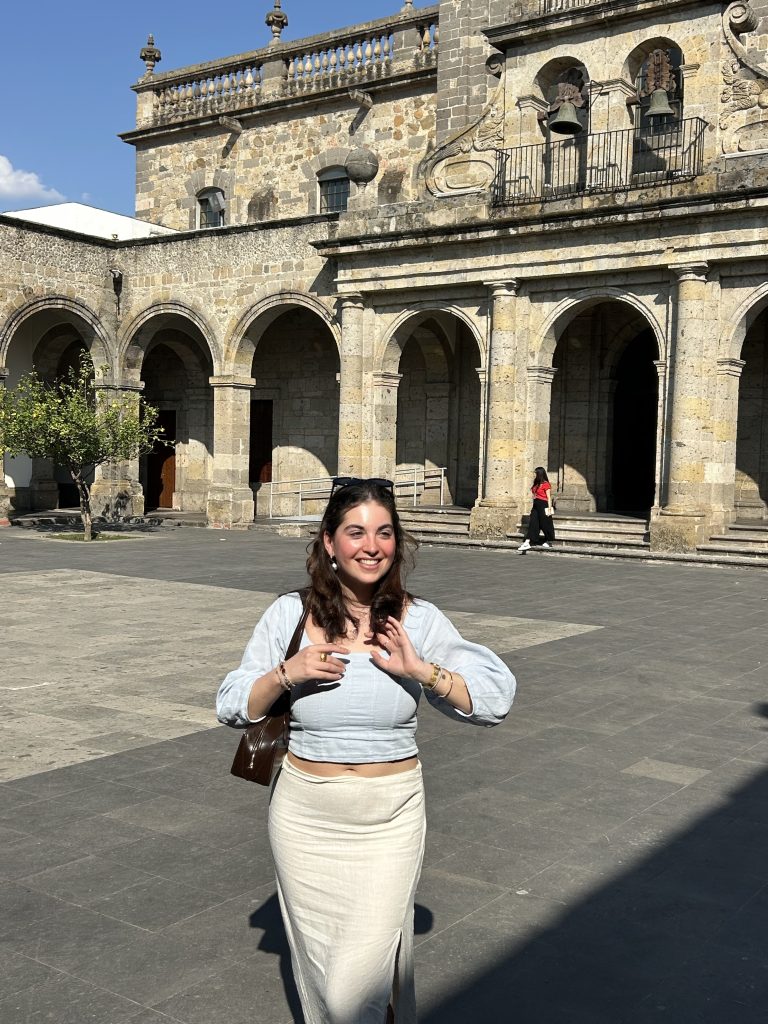
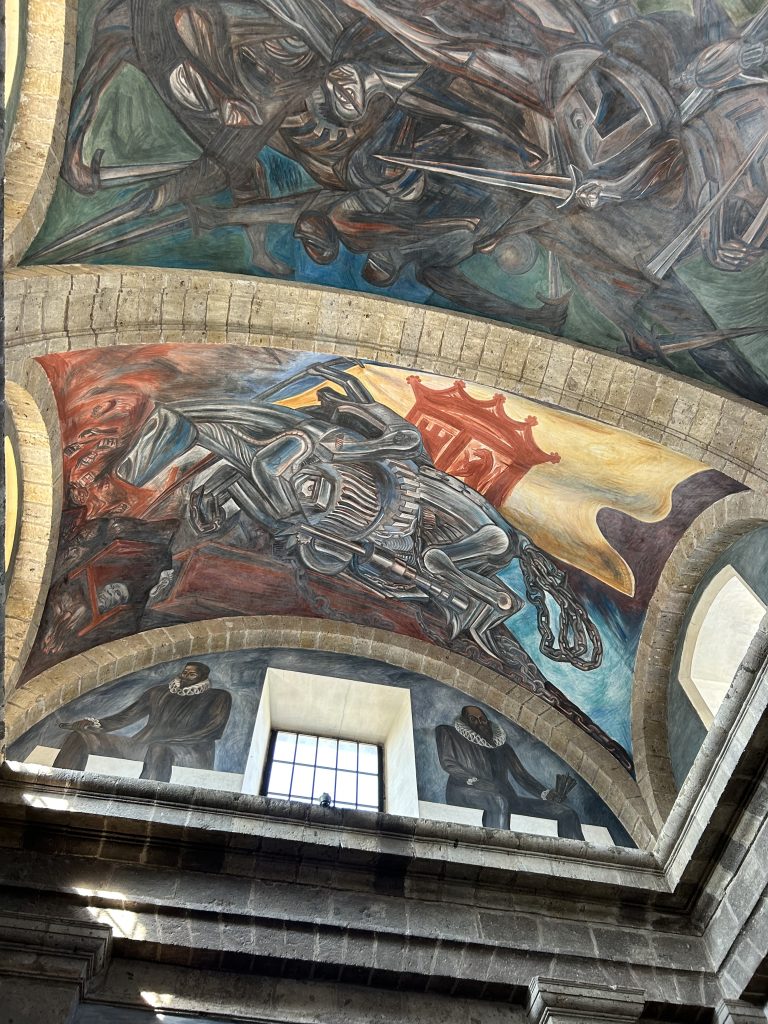
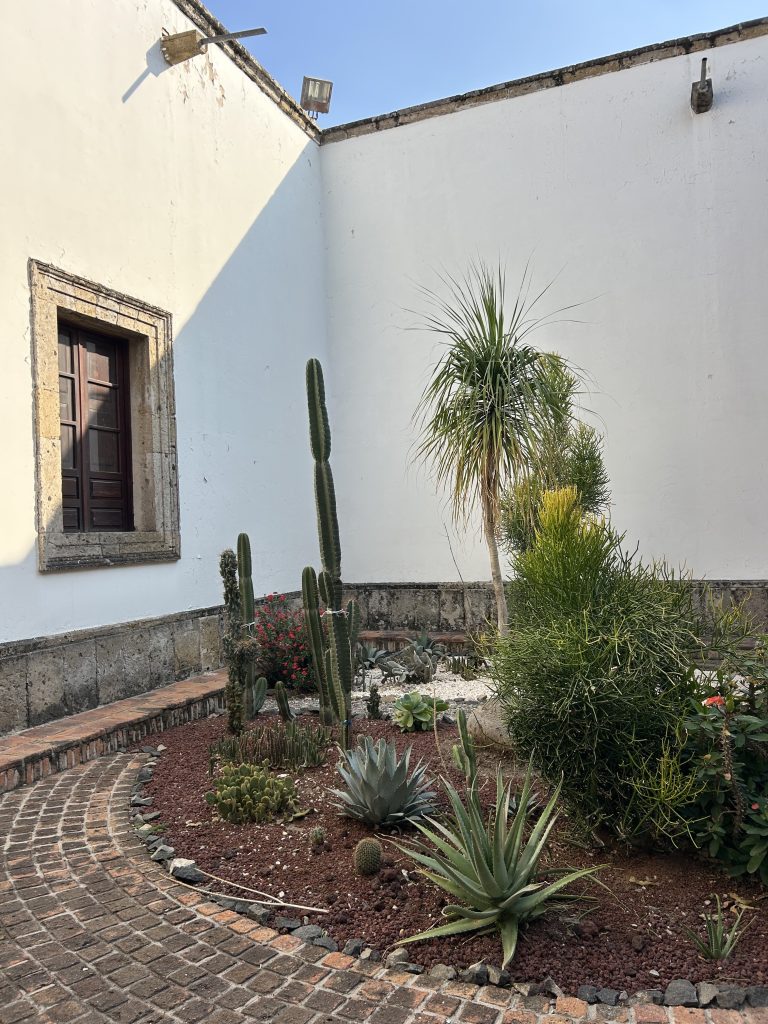
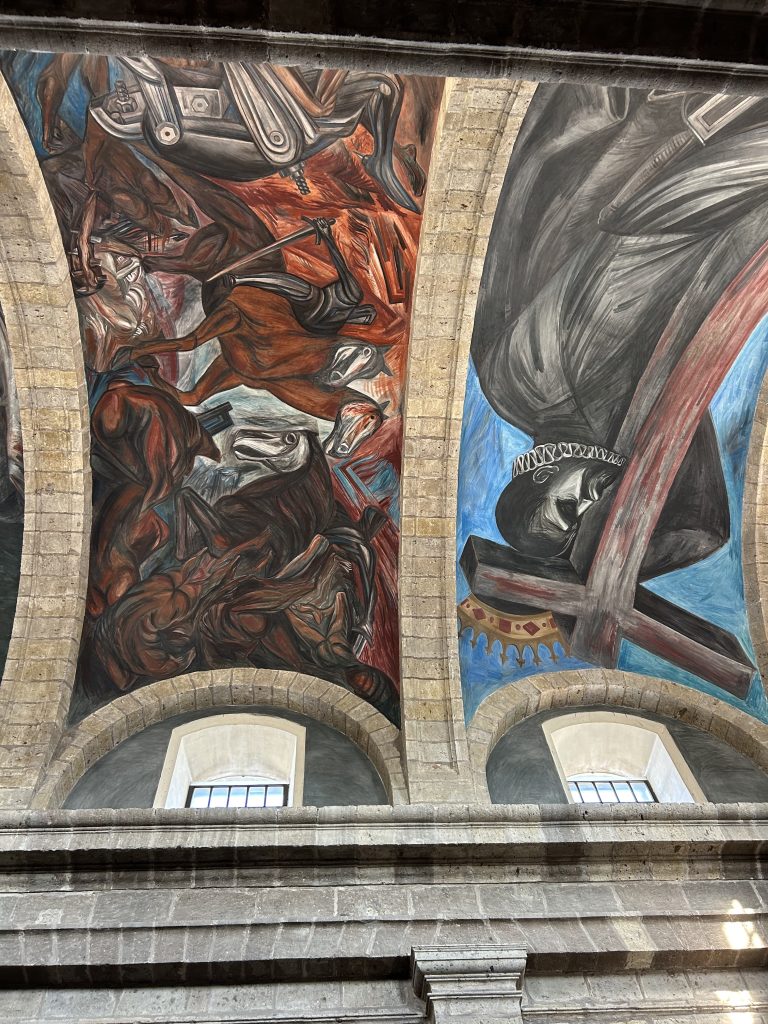
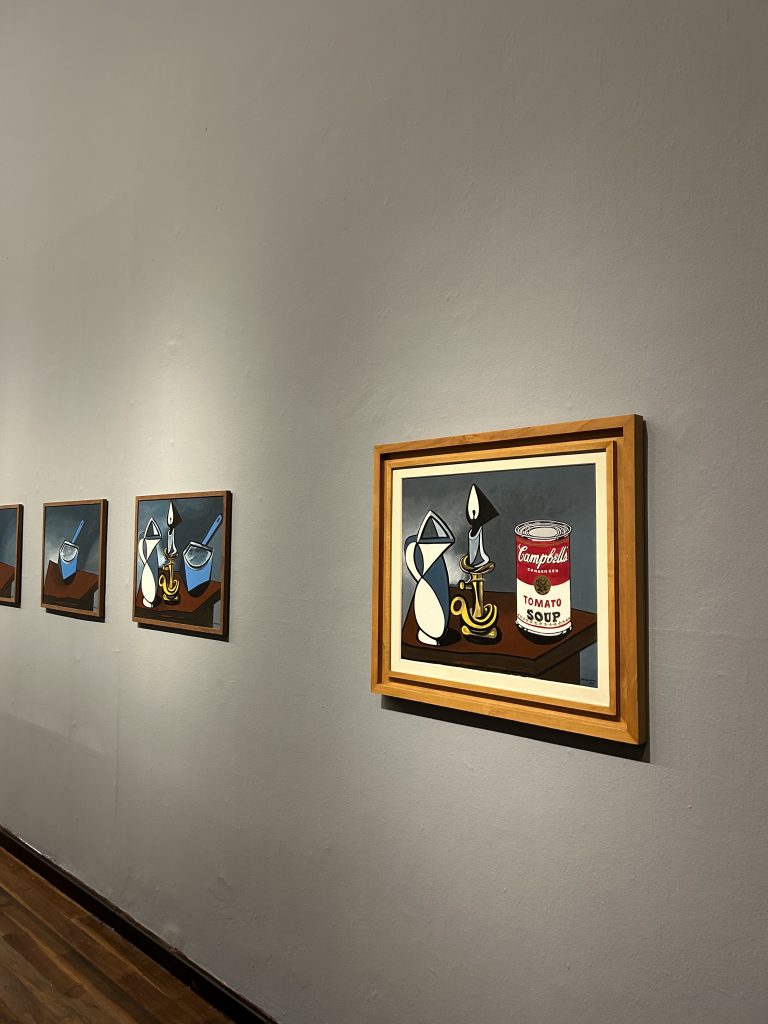
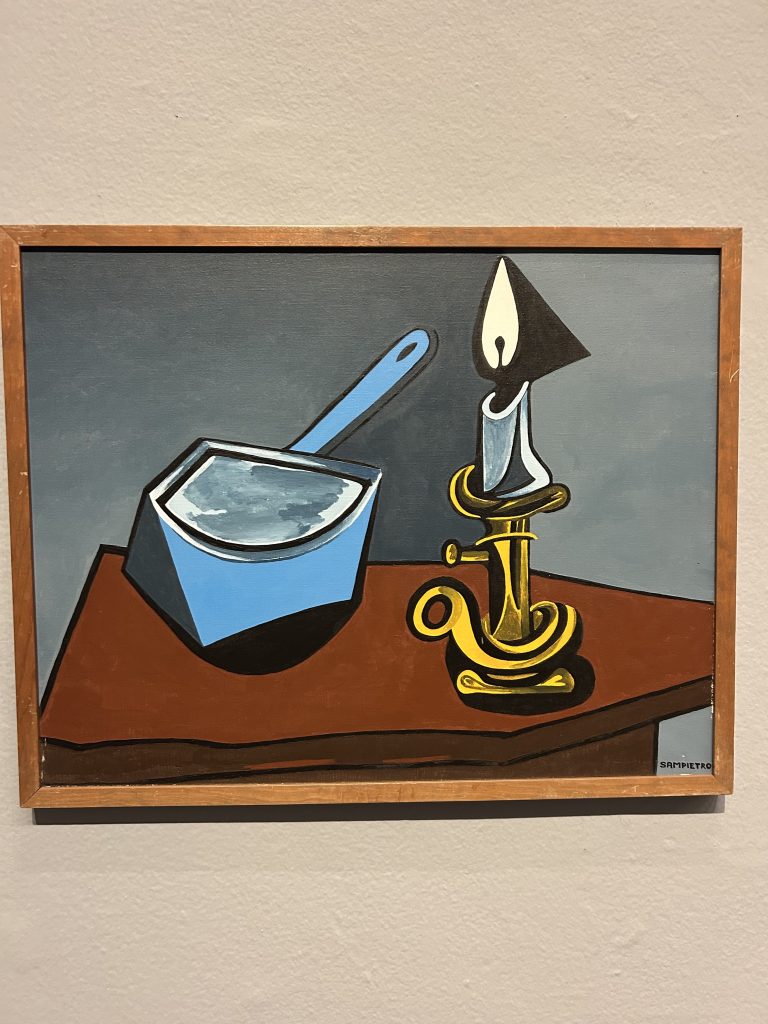
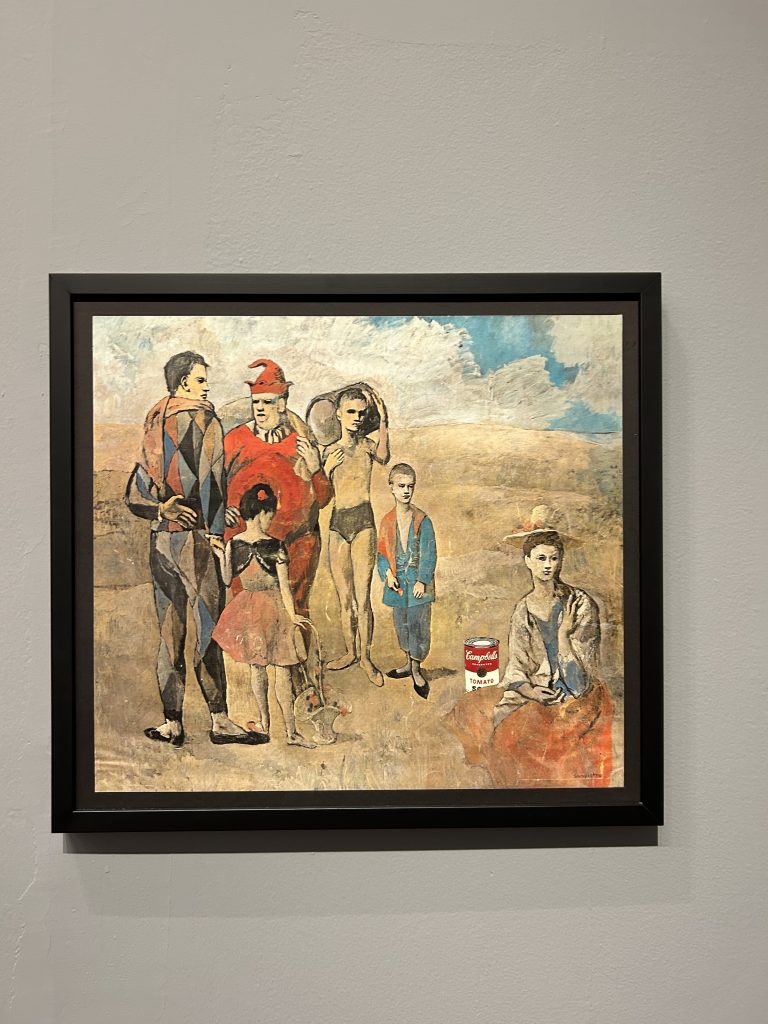
Museo Cabañas was one of the most memorable places I visited in Guadalajara, and I have found myself returning to it often in my thoughts. Walking through the complex, I became increasingly aware of the different emotions the space seemed to evoke. Some moments felt peaceful and contemplative, while others felt intense and emotionally demanding.
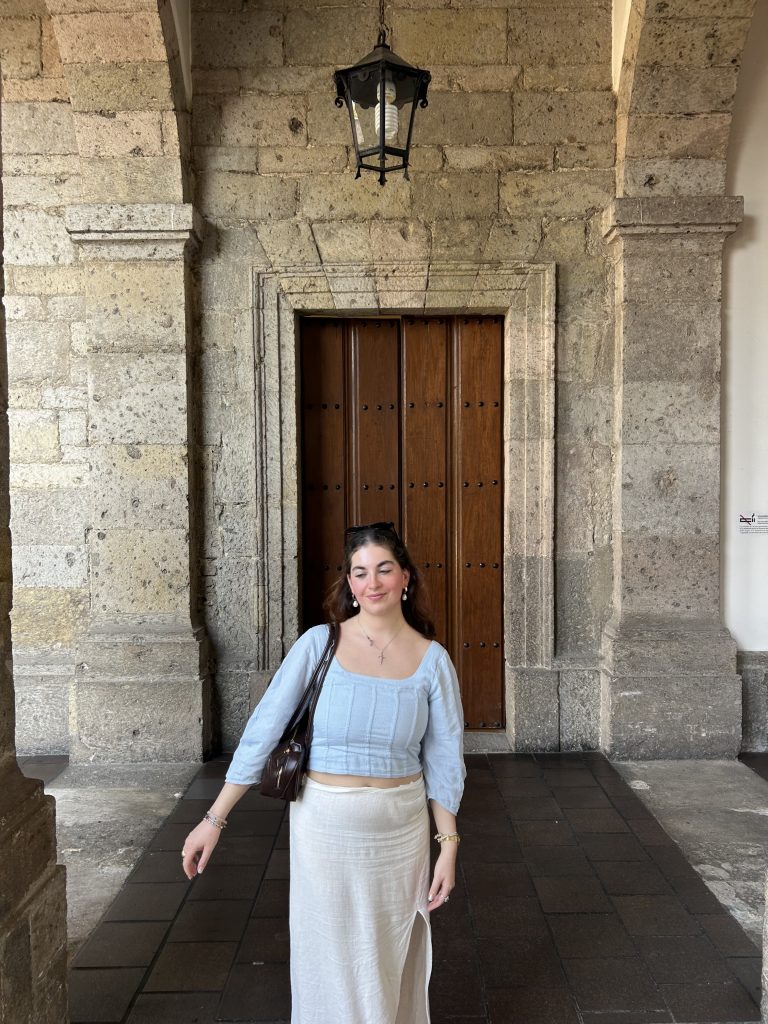
The architecture plays an important role in this experience. The open courtyards, long corridors, repeated arches, and careful symmetry create a sense of order and calm. The building encourages slow movement. There is light, space, and room to breathe. Moving through the courtyards, I often felt a sense of stillness that reminded me of monasteries, historic cloisters, or other places designed for reflection.
Inside the chapel and surrounding rooms, however, the atmosphere changes dramatically. The murals by José Clemente Orozco introduce an entirely different energy. They are powerful, emotional, and often unsettling. Themes of conflict, suffering, violence, sacrifice, and human struggle appear repeatedly throughout the work. Standing beneath The Man of Fire, I felt the scale of the mural physically. It is difficult not to be affected by its intensity.
I also found myself thinking about the history of the building itself. Originally constructed as an orphanage and hospital, Hospicio Cabañas was designed to care for society’s most vulnerable populations. Knowing this history changes the way one experiences the space. The architecture feels compassionate in its attention to light, air, and openness, yet it also carries traces of its institutional past. The long corridors and repeating forms can feel both welcoming and imposing at the same time.
What stayed with me most was the relationship between architecture and art. The building and the murals seem to speak different languages. One is ordered, restrained, and balanced; the other is emotional, urgent, and dramatic. Yet together they create something far more powerful than either could achieve alone. The calm geometry of the architecture makes the murals feel even more intense, while the emotional force of the murals draws attention back to the stillness of the surrounding spaces. I was also drawn to the repetition throughout the complex. The repeated arches, courtyards, and corridors create a rhythm that encourages observation. Walking through the museum felt almost meditative at times. The architecture constantly directs the eye toward light, shadow, and perspective, transforming simple movement through the building into part of the experience itself.
Leaving Museo Cabañas, what remained with me was not a single artwork or room, but a feeling. It was the experience of moving between stillness and intensity, between order and emotion. Few museums have left such a strong impression on me. The building is beautiful, certainly, but what makes it memorable is the way architecture, history, and art come together to create an experience that feels both visually striking and emotionally complex.