I visited the Guggenheim for the first time this past April during my New York trip. I had always wanted to see the building itself and went without a specific plan for what was inside, I did not know what exhibitions were there or who the artists were. Walking in, I came across Gabriele Münter: Contours of a World, an artist I had never really heard of before; I may have briefly seen her name in an art history class before but I had no memory of her work or having studied her in any depth.
That turned out to be a good thing. I usually visit museums for artists I already know well, which means I rarely get to approach work with completely fresh eyes. With Münter I had no prior knowledge and no opinions, just the paintings in front of me.
First Impressions
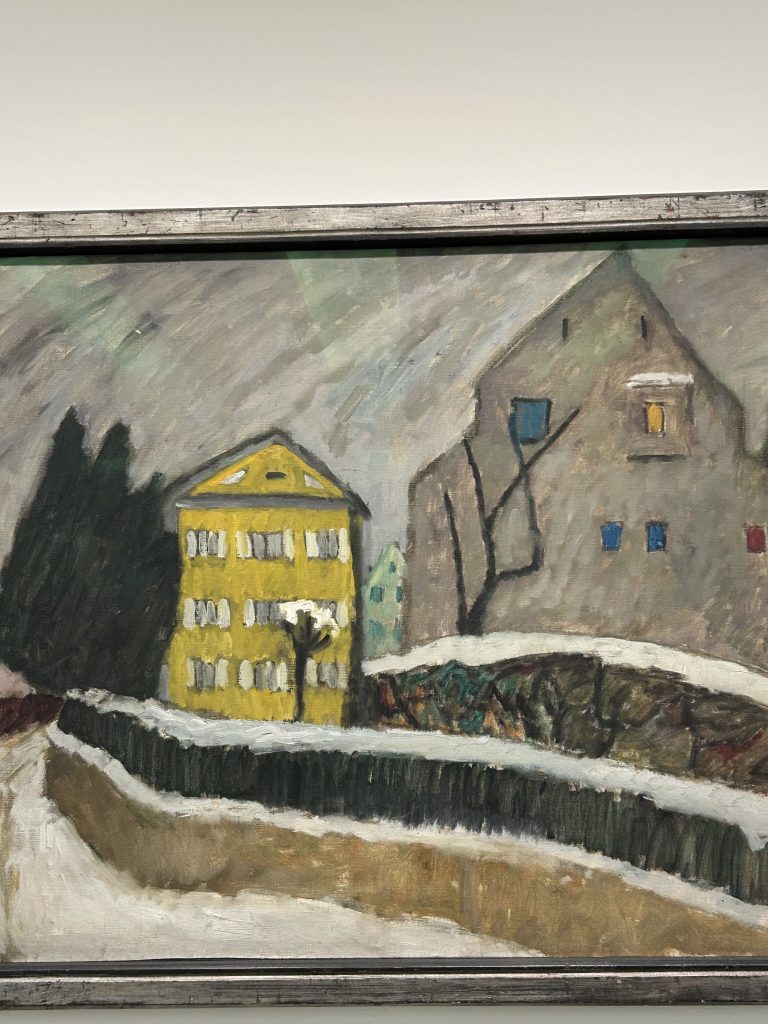
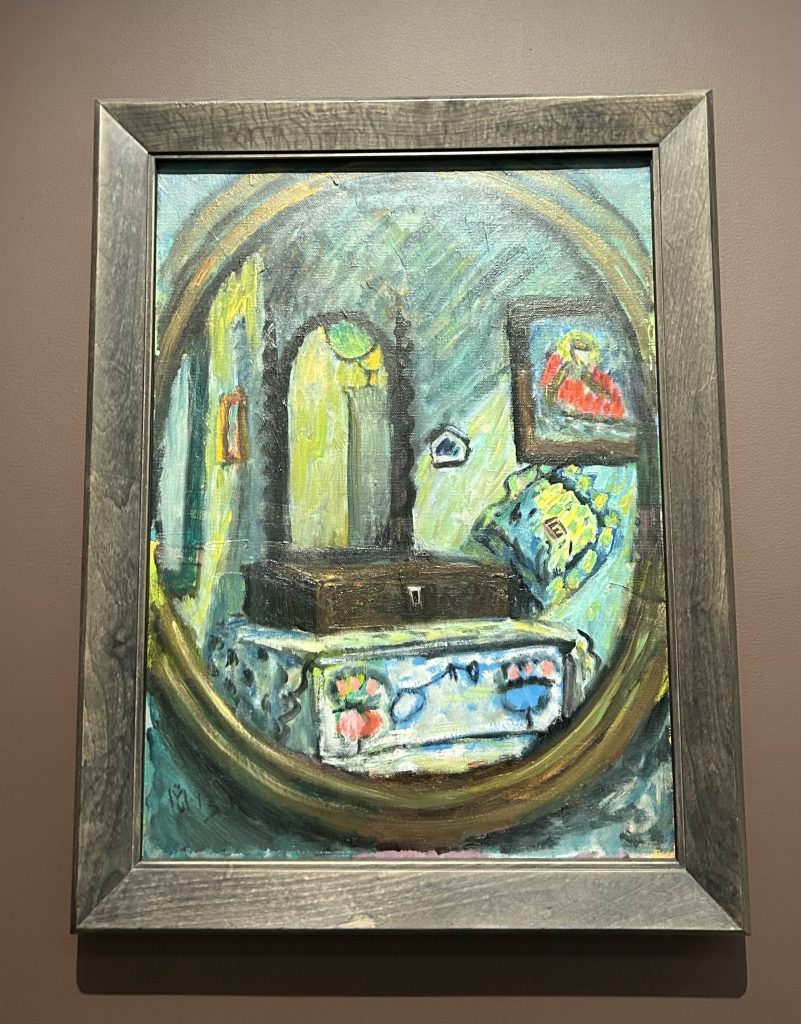
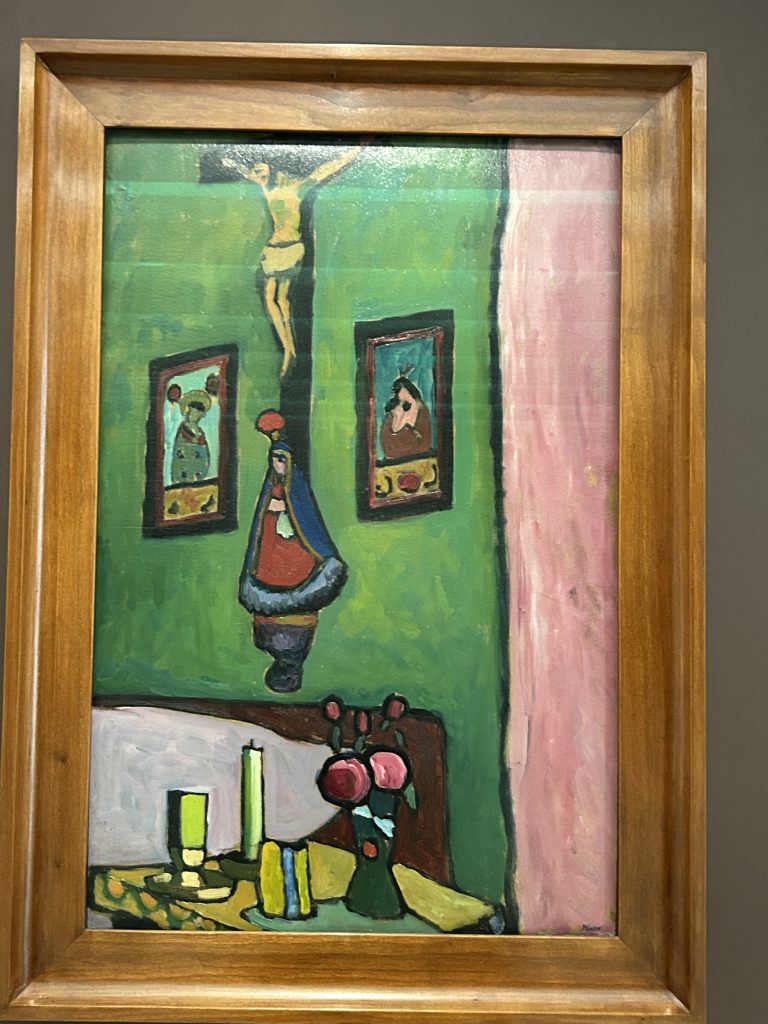
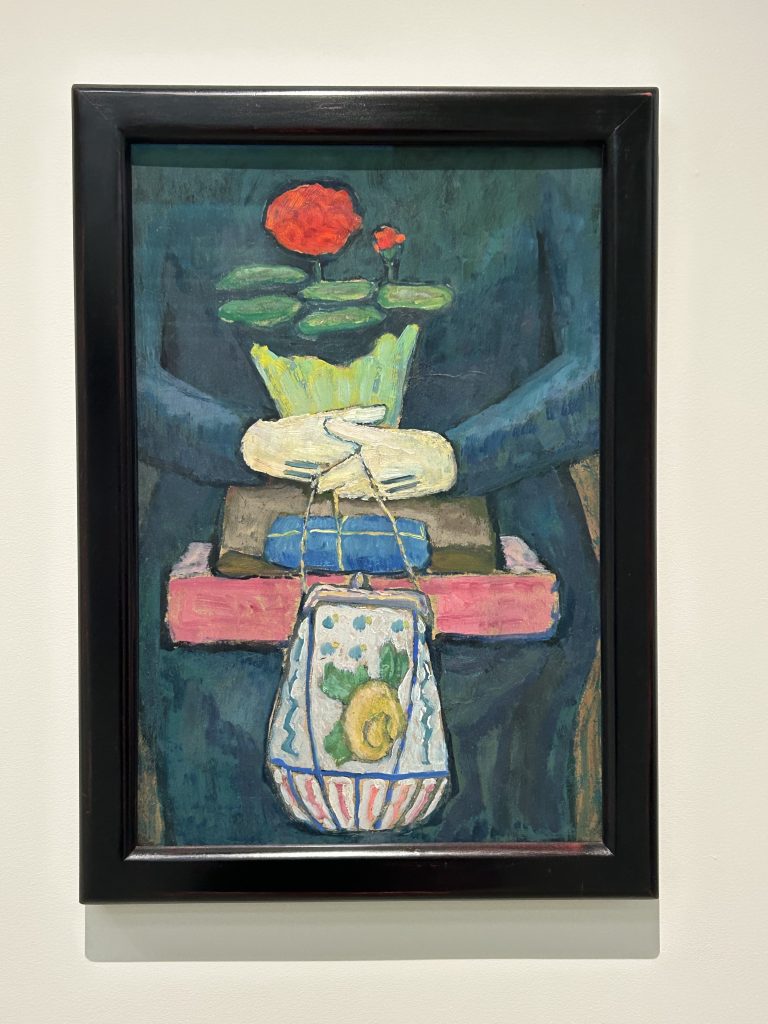
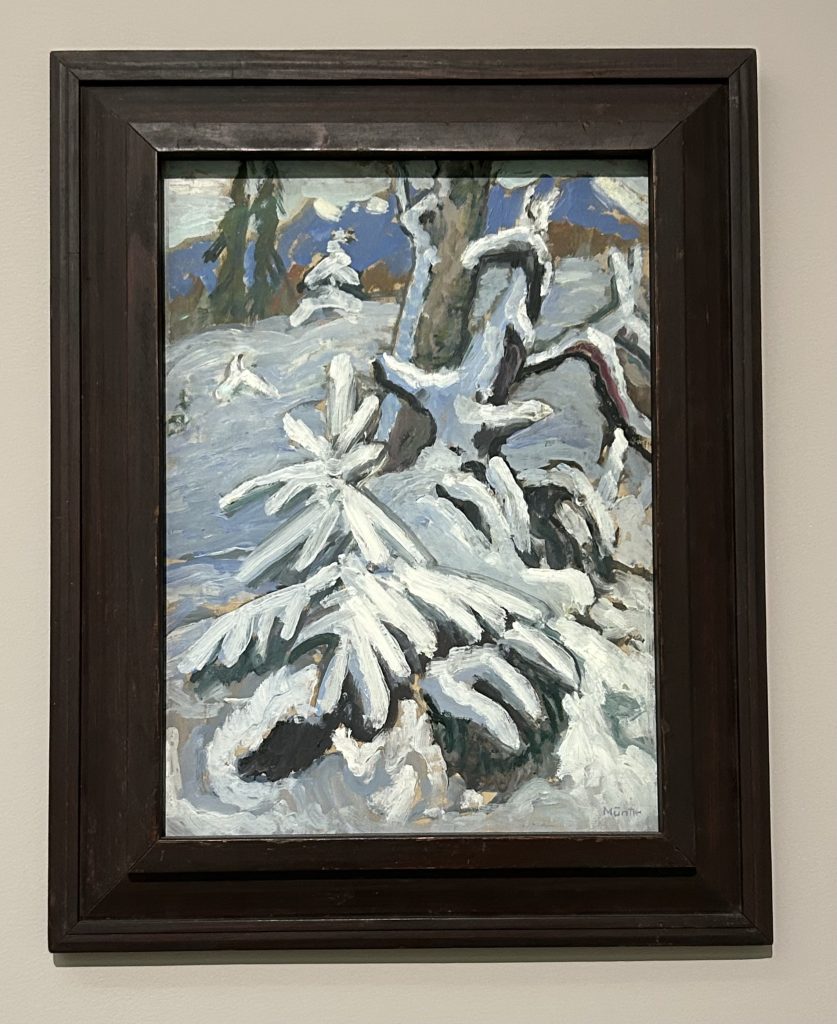
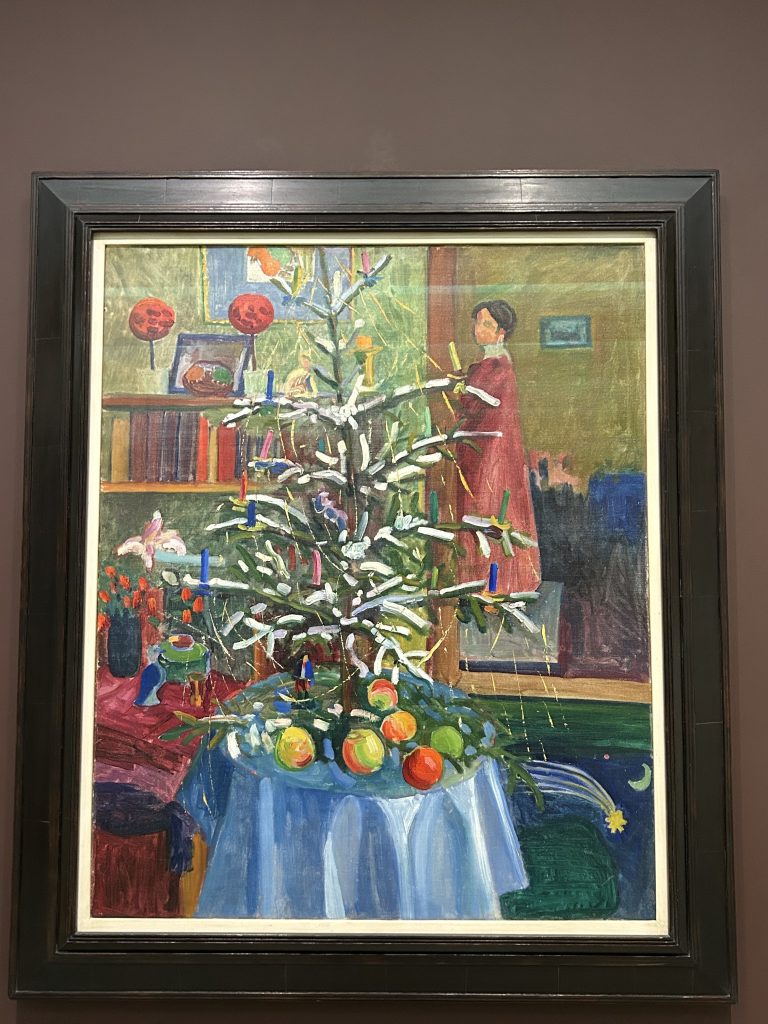
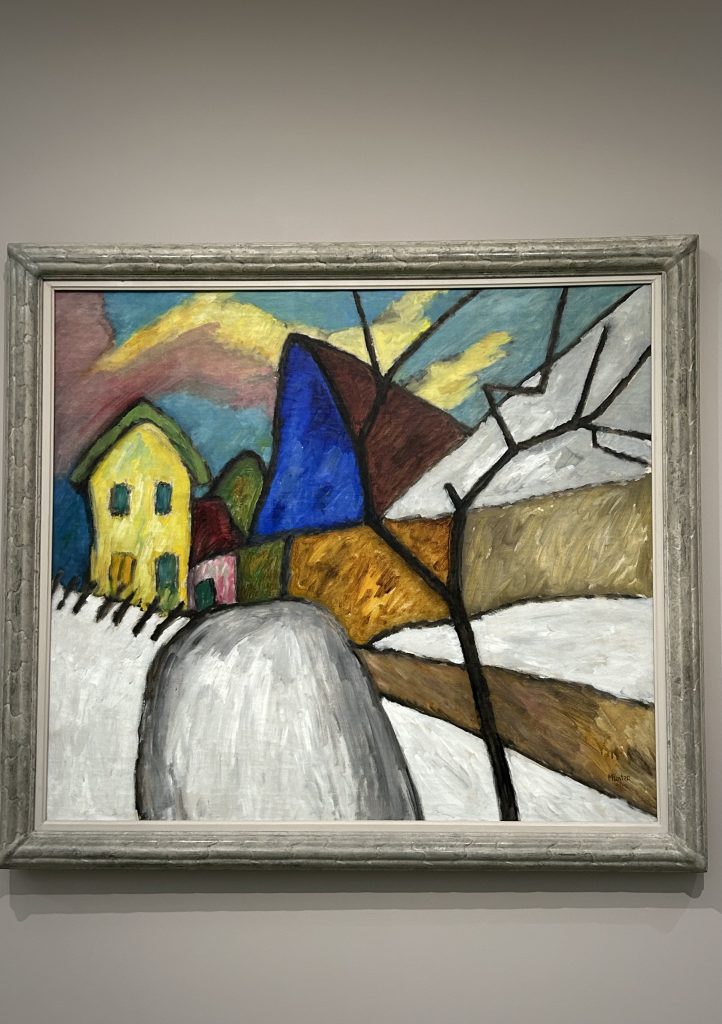
What drew me in immediately was the color, bold, confident, simplified forms in vivid combinations that felt both instinctive and controlled. Winter scenes, domestic interiors, portraits of women painted with a confidence and directness that caught my attention. I really enjoyed seeing a Christmas tree in one of her paintings, and just the interiors and scenes from daily life in general, there is something so calming and familiar in her work, a quality that made me feel at ease with it.
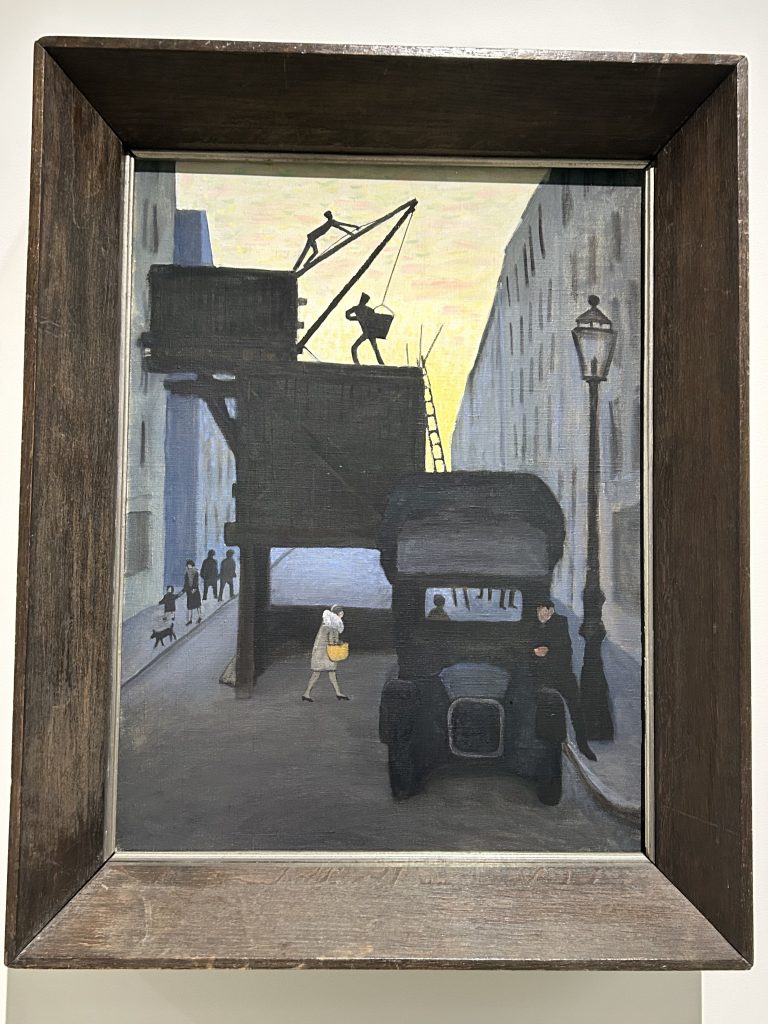
One painting stopped me for longer than the others, The Scaffolding, from 1930. It is not her most celebrated work and not typical of what she is best known for. It comes from a later period, after her Expressionist peak, when she was living in Paris and experimenting with something more urban. It depicts a construction scene, ordinary and everyday, but the light of the sky above it caught my attention completely.
Who She Was
Gabriele Münter was born in Berlin in 1877. She lost both parents young and traveled to the United States for two years with her sister in her early twenties, moving through Missouri, Texas, and Arkansas. During that trip she acquired a Kodak camera and took around 400 photographs, informal portraits, street scenes, landscapes, that already showed a strong and instinctive eye for composition and light.
Back in Germany she enrolled at the Phalanx School in Munich, where her teacher was Wassily Kandinsky. He recognized her talent immediately, telling her: “You cannot be taught anything. You have everything from birth.” Their professional relationship became a romantic one and they spent twelve years together, eventually settling in Murnau in the Bavarian Alps where they built a creative life alongside other artists of the time. It was in Murnau that something shifted in her work. As she described it herself: “After a short period of agony I took a great leap forward, from copying nature, in a more or less Impressionist style, to feeling the content of things, abstracting, conveying an extract.”
She was also one of the founders of Der Blaue Reiter (The Blue Rider) the German Expressionist movement that also included Franz Marc, August Macke, and Paul Klee. What made her approach distinctive within the group was that while Kandinsky and others moved toward pure abstraction, abandoning recognizable subject matter entirely, Münter stayed true to the visible world, people, places, everyday objects, believing that even the most ordinary scene must contain what she called the “inner life” of both the things portrayed and the artist who portrayed them. She contributed to the group’s almanac, handled correspondence, and had a say in the selection of works and authors. However, her name never appeared in the imprint, and she later said: “I imagine that nobody thought I had a say… Everyone saw me as the lady painter of the dozen.”
The Kandinsky Shadow
When World War I broke out, Kandinsky, unable to stay in Germany as a Russian national, fled to Switzerland and then continued on to Russia alone, leaving Münter behind. He promised to return but he never did. Münter moved to Stockholm, learned Swedish, connected with the Scandinavian art scene, and had exhibitions there, where her career was beginning to find its own trajectory. Then in 1916 Kandinsky came to Stockholm briefly, stayed a few months, and left again in March. His last postcard to her ended with “I kiss your hands, your Kandinsky”. She found out years later that he had remarried just months after they last met.
The years that followed were difficult. Germany had changed after the war, many friends had left or died, and the cultural life that had sustained her was gone. She wrote in 1922: “Those who stood with and behind me are now all celebrities, I was pushed aside.” A long legal dispute with Kandinsky over his belongings and artworks left in Germany added more frustration, and was only settled in 1926.
For a long time after, Münter’s work was discussed primarily in relation to that relationship. Her own contributions to Der Blaue Reiter were minimized and her decades of continued work after the movement ended were largely ignored. This is a pattern that comes up repeatedly in the history of women in art, the woman beside the famous man, her own work treated as secondary. Münter is one of the clearest examples of it in modern art history, and probably one of the reasons why I had always been familiar with Kandinsky’s work but never knew about Münter’s influence and work until I walked into that exhibition.
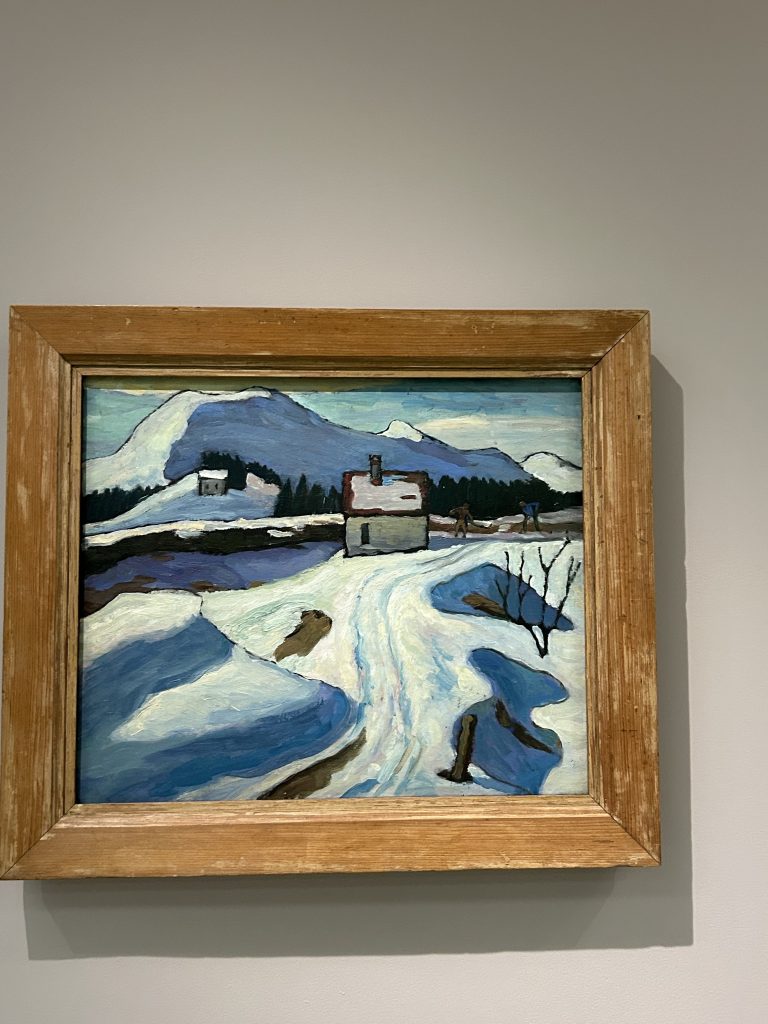
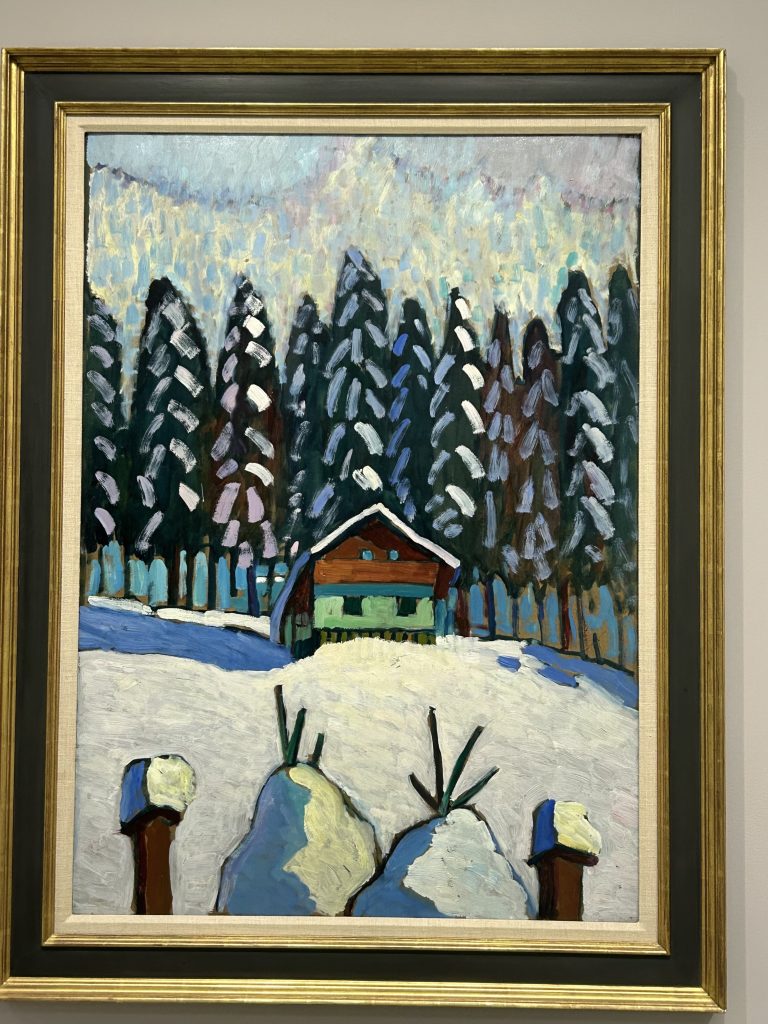
What She Did
She kept working through all of it. When the Nazi regime declared modernist art degenerate, she hid hundreds of works by Blue Rider artists in the basement of her house in Murnau. None were discovered. On her 80th birthday in 1957 she donated over 1,000 works from the Blue Rider and its circle to the Städtische Galerie im Lenbachhaus in Munich. She died in Murnau in 1962 at 85.
Why This Exhibition Mattered
Gabriele Münter: Contours of a World was the first major exhibition dedicated to her work in the United States in nearly thirty years, featuring over sixty paintings and nineteen photographs without Kandinsky as the reference point.
Women artists who worked alongside famous men have often had their contributions minimized or overlooked entirely. This exhibition was a correction of that, a way to emphasize her contribution, the central role she played, and the remarkable body of work she produced across more than six decades. I find it interesting that the work was always there. The attention just took a while to follow.
A Final Note
I left thinking about how rarely I get to encounter an artist for the first time with no prior knowledge or expectations. I was drawn to her work before I knew her story, and then her story changed how I looked at the work. That combination is one of the things I find most valuable about spending time in museums.