On the old citadel, Mediterranean summers, and the wild landscape of southern Corsica.
Bonifacio is one of those places I love returning to during summer. I have been there several times, coming from Sardinia by ferry, and every time I go I am reminded of how much I love this part of Corsica.
There is something very distinctive and unique about Bonifacio that I find difficult to compare to other Mediterranean towns. It can feel incredibly elegant, especially around the marina, where restaurants face the water and yachts fill the harbor during the summer. But at the same time, Bonifacio still feels incredibly close to nature and wild. The old town sits high above the sea on its white limestone cliffs, and once you move a little farther away from the center, you are quickly surrounded by rocks, Mediterranean vegetation and open landscape.
I think that contrast is one of the things I love most about it. Bonifacio has the beauty and elegance I associate with Mediterranean summers, but it has never felt overly polished to me. There is still something very wild about the landscape around it.
A Town Above the Sea
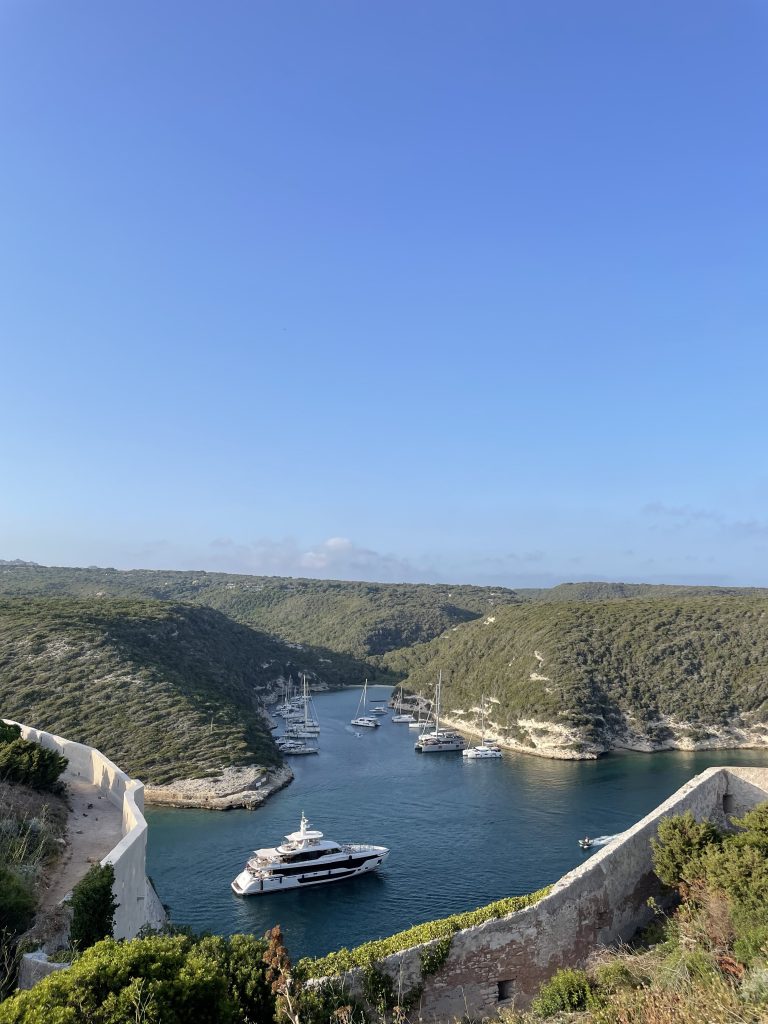
The first thing that makes Bonifacio so recognizable is its location. Bonifacio is located at the very south of Corsica, with the old town sitting high above the sea on its famous limestone cliffs. Some of the buildings are built incredibly close to the edge, which is one of the things that makes the town so beautiful and unusual. From the water, you can see the old citadel above the cliffs and the harbor below.
The cliffs are not just a beautiful part of the landscape. They are also closely connected to the way Bonifacio was built and to its history. Its position high above the sea made Bonifacio an important fortified settlement, and the old citadel still dominates the town today.
The relationship between the architecture and the rock is probably one of the things I find most beautiful about Bonifacio. You are constantly aware of the landscape around you. There are streets that suddenly open onto views of the sea, buildings sitting directly above the cliffs, and paths that make you realize just how high above the water you actually are. The most striking example is the Escalier du Roi d’Aragon, a staircase of 187 steps cut directly into the limestone cliff. There are different legends surrounding its history, but simply seeing a staircase carved into the side of the rock says a lot about the unusual geography of the town.
And across the water, on clear days, you can see Sardinia. Coming from Sardinia myself during the summer, I always find that proximity fascinating. The two islands are separated by the Strait of Bonifacio, yet standing at the southern edge of Corsica and seeing Sardinia in the distance makes them feel incredibly close.
Inside the Vieille Ville
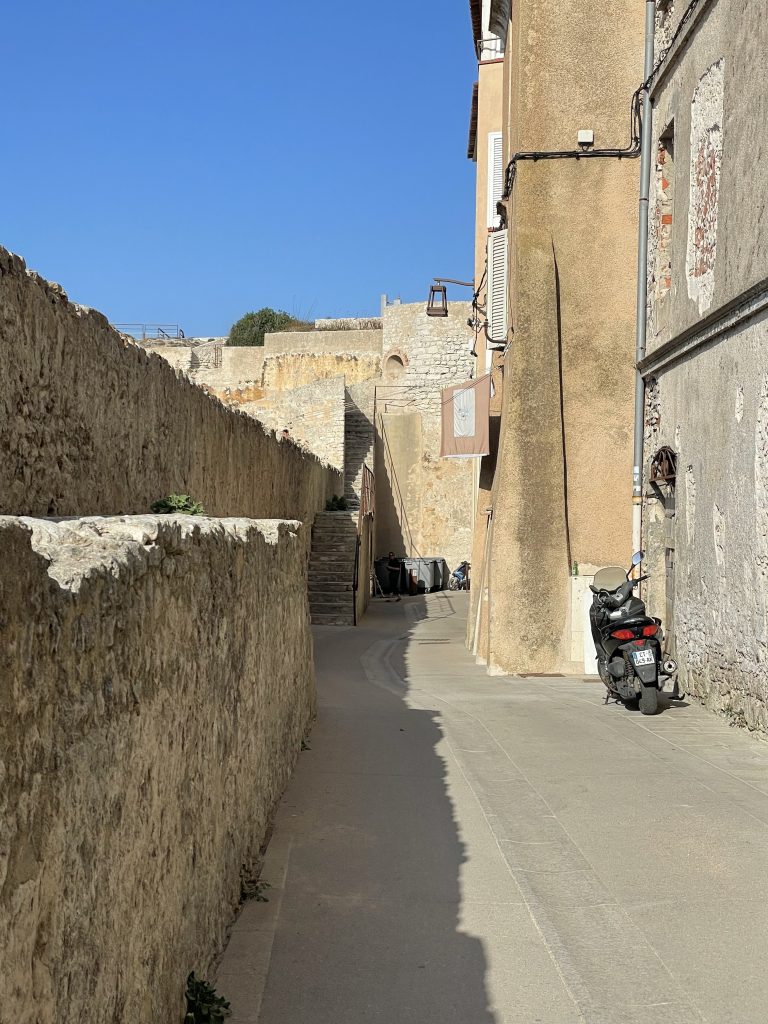
Once you enter the Vieille Ville, Bonifacio feels so unique.
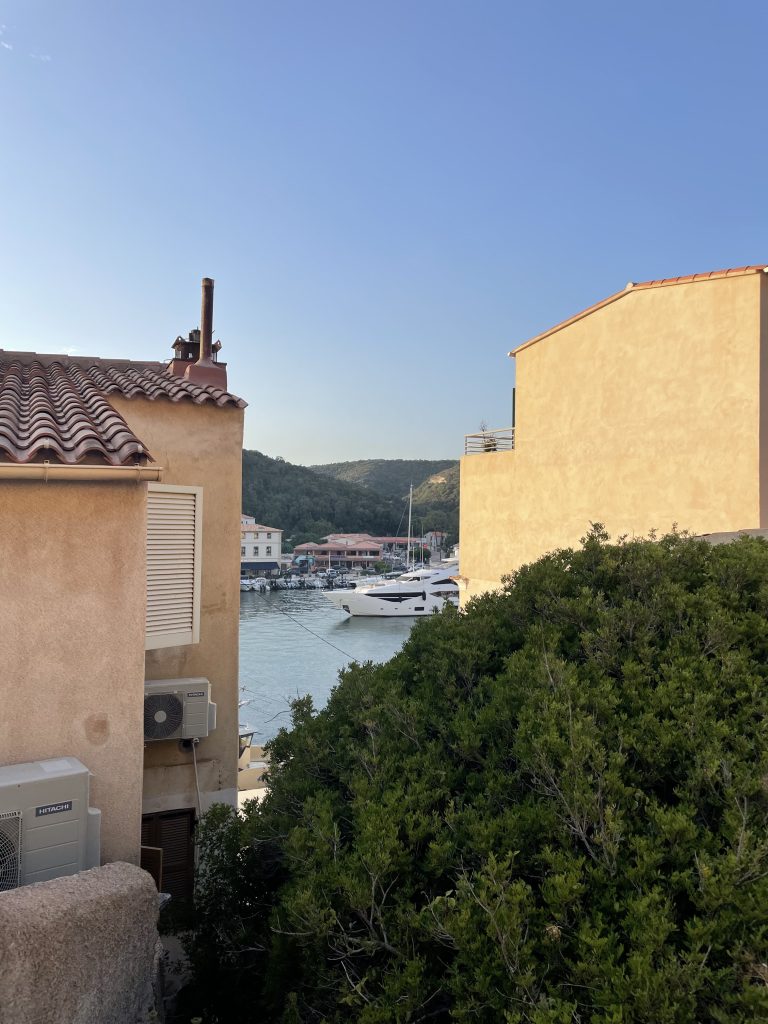
The old town is contained within the historic citadel, with narrow streets and alleyways running between old stone buildings, churches and small squares. One of my favorite things about the center is actually all the small boutiques and independent stores you find as you walk around. There are shops selling clothes, jewelry, ceramics, baskets, homeware and other locally made pieces, mixed between cafés and restaurants. I always enjoy stopping and looking inside them, and they make walking through the old town feel very different from walking through a center dominated by the same stores you could find anywhere else.
I think this is another part of Bonifacio’s elegance that I like. It isn’t necessarily about large luxury stores or something particularly extravagant. It is more in the combination of the old buildings, small boutiques, restaurants and people walking through the narrow streets during the summer.
There is also so much history around you. The citadel, churches, old houses and fortifications are reminders that this was a strategic town long before it became the summer destination it is today. Bonifacio’s history has been particularly shaped by Genoese rule, which left an important mark on the old town and helps distinguish it from other places in Corsica. Genoese control of the town began in the Middle Ages and lasted, with interruptions, for centuries. You can still see traces of this history when walking around the old citadel. One of them is the Porte de Gênes, the old entrance to the citadel. For a long time, this was the only way into the fortified town, reached by a drawbridge. Another detail I found interesting is Rue des Deux Empereurs. The street takes its name from two very different visitors to Bonifacio: Charles V stayed there in 1541 and Napoleon in 1793. The houses associated with their stays are still there, although they are not open to visitors.
These are the kinds of details I like discovering when visiting old towns. You can easily walk through Bonifacio simply looking at the buildings, shops and views, without realizing how much history is behind some of the streets and entrances you are passing.
Down by the Marina
Then there is another side of Bonifacio at the bottom of the citadel.
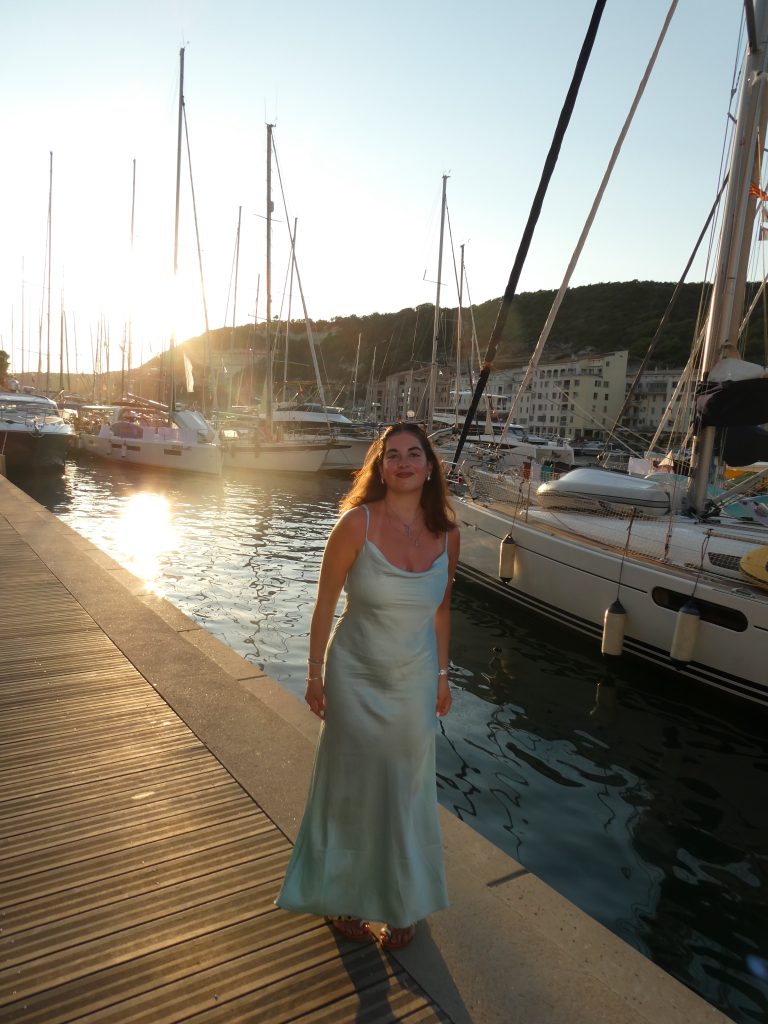
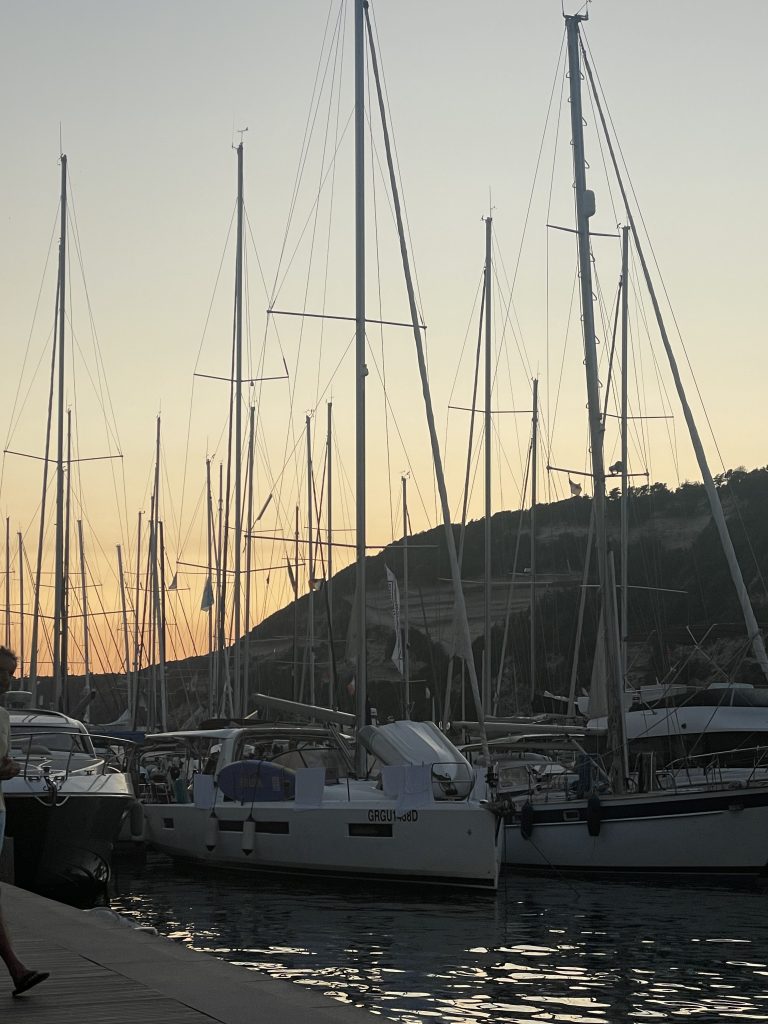
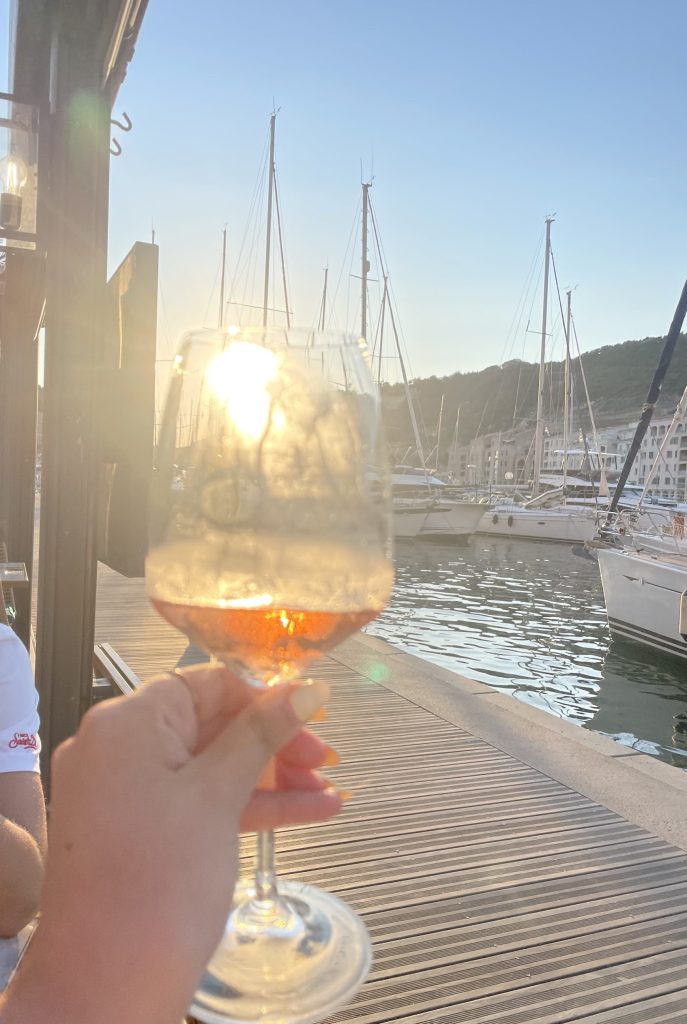
The marina is probably where you feel the more glamorous side of the town most clearly. During the summer, the harbor is full of yachts and boats, while restaurants and cafés line the waterfront. I love sitting outside for dinner or a drink with the boats directly in front of me and the old town rising above.
It can feel very elegant, but the cliffs and citadel are still there above you, so you never really lose sight of the landscape around Bonifacio.
The Wilder Side of Bonifacio
This is probably the side of Bonifacio I love the most.
Nature is one of the things I love most about Corsica. Even around Bonifacio, you are constantly surrounded by rocks, Mediterranean plants and the sea, and everything feels very open and natural. I especially love the rocks around Bonifacio. The pale limestone is very different from the darker rocks you see in other parts of Corsica, and it gives this part of the island such a particular look.
You can leave the marina and the center behind and very quickly find yourself driving through a much quieter landscape. There are small roads surrounded by vegetation, stretches of countryside and places where you can see very little development at all. It is one of the things I notice every time I am in Corsica. Even in areas that have become popular summer destinations, nature still feels very present. And I think this is part of what makes Bonifacio work so well for me. I love beautiful hotels, restaurants by the water, boutiques and the elegance of the marina, but I also really need that feeling of being surrounded by nature.
Looking at Bonifacio from Cala di Greco
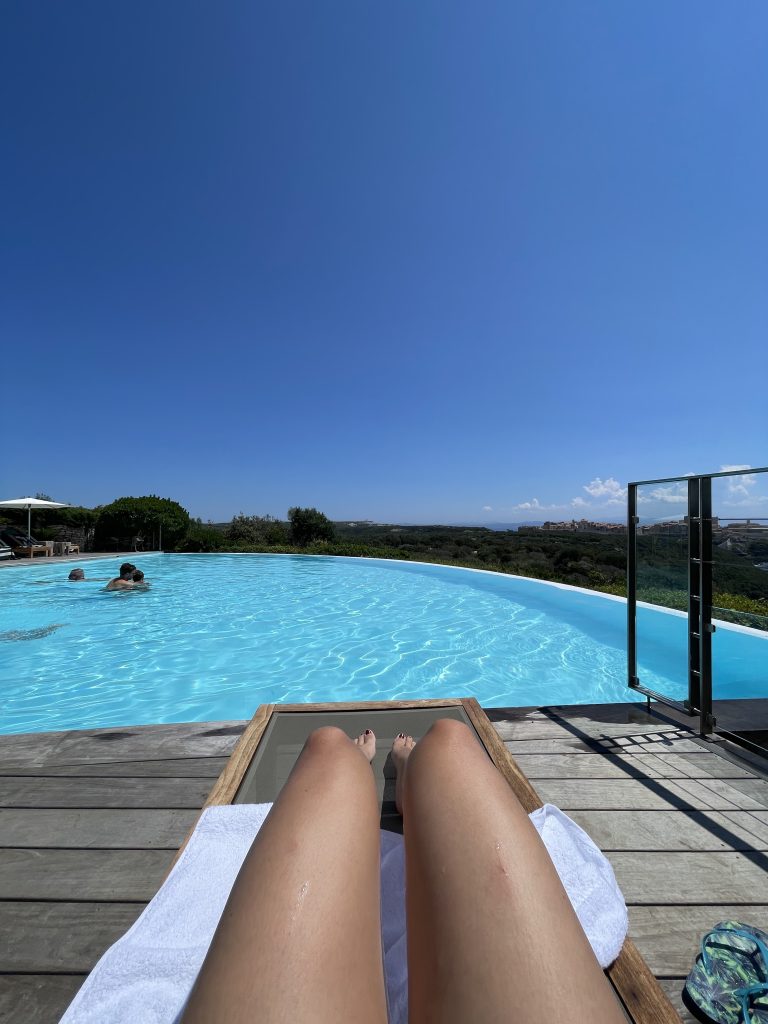
One of my favorite stays in Bonifacio has been at Cala di Greco, a small boutique hotel just outside the center.
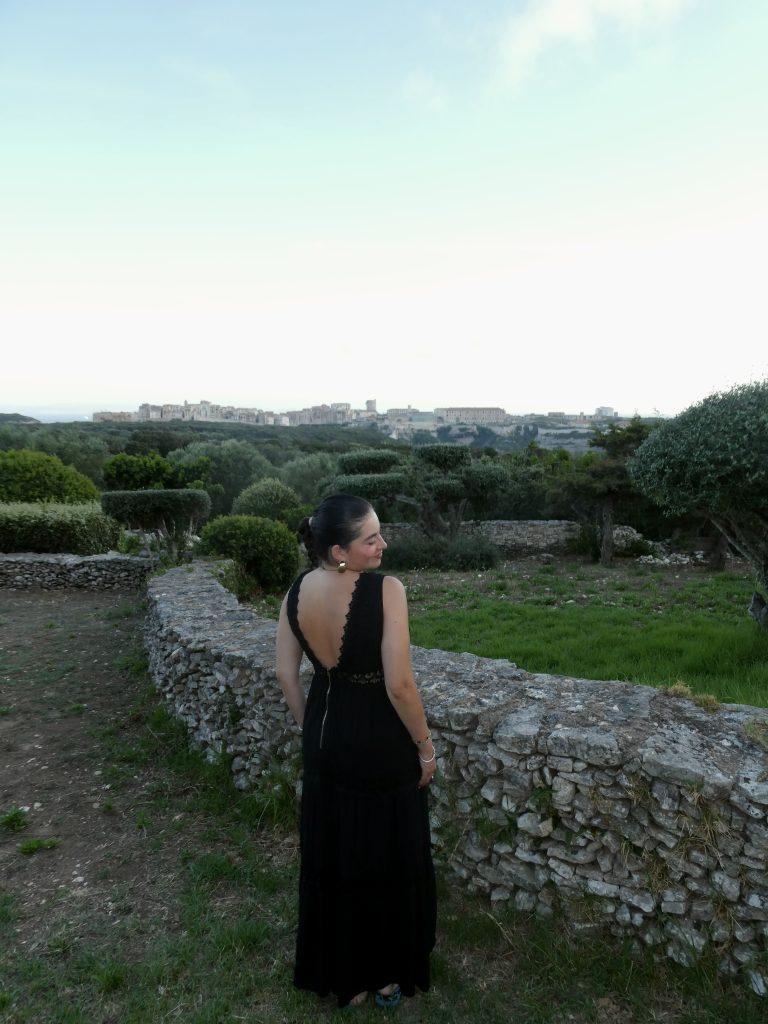
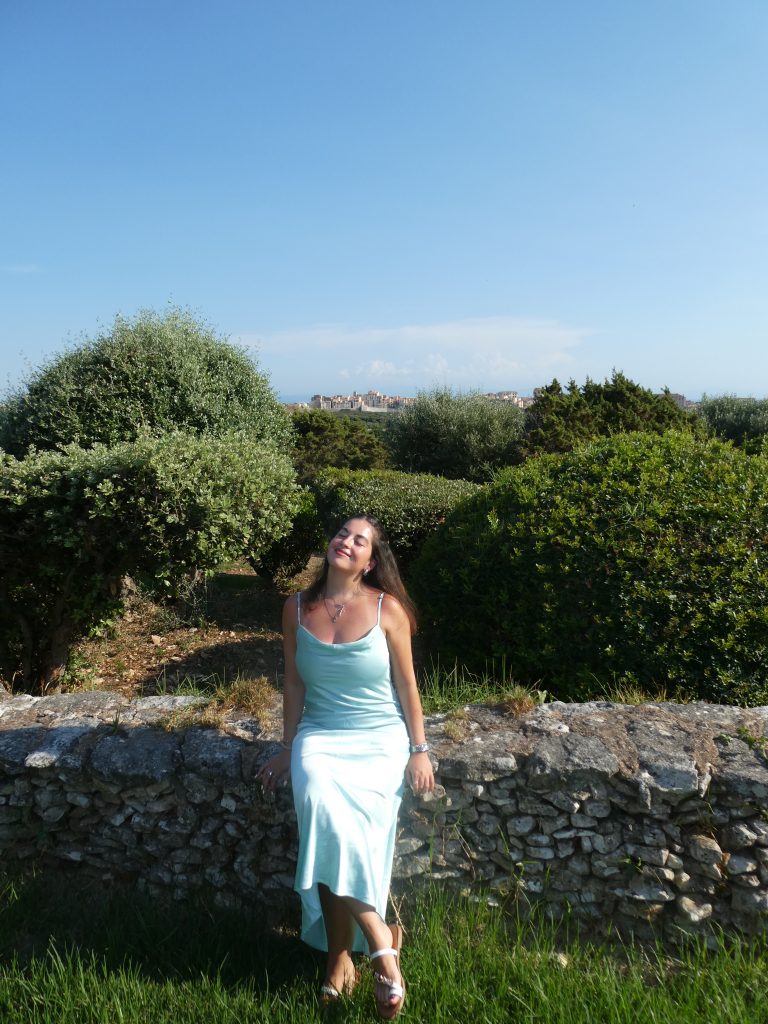
The location is probably what I loved most about it. You are removed from the activity of the old town and marina and surrounded by a much quieter landscape, but in the distance you can see Bonifacio itself, with the old citadel sitting above the limestone cliffs.
I will never get tired of this view. There is something particularly beautiful about seeing Bonifacio from a distance. When you are inside the old town, you experience its streets, buildings and shops, but from Cala di Greco you can actually see the extraordinary position of the town as a whole.
I also liked how much the hotel itself felt connected to the landscape around it. Rather than being directly on the busy waterfront, it gave me that feeling I love in Corsica of having space around me and being surrounded by nature, while still being close enough to go into Bonifacio for dinner or spend the evening walking around the old town.
For me, it was probably the best way to experience the two sides of Bonifacio that I love: the quieter landscape during the day and the energy and elegance of the town during the evening.
Between Corsica and Sardinia
I think my relationship with Bonifacio is also inevitably connected to Sardinia.
The two islands are incredibly close at this point of the Mediterranean, and traveling between northern Sardinia and southern Corsica makes you realize how connected these landscapes are. There are similarities in the sea, vegetation, food and way summer life revolves around the coast, but Corsica has always felt different to me.
It feels more mountainous and, in many places, wilder. There is something about driving through Corsica that makes me feel particularly surrounded by nature. Bonifacio also has a fascinating history. Although today it is part of France, the town was under Genoese control for centuries, and this influence can still be seen throughout the old town.
What I Love About Bonifacio
I think Bonifacio has simply become one of my favorite places to spend time during the summer and come back. I love going into town, walking around the little shops, having dinner by the marina, but also just being outside and enjoying the landscape around us. After visiting several times, it feels familiar to me now, but I still enjoy it just as much every time I am there.