On Baroque interiors, extraordinary gardens, and one of the most beautiful places I have visited in Italy.
Palazzo Borromeo on Isola Bella is probably one of my favorite places I visited recently. Isola Bella is a beautiful place, located on Lake Maggiore, the second-largest lake in Italy and home to the famous Borromean Islands. Of all the islands, Isola Bella is probably the jewel of the lake and, in my opinion, one of the most beautiful places in northern Italy.
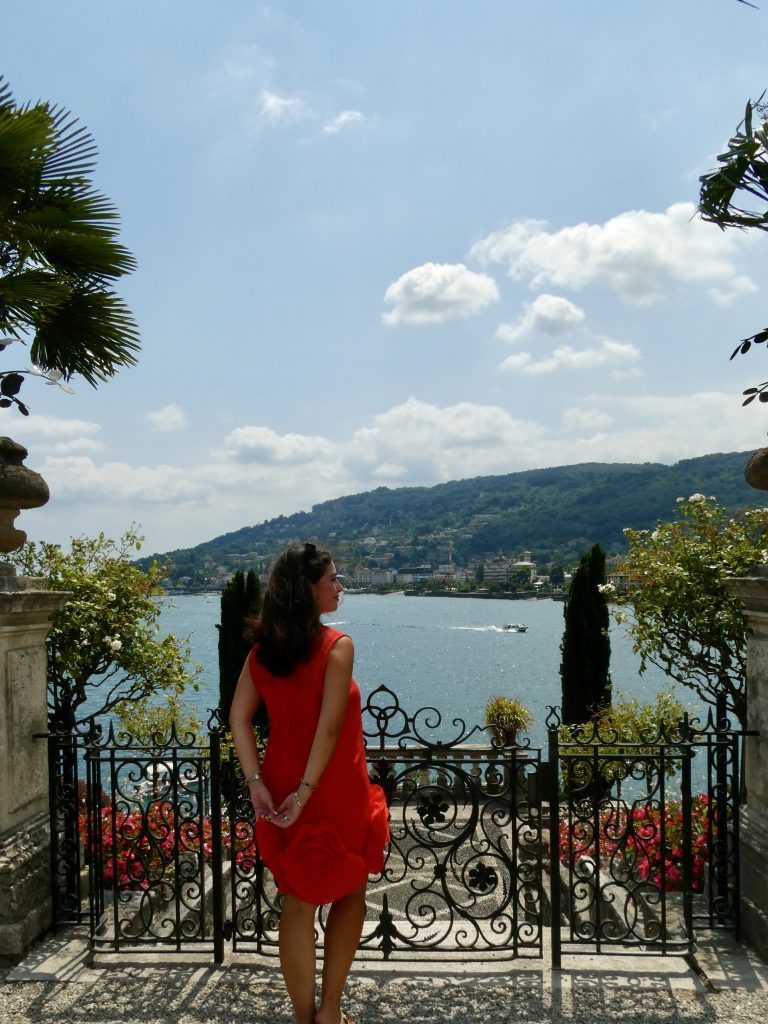
My favorite part of the island is, of course, Palazzo Borromeo. This summer, while I was walking through the palace, I genuinely felt like being inside a fairy tale, especially once we reached the gardens outside. Between the terraces, statues, flowers, white peacocks and other birds around, and with the beautiful view of Lake Maggiore, the entire place seemed so dreamlike.
I did not only loved the place, but also the history behind it. Isola Bella wasn’t always this elaborate island covered by a Baroque palace and gardens. Its transformation began almost four centuries ago, and the palace we see today is the result of generations of the Borromeo family continuing to build and change the island.

From a Fishing Island to Isola Bella
Before the seventeenth century, Isola Bella looked very different. The small island was home to a fishing village and two churches. It was known as Isola Inferiore or Isola di Sotto.
That began to change in 1632, when Carlo III Borromeo commissioned the construction of a palace on the island and renamed it Isola Isabella in honor of his wife, Isabella D’Adda. Over time, the name became the Isola Bella we know today.
Carlo III Borromeo initially commissioned the Milanese architect Giovanni Angelo Crivelli to oversee the construction, but the project would eventually involve numerous architects and artists. Work slowed considerably during the plague that struck the Duchy of Milan in the seventeenth century and was later taken up again under Carlo III’s son, Vitaliano VI Borromeo. The project continued to develop over generations. Parts of the palace were still being completed centuries after construction first began, with work on the Great Hall continuing into the twentieth century.
One of my favorite things I learned about Isola Bella is that the palace and gardens were not really conceived as separate from the island around them. The intention was to transform the entire island into something resembling a ship floating on Lake Maggiore, with the palace forming the bow at the front and the terraces and gardens forming the stern at the back.
It makes the scale of the project even more remarkable. This very small island was gradually transformed into one enormous architectural composition.
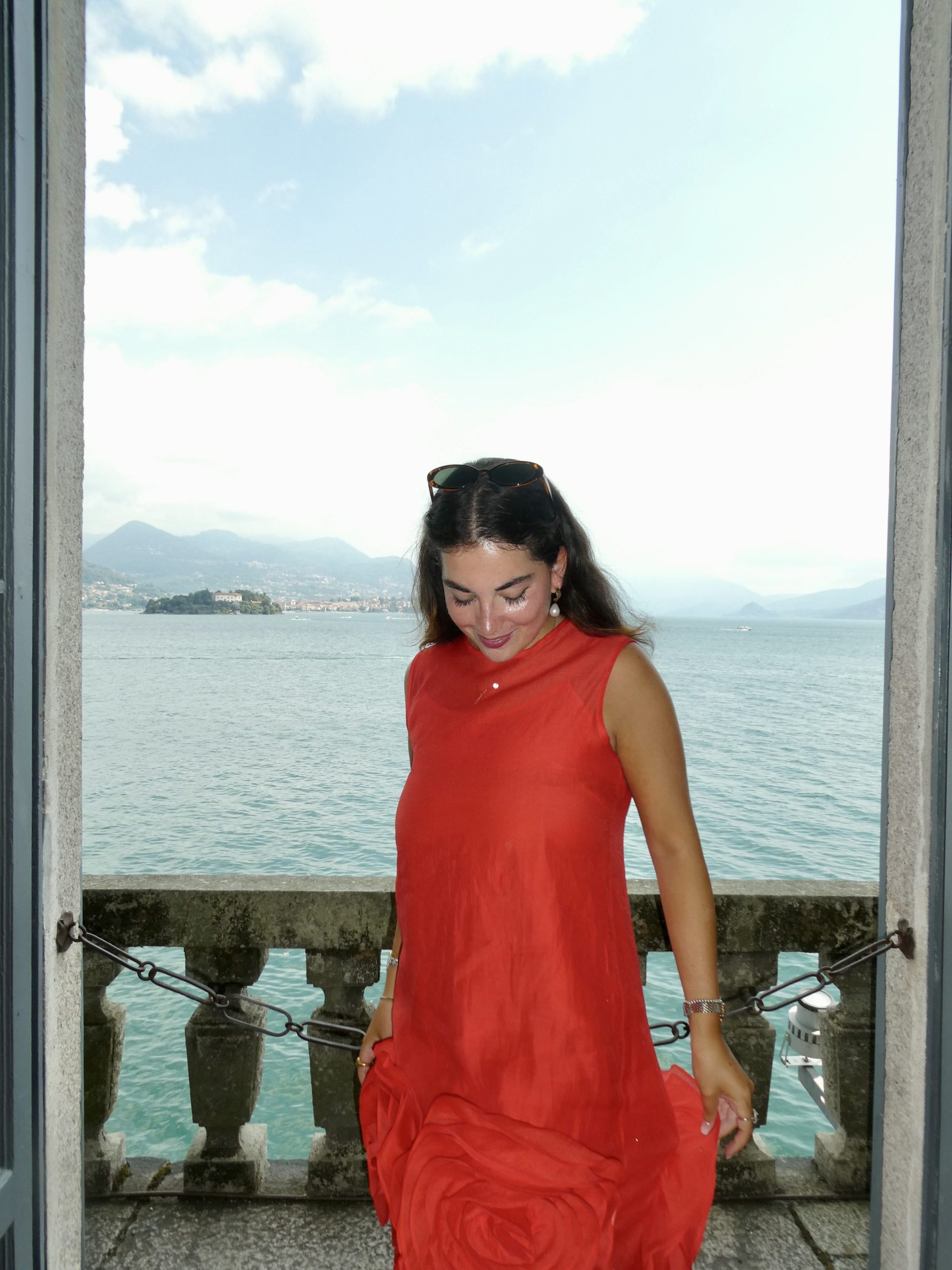
Inside Palazzo Borromeo
Palazzo Borromeo is one of the most remarkable examples of Baroque architecture on Lake Maggiore. The palace was designed not only as a residence for the Borromeo family, but also as a place to receive and entertain guests, which helps explain the grandeur of its interiors.
The Baroque style can be seen throughout the palace in the richness of its decoration. The rooms are filled with paintings, tapestries, sculptures, elaborate stucco work, gilded details, decorated ceilings and beautiful floors. There is so much to look at that I found it almost overwhelming and difficult to take everything in at once, with each room having its own character. This was probably what I loved most about walking through the palace. I found myself constantly looking around at the smaller details, from the ceilings and walls to the furniture and artwork. Some rooms feel incredibly grand, while others are more intimate, but there is a sense of richness and decoration almost everywhere you look.
Many of the most important rooms are located on the piano nobile, or main ceremonial floor of the palace. This was traditionally the part of an Italian palazzo used for its most important reception rooms and spaces for entertaining guests. At Palazzo Borromeo, these rooms also became a way for the family to display its art collection, history and position.
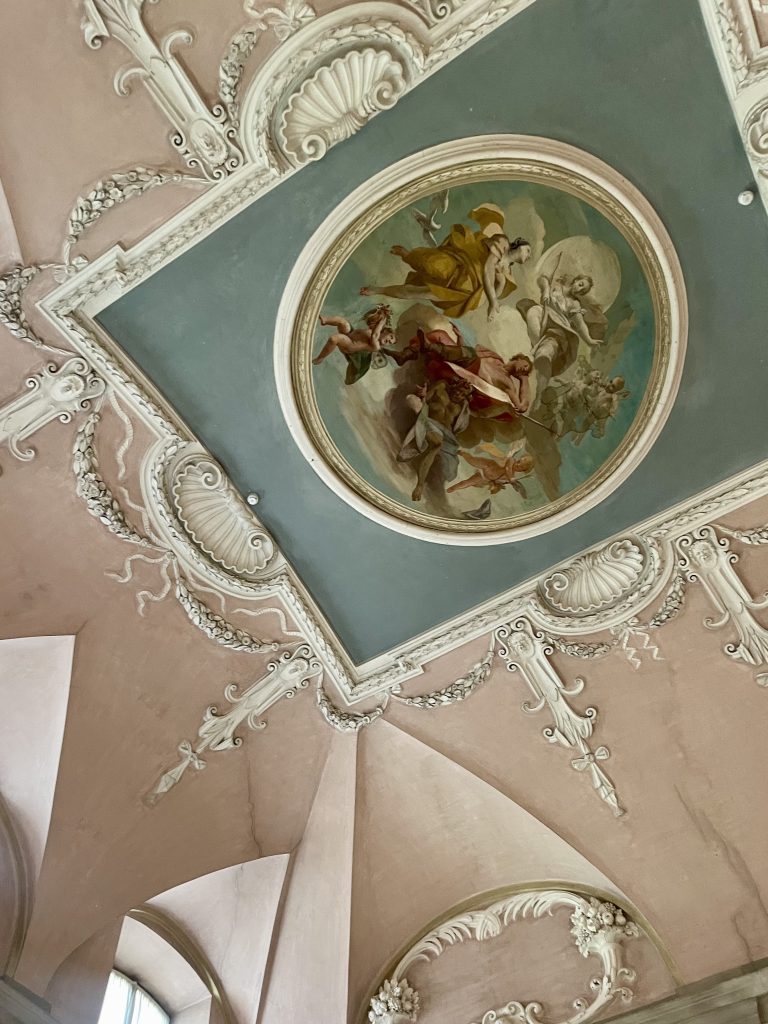
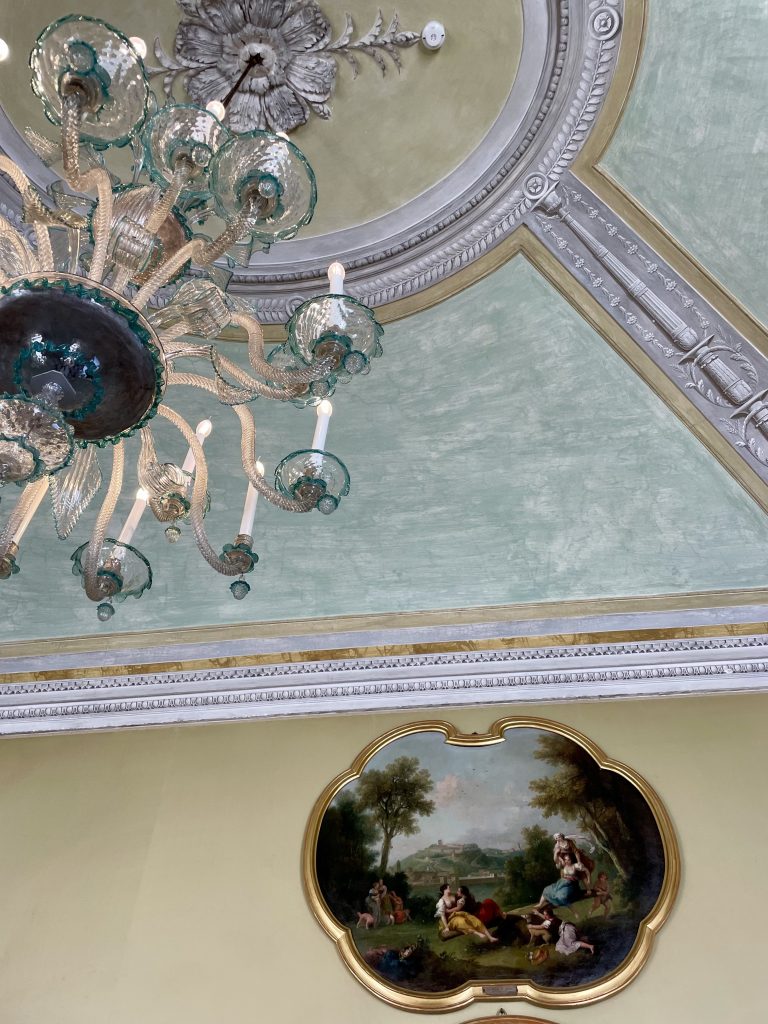
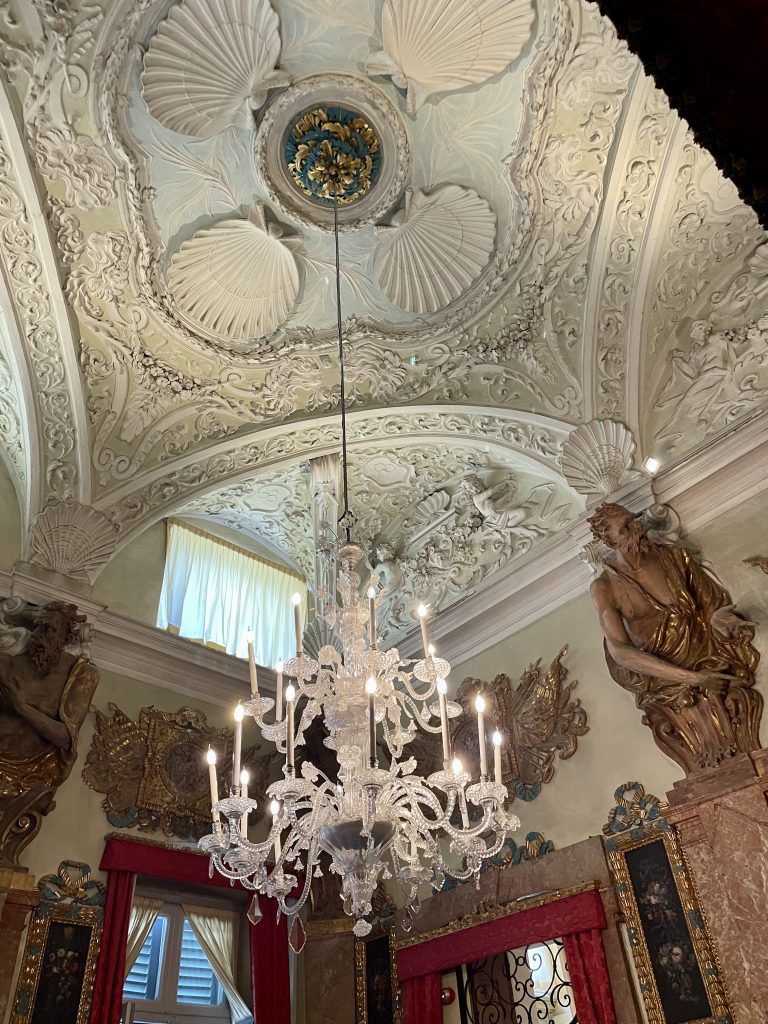
The Salone Nuovo
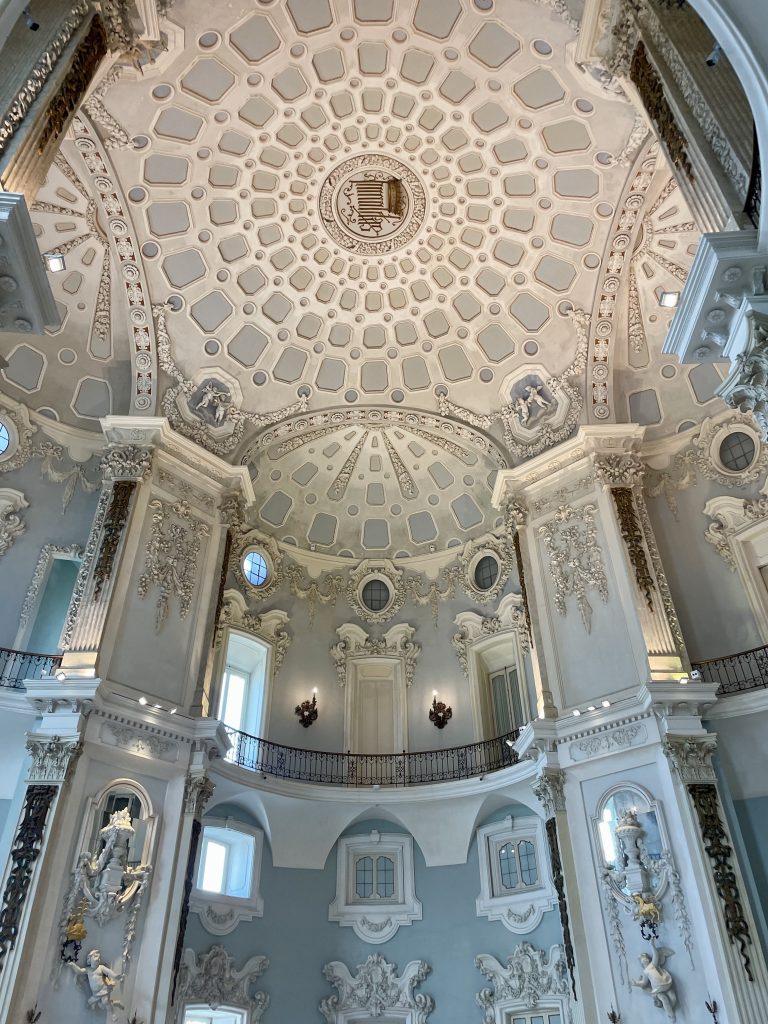
At the center of the palace is the monumental Salone Nuovo, or Great Hall, one of the most impressive spaces inside, and also the biggest room completed in 1948.
The room rises beneath a domed vault and is decorated with stucco, gilded details and pale blue walls. At the top of the dome appears the word Humilitas, the historic motto of the Borromeo family. The family’s symbols appear throughout the room as well. Among them are a camel associated with patience, a unicorn representing devotion, a horse bit representing strength, and a cedar tree connected with the Borromean Islands.
What I find particularly interesting about the Salone Nuovo is how much of the palace’s long construction history is contained in this one room. Although the palace project began in the seventeenth century, the Great Hall’s dome and decoration were only finally completed in the twentieth century, following the earlier design.
It is a reminder that Palazzo Borromeo wasn’t created at one moment in history. What we see today developed over centuries.
The Sala della Musica
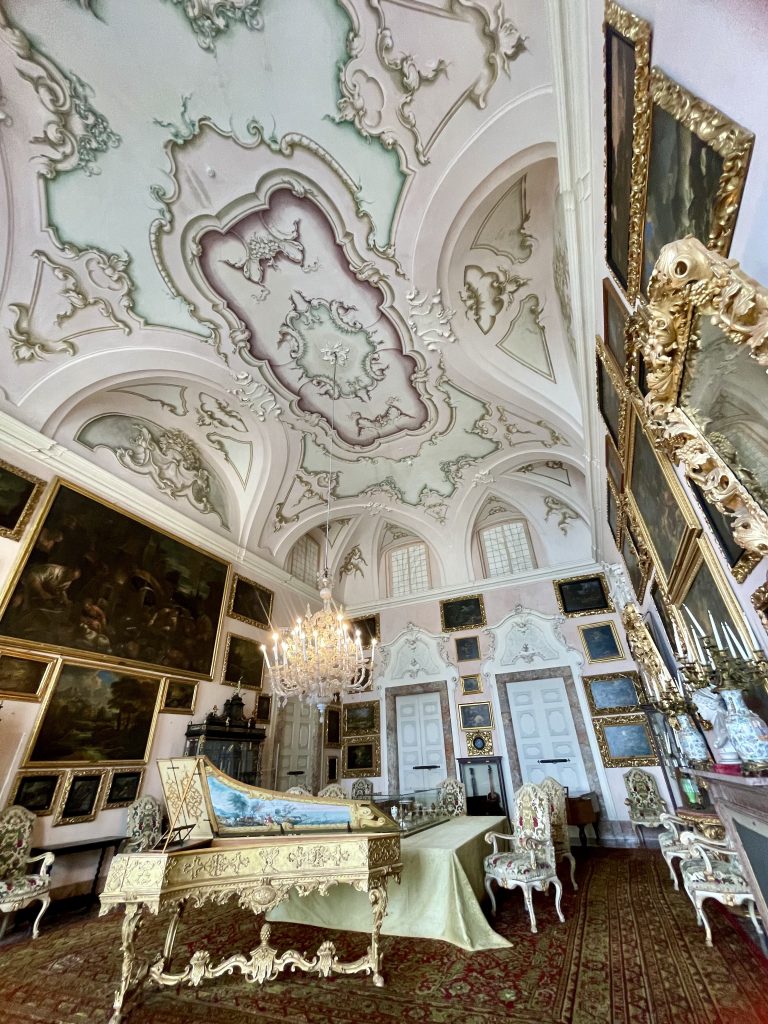
One of the most important rooms inside Palazzo Borromeo is the Sala della Musica, also known as the Sala delle Colonne, or Hall of Columns. Unlike some of the more Baroque rooms in the palace, this room has a Neoclassical character, with columns helping to give the space its more formal and symmetrical appearance.
The room takes its name from the collection of historic musical instruments displayed inside it, a reminder of the role that music and entertainment once played in life at the palace. Palazzo Borromeo was not simply a private residence: it was also created for receiving guests, celebrations and performances, and there was once even a theater within the palace where comedies and dramas were staged.
But the Sala della Musica is particularly important because it is where the Stresa Conference took place in April 1935, which brought together representatives of Italy, France and Great Britain at a moment of growing political tension in Europe. The three countries met in Stresa in response to Germany’s violations of the Treaty of Versailles and attempted to reaffirm the postwar European order. This shows how Palazzo Borromeo is not just a collectio of beautiful interiors, but also a place that continued to be part of European history.
The Napoleon Room
Napoleon also became part of the history of Isola Bella when he visited in 1797. One of the palace rooms still bears his name, and the bed associated with his stay remains there.
It is one of those details that makes the history of the palace feel much more tangible. The rooms weren’t simply designed to be admired; people lived in them, entertained in them and hosted some of the most important figures of their time.
The Gallery of Tapestries
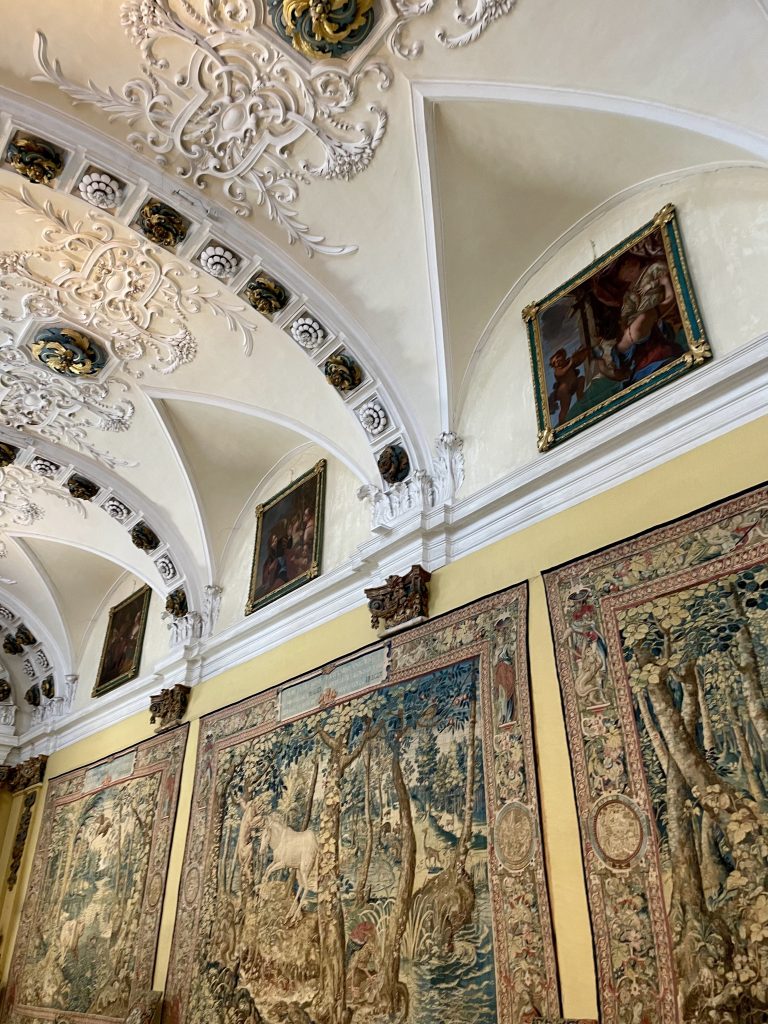
The Galleria degli Arazzi was another beautiful and elaborated part of the palace.
The gallery contains six enormous Flemish tapestries dating from the sixteenth century, woven in silk and gold. The unicorn, one of the most recognizable symbols of the Borromeo family, appears repeatedly throughout them. Above, the barrel-vaulted ceiling is decorated with gold rosettes against a white background, adding yet another layer of detail to a room already dominated by the tapestries.
I think this is part of what made walking through Palazzo Borromeo so interesting for me. There is almost no part of these rooms that feels incidental. You find yourself looking not only at the paintings and furniture but also at the ceilings, floors, walls and smaller decorative details.
A Palace Filled With Art
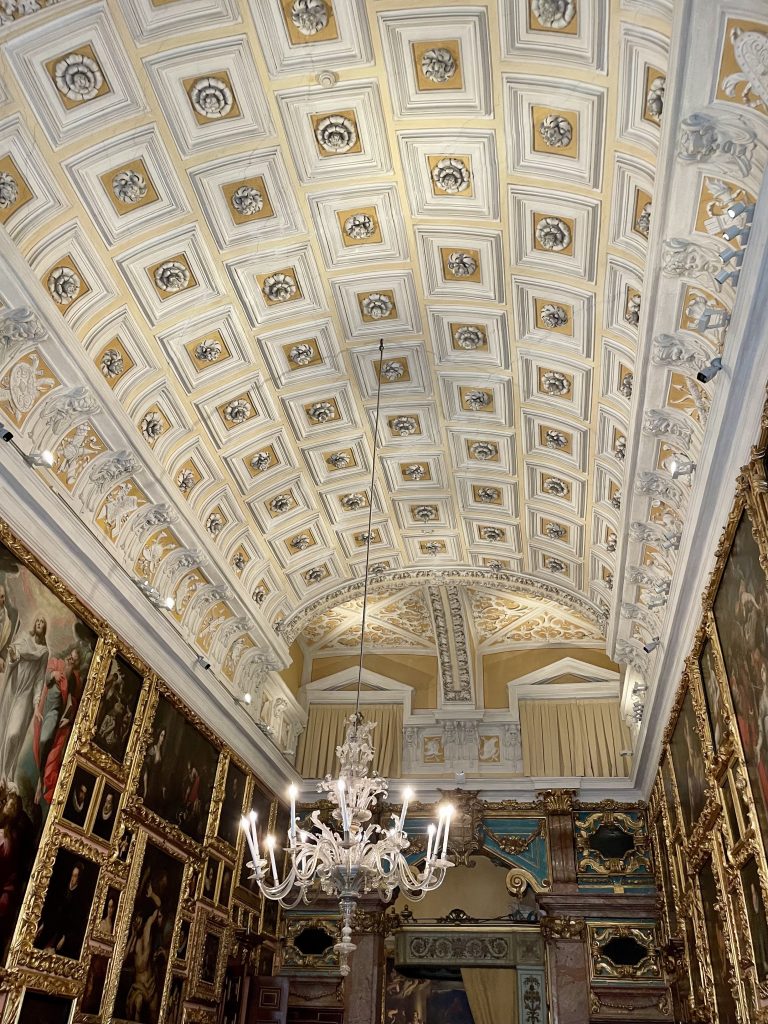
Art is everywhere inside Palazzo Borromeo, but nowhere is this more evident than in the Berthier Gallery.
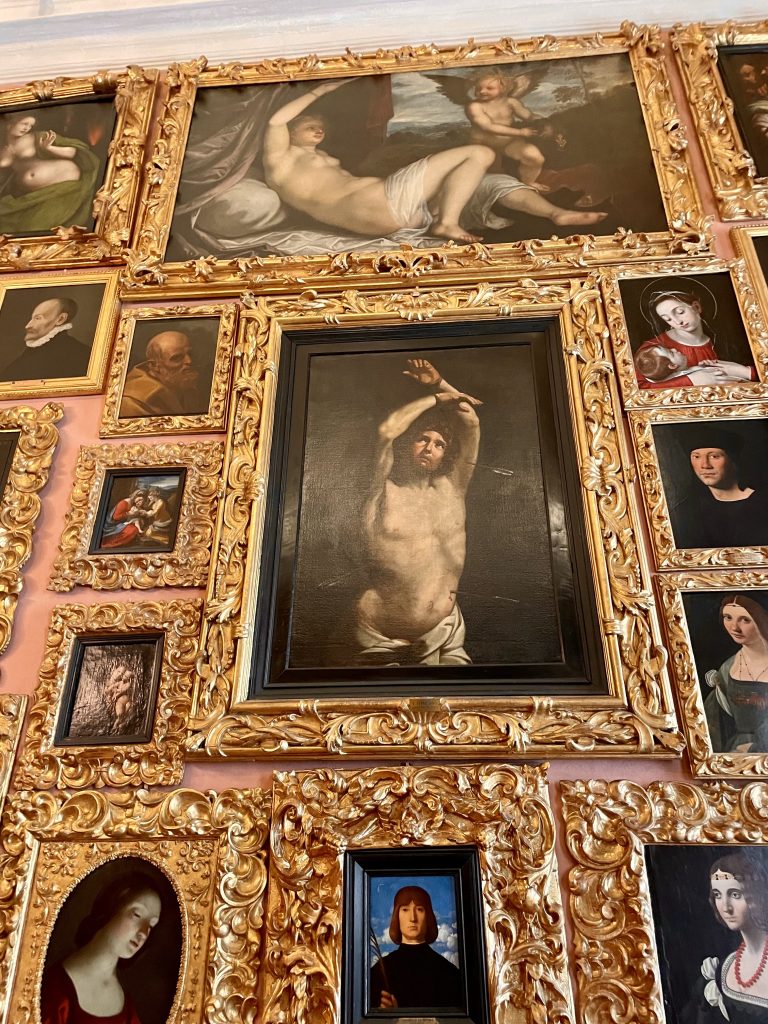
The Galleria Berthier contains more than 130 paintings, including originals, historical copies and replicas connected to Italian and European masters from the Renaissance through the Baroque period. Artists represented or referenced in the collection include Raphael, Titian, Correggio and Guido Reni, among others.
What I remember most about the gallery is simply the amount of art surrounding you. The paintings are displayed incredibly extremely close to one another, covering almost the entire walls and continuing one above another. There is so much to look at that it can actually feel a little overwhelming.
I think this is also where I really noticed the Baroque character of the palace. Baroque art and architecture are known for their richness, drama and abundance of decoration, and that is very much how Palazzo Borromeo feels when you are walking through it. There are paintings, elaborate frames, decorated ceilings, furniture and small details everywhere you look. The Galleria Berthier takes that feeling even further because you are almost completely surrounded by paintings.
The way they are displayed is also very different from how we are used to seeing art in most museums today. Instead of giving each painting its own space, the works are arranged closely together in the tradition of seventeenth-century picture galleries. I actually loved seeing them this way. It makes the room feel incredibly rich and full, even if you don’t quite know where to look first.
Down Into the Grottoes
One of the most unexpected parts of Palazzo Borromeo comes when you leave the formal rooms behind and descend toward the water level.
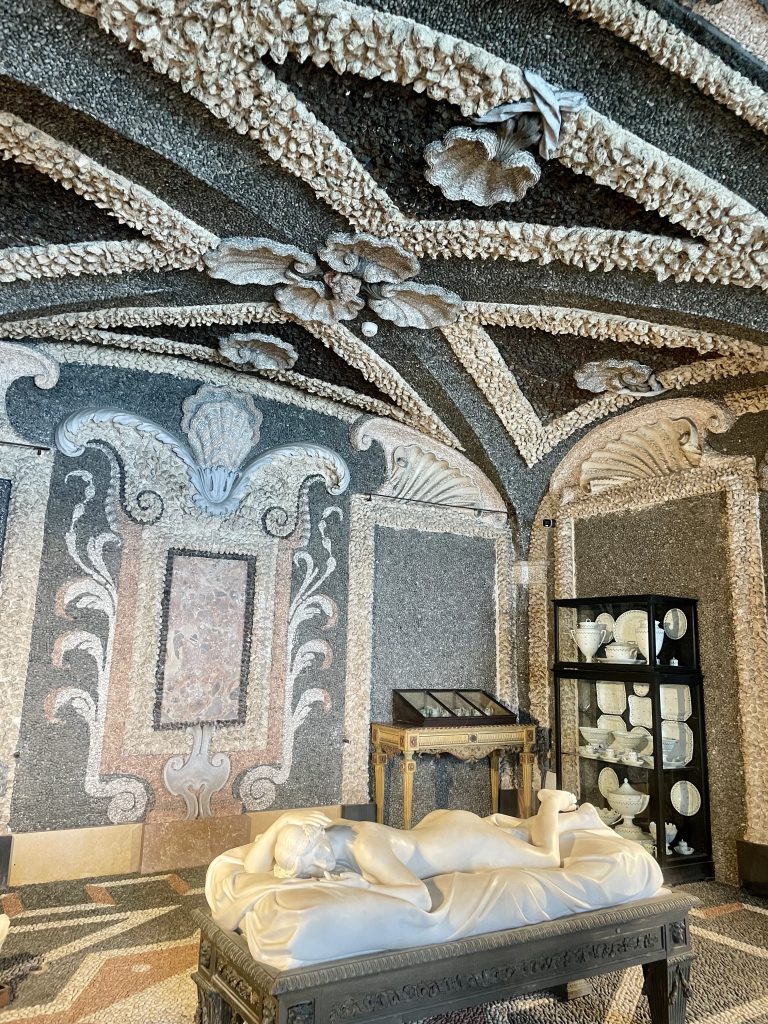
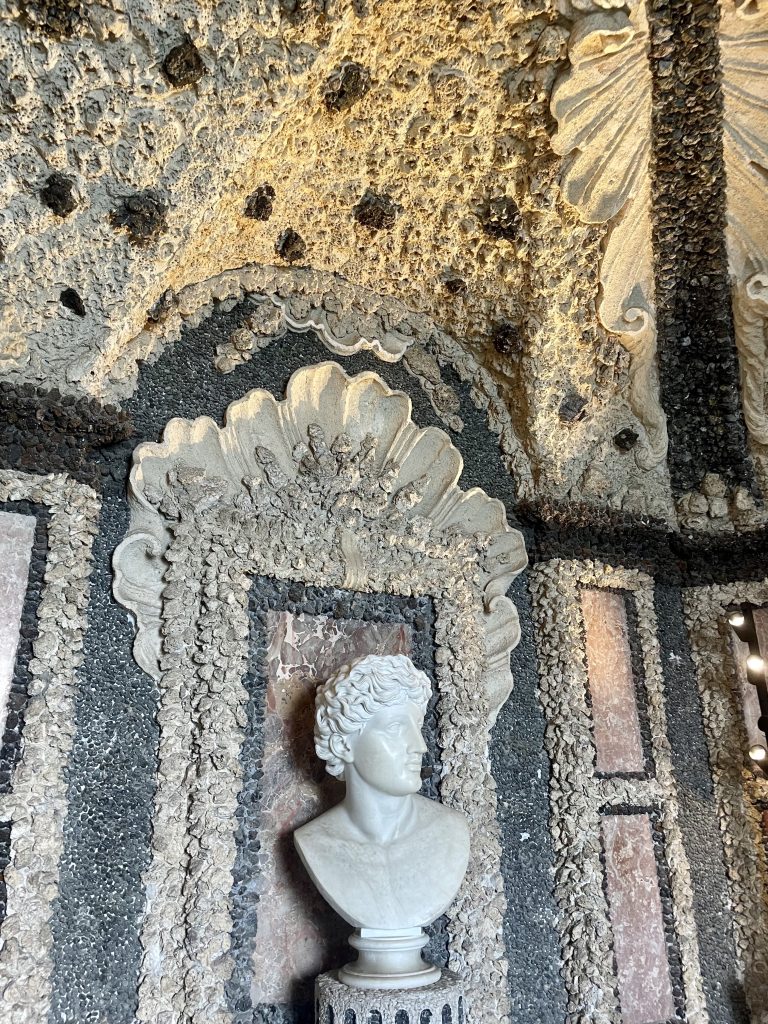
Here are the palace’s artificial grottoes, begun in the seventeenth century and designed as summer rooms where the Borromeo family and their guests could escape the heat and enjoy the cooler air coming from Lake Maggiore.
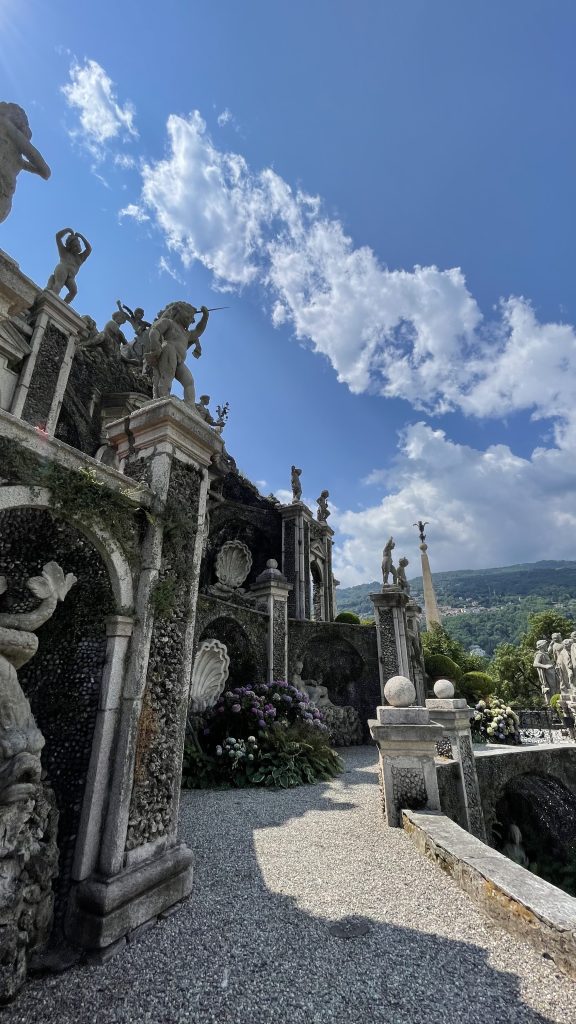
They feel completely different from everything above them. Instead of painted walls, gilding and textiles, the rooms are covered in an extraordinary mixture of natural and decorative materials: pebbles, shells, tufa, marble fragments, mica, stone incrustations and stucco. The surfaces form elaborate patterns intended to evoke an underwater or marine environment.
The idea of creating artificial grottoes inside a palace already feels unusual, but their position at water level makes them even more connected to the lake outside. They also create an interesting transition within the visit. After walking through rooms filled with paintings, tapestries and elaborate furnishings, suddenly you are surrounded by stone and shells. And from there, you eventually make your way toward an entirely different part of Isola Bella.
The Gardens of Isola Bella
The gardens were probably my favorite part of the entire visit. The gardens are just as elaborate as the palace, but everything is mixed with plants, flowers, animals and views of Lake Maggiore.
The Italian Baroque gardens extend across ten terraced levels, transforming this part of the island into an architectural landscape of staircases, balustrades, statues, fountains, obelisks and carefully arranged vegetation. They feel like a natural continuation of the palace, with the different terraces connected by staircases and paths. As you walk through them, you constantly get different views of the gardens, the lake and the mountains surrounding Isola Bella.
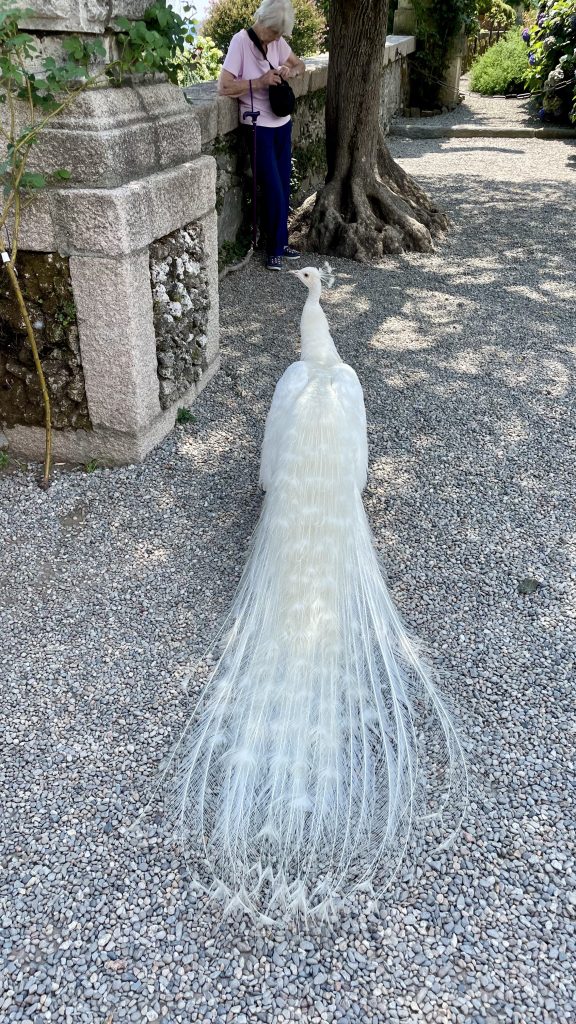
One of my favorite things from the gardens were actually the number of white peacocks around. They wander freely around the gardens, between the plants, statues and terraces, along with other birds that you come across as you walk around. I loved how naturally they seemed to be part of the gardens, especially against such an elaborate setting and with Lake Maggiore in the background.
The presence of birds on the island also has a much longer history. The Borromeo family collected ornamental and exotic birds alongside rare plants, and Isola Bella still has an eighteenth-century Casina degli Uccelli, or House of Birds, which was originally created to house rare songbirds. The white peacocks continue to walk freely through different parts of the gardens today.
I think they were also part of what made the gardens feel so special to me. Between the terraces, sculptures, flowers, birds and the views over the lake, walking through them genuinely felt a little like being inside a fairy tale.
A Place Designed to Astonish
Isola Bella was deliberately transformed over centuries. The palace was created for receiving and entertaining guests. There were once theatrical performances within its walls. The grottoes were designed to surprise visitors while providing a summer retreat. Outside, the gardens turned the landscape itself into another part of the architecture.
Even the island’s overall form was conceived to resemble a ship floating on the lake.
I think this is why Palazzo Borromeo feels so different from simply visiting another beautiful historic residence. There is always something else to see. One room leads into another, the formal interiors eventually give way to the unusual grottoes, and then everything opens onto the gardens and Lake Maggiore. I already thought Isola Bella was one of the most beautiful places on Lake Maggiore before learning more about its history. Knowing how deliberately the island was transformed over centuries has only made me appreciate it more.