Why one of Italy’s greatest writers still helps us understand identity today.
We rarely think of ourselves as different people.
Most of us move through life believing there is a single, stable version of who we are. Yet ask a parent, a childhood friend, a colleague, or someone who has only ever known us through social media to describe us, and the answers would almost certainly differ. Each would tell a slightly different story. Each would recognize a different version of the same person.
Which one, then, is the real one?
Long before social media encouraged us to curate different versions of ourselves for different audiences, the Italian writer Luigi Pirandello (1867–1936) was asking remarkably similar questions. Through his novels and plays, he challenged one of our deepest assumptions: that identity is fixed. Instead, he suggested something far more unsettling, that we are never simply one person, but many, constantly shaped by the eyes of others and by the relationships we build throughout our lives.
I first encountered Pirandello long before I understood any of this.
Growing up in Italy, there was always a copy of Il fu Mattia Pascal (The Late Mattia Pascal) somewhere in our house. It was my mother’s favorite novel, and she encouraged me to read it from a young age. At the time, I appreciated it mostly because she loved it so much. It wasn’t until years later, when I returned to Pirandello in high school, that I began to understand the depth of the questions he was asking.
We studied Uno, Nessuno e Centomila (One, No One and One Hundred Thousand), and for the first time I understood why Pirandello had become one of Italy’s greatest writers. The novel follows Vitangelo Moscarda as he discovers that every person around him sees a different version of who he is. What begins as a seemingly insignificant observation grows into a profound existential crisis: if everyone knows a different version of me, who am I really?
That question has stayed with me ever since.
The more I returned to Pirandello’s work, the more I realized that his novels were never simply about mistaken identities or theatrical masks. They were about something much more fundamental: the fragile, shifting nature of the self. More than a century later, in a world shaped by professional identities, social media profiles, and carefully curated public lives, his reflections feel remarkably contemporary, not because he predicted our digital age, but because he understood something timeless about being human.
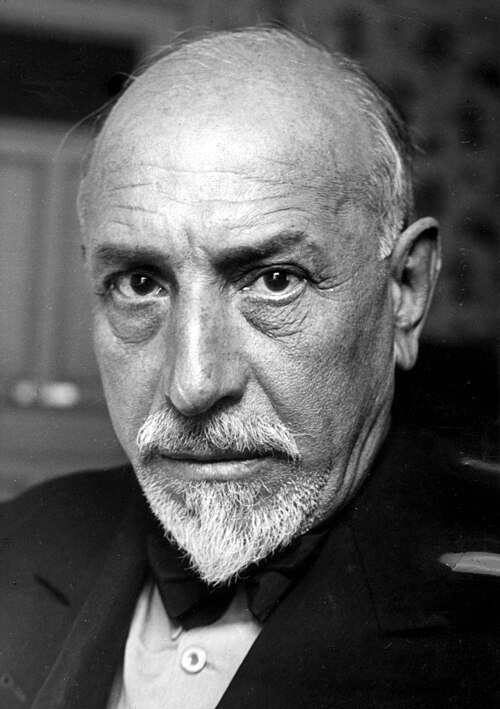
One, No One and One Hundred Thousand
One of Pirandello’s most enduring ideas is also one of his simplest: we are never only one person.
We tend to think of identity as something stable, imagining there is a single, authentic version of ourselves that remains unchanged regardless of where we are or who we are with. Pirandello challenged that assumption. In Uno, Nessuno e Centomila, he suggests that every person we meet constructs a slightly different version of who we are. The person we believe ourselves to be may not be the same person our family sees, our closest friends know, or our colleagues encounter each day.
The novel begins with an almost insignificant observation. Vitangelo Moscarda’s wife casually remarks that his nose tilts slightly to one side. Until that moment, he had never noticed it. The comment seems trivial, yet it becomes the beginning of a much larger realization. If he had never even seen himself as others did, how many other things about his own identity had escaped his attention?
From that moment on, Moscarda begins to question everything he thought he knew about himself. He realizes that the image he carries of himself is only one among countless others. Every relationship creates a different version of him. There is no single Vitangelo Moscarda, but many, one for every person who knows him.
I have often thought about that idea outside the pages of the novel. It seems almost impossible to deny. We are different with our parents than we are with lifelong friends. We speak differently in a job interview than we do over dinner with people who have known us for years. Even moving to another country or speaking another language can reveal parts of ourselves we didn’t know existed.
Perhaps the most unsettling part of Pirandello’s insight is not that we change, but that we can never fully control how we are perceived. No matter how carefully we explain ourselves, every person inevitably constructs their own understanding of who we are. In that sense, each of us exists not as one individual, but as many.
The Masks We Wear
If Uno, Nessuno e Centomila asks whether we are ever truly one person, Il fu Mattia Pascal explores a different but equally compelling question: can we ever leave one version of ourselves behind and begin again?
The novel follows Mattia Pascal, a man who is mistakenly declared dead and seizes the opportunity to reinvent himself under a new identity. At first, it seems like the ultimate freedom. Free from the expectations, disappointments, and responsibilities of his previous life, he imagines that starting over will allow him to become someone entirely new.
Yet Pirandello gradually reveals that identity is far more complex than a name or a fresh beginning. Mattia may change how the world sees him, but he cannot simply erase the experiences, memories, and contradictions that have shaped who he is. His new life, rather than offering complete freedom, becomes another kind of uncertainty.
It is a surprisingly modern idea. We often imagine that fulfillment lies somewhere else: in a different city, a different career, a different relationship, or even a different version of ourselves. We convince ourselves that if we could only start over, we would finally become the person we are meant to be. Pirandello gently questions that hope. Reinvention is possible, but it is never absolute. Every version of ourselves carries traces of the ones that came before. We do not simply abandon our past; we build upon it. The people we once were continue to shape the people we are becoming.
Perhaps that is why Il fu Mattia Pascal still feels so relevant today. It reminds us that identity is not something we can discard at will, nor something we discover once and for all. Like the rest of Pirandello’s work, it suggests that who we are is always unfinished, formed as much by our memories and experiences as by the futures we imagine for ourselves.
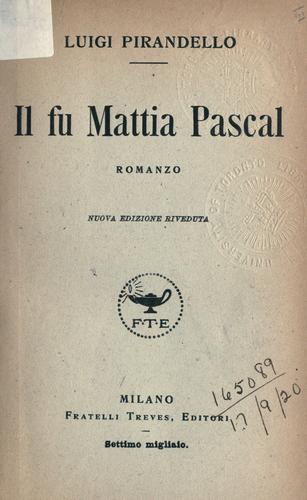
Can We Ever Escape Ourselves?
If Uno, Nessuno e Centomila asks whether we are ever truly one person, Il fu Mattia Pascal explores a different but equally compelling question: can we ever leave one version of ourselves behind and begin again?
The novel follows Mattia Pascal, a man who is mistakenly declared dead and seizes the opportunity to reinvent himself under a new identity. At first, it seems like the ultimate freedom. Free from the expectations, disappointments, and responsibilities of his previous life, he imagines that starting over will allow him to become someone entirely new.
Yet Pirandello gradually reveals that identity is far more complex than a name, a place, or a fresh beginning. Mattia may change how the world sees him, but he cannot simply erase the experiences, memories, and contradictions that have shaped who he is. His new life, rather than offering complete freedom, becomes another kind of uncertainty. It is a surprisingly modern idea. We often imagine that fulfillment lies somewhere else: in a different city, a different career, a different relationship, or even a different version of ourselves. We convince ourselves that if we could only start over, we would finally become the person we are meant to be. Pirandello gently questions that hope. Reinvention is possible, but it is never absolute. Every version of ourselves carries traces of the ones that came before. We do not simply abandon our past; we build upon it. The people we once were continue to shape the people we are becoming.
Perhaps that is why Il fu Mattia Pascal still feels so relevant today. It reminds us that identity is not something we can discard at will, nor something we discover once and for all. Like the rest of Pirandello’s work, it suggests that who we are is always unfinished, formed as much by our memories and experiences as by the futures we imagine for ourselves.
Why Pirandello Still Matters
More than a century after Pirandello first explored these questions, they continue to feel familiar. The world has changed in ways he could never have imagined, yet the uncertainty surrounding identity remains much the same. If anything, modern life has simply multiplied the spaces in which we present ourselves. We move between professional profiles, private conversations, family gatherings, and social media, each inviting a slightly different version of who we are.
It is tempting to see these different versions of ourselves as contradictions, or even as signs that we are somehow being inauthentic. Pirandello suggests something more generous. The masks we wear are not always disguises. More often, they are the natural result of living in relationship with other people. We are daughters and sons, friends and colleagues, students and professionals. None of these identities tells the whole story, yet none of them is entirely false.
Perhaps the challenge is not to search for one “true” self hidden beneath every role we play. Perhaps it is to recognize that identity has never been fixed. We are shaped by the people we meet, the places we live, the languages we speak, and the experiences that quietly transform us over time. Rather than replacing one another, these different versions of ourselves coexist, each becoming part of a much larger story.
I think this is what great literature does. It doesn’t simply tell us who its characters are; it quietly changes the way we understand ourselves. More than a century after Pirandello first asked who we really are, I find myself returning to the same question, not because I expect to find a definitive answer, but because his work reminds me that none of us is ever just one person.